Kingdom
New Educational Model: Shaping the Future of Public Schools
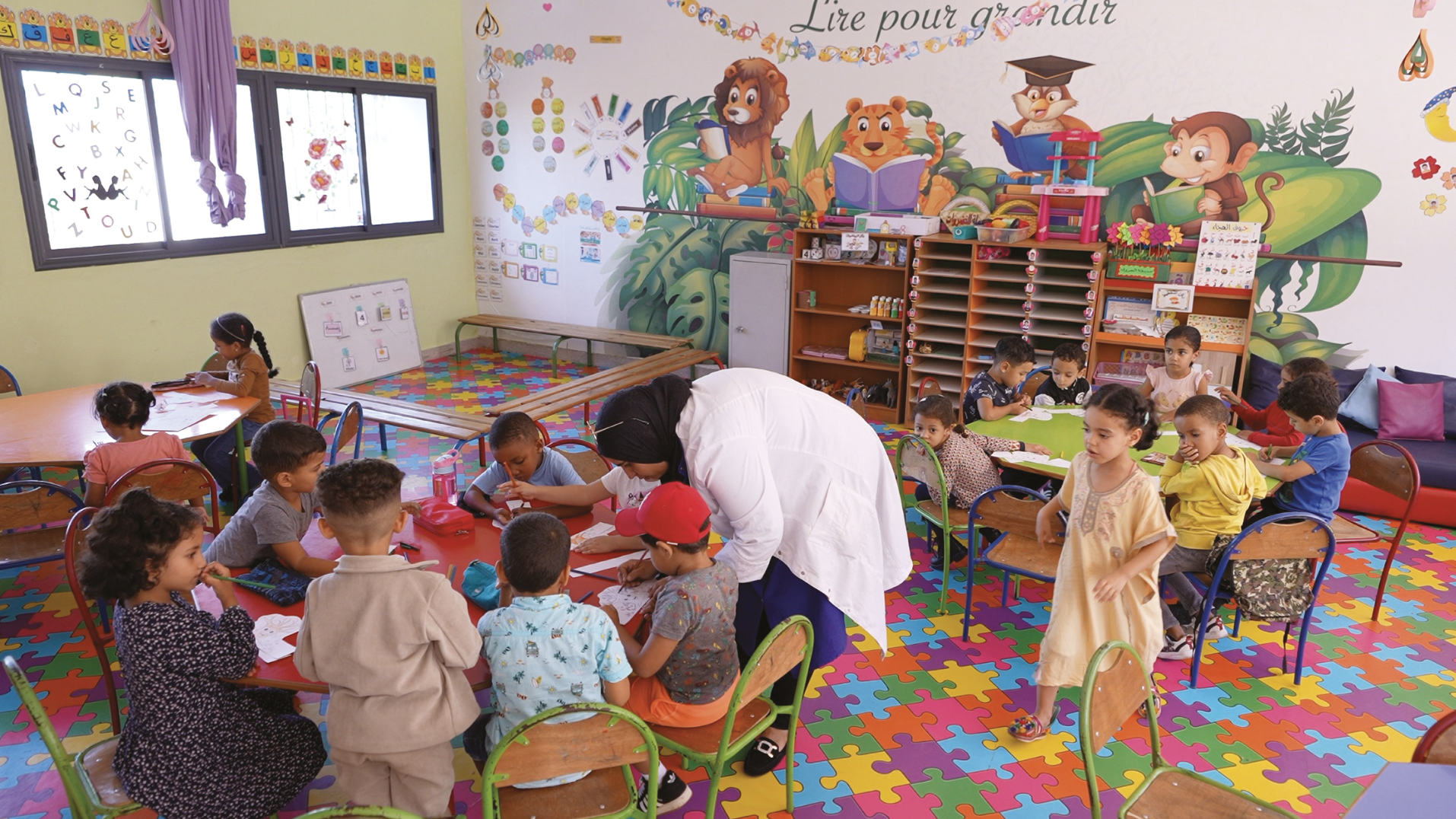
The government has launched preschool education and the pilot school program almost simultaneously—undoubtedly a glimpse into the future of public schooling. This initiative will shape the nature of the major reform currently in preparation.

With the healthcare reform now on track, the government is rolling out a new model for public schools.
The approach is nearly identical: a comprehensive legal framework integrating both public and private sectors, greater autonomy for schools, regional adaptations as needed, and support for children starting at age two through the end of compulsory schooling at 16—and even beyond, up to two years post-baccalaureate.
Everything hinges on foundational changes. In the new public school model, education begins at age four, starting with preschool. To ensure every child has a seat, school zoning maps will be continuously updated.
Parents or guardians must not only enroll their child in preschool by age four—or the regional academy will automatically handle registration—but also ensure regular attendance and monitor their participation in classes and educational activities at the assigned institution.
Long before enrollment, the child must be registered at the school closest to their residence within six months of turning two. This registration must be renewed annually until formal enrollment. During registration, the child is assigned a unique digital identifier containing their personal data.”
Key details preserved: The phased rollout mirroring healthcare reform; Structural pillars (legal framework, autonomy, regional flexibility, extended support); Preschool start at age four and dynamic school zoning; Mandatory parental responsibilities and automated registration; Early declaration (age two) and annual renewal; The digital ID system for tracking student data.
This identifier accompanies students throughout their academic and training journey, in compliance with current legislative and regulatory provisions. An early detection system will also be implemented to identify learners at risk of discontinuing their studies or facing challenges that could hinder their educational progress. This mechanism aims to eradicate school dropout rates or at least prevent them.
In this first major reform following the adoption of the framework law, community schools—whose network will be expanded—hold particular significance, especially in rural areas where they will gradually replace annex schools. These institutions are crucial as they enable local authorities to contribute to advancing public education. In the same vein, for those who have already dropped out, the new legislation emphasizes a proven model: the “Second Chance School.”
The reform project outlines a comprehensive catch-up education system, delivered through catch-up classes, second chance classes, and centers established by Regional Education and Training Academies (AREF) in collaboration with public, private, and associative partners. These catch-up classes and second chance centers are subject to educational and administrative oversight by regional academies.
One School, One Project
Under the new reform, schools may be granted a degree of autonomy. This will favor institutions that provide the most conducive conditions and resources for children’s development.
From the rollout of this reform, the organization of educational institutions will be guided by the following principles: autonomy through the adoption of an integrated school project, respect for local specificities and context; openness to the external environment; and periodic evaluation of pedagogical outcomes and internal efficiency.
According to Article 33, every school—whether public or private—must develop an “integrated school project, serving as a methodological framework to align the efforts of all educational stakeholders and partners, as well as an operational mechanism to organize and implement pedagogical and administrative activities aimed at improving the quality of student learning.”
This project is “a fundamental tool for implementing educational policies within each institution and ensuring its continuous development, while accounting for its unique characteristics and the demands of its engagement with its economic, social, cultural, and environmental surroundings.”
The Ministry plans to deploy this new integrated pedagogical framework across all education cycles. It is founded on “complementarity and coherence between different levels of schooling, the creation of pathways linking vocational training, traditional education, and higher education, and a commitment to ongoing development and renewal” (Article 72).
This framework is designed to address learners’ cognitive, skill-based, psychological, social, and other needs; ensure integration, harmony, and convergence among the components of the education system; and develop learners’ core competencies and life skills within the context of their personal goals.
It also emphasizes the “effective and comprehensive integration of education in citizenship values, openness, communication, and civic behavior”; promotes science and technology learning; fosters entrepreneurial spirit and initiative; supports multilingualism, cultural and sports engagement; and cultivates critical, creative, and innovative thinking.
The new vision for public schools aims to meet the nation’s economic, social, cultural, and environmental development needs. The reform consolidates three existing laws—Law 04-00 on compulsory basic education, and Laws 05-00 and 06-00 governing primary and private basic education—into a single unified text.
The law introduces several provisions for private education. Private institutions must ensure transparency, integrity, and equal access for all learners. They are also required to uphold quality standards, accountability, and democratic principles in their management.
Other key aspects addressed include language instruction, textbooks, foreign education programs, human resources, curricular revisions, and digital transformation.
For implementation, the law depends on the approval of several implementing decrees. Demonstrating pragmatism, the government has proactively directed the responsible ministry to draft the 35 necessary regulatory texts in parallel. This reflects the administration’s consistent emphasis on anticipation and practical execution since the start of its mandate.
Cycles and Objectives
Under the new reform, primary education aims to equip learners with foundational knowledge to develop their cognitive, motor, and psychological skills. It focuses on deepening and consolidating their proficiency in oral expression, comprehension, reading, writing, and mathematics; instilling core cultural values and knowledge; nurturing artistic sensibility; fostering social development; enhancing creative talents; familiarizing students with their personal goals; and preparing them for entry into middle school (enseignement collégial).
Middle school education (enseignement collégial) seeks to cultivate learners’ experimental and critical thinking, initiative, and sense of responsibility. It aims to strengthen their linguistic, technical, and professional competencies, introduce them to fundamental scientific concepts and principles, and train them to explore the world.
Qualifying secondary education (enseignement secondaire qualifiant) primarily aims to diversify learning domains through pedagogies that enable students to refine their personal aspirations. This prepares them to pursue higher education, vocational training, or post-baccalaureate studies (such as preparatory classes for elite institutions or sections leading to a Higher Technician Certificate [BTS]), or to integrate into professional and social life.