Kingdom
Moussem: In Moulay Abdellah, people pray, gallop, dance… and now they’re issuing public tenders
So that spirituality, baraka (blessing), and popular celebration remain dignified, the municipality of Moulay Abdellah is launching two low-profile but essential public contracts aimed at rehabilitating the seaside site of Sidi Bouzid and upgrading the festival area, which is already in the starting blocks. Because even tradition needs plumbing that holds up and electricity that doesn’t trip under 40°C heat.

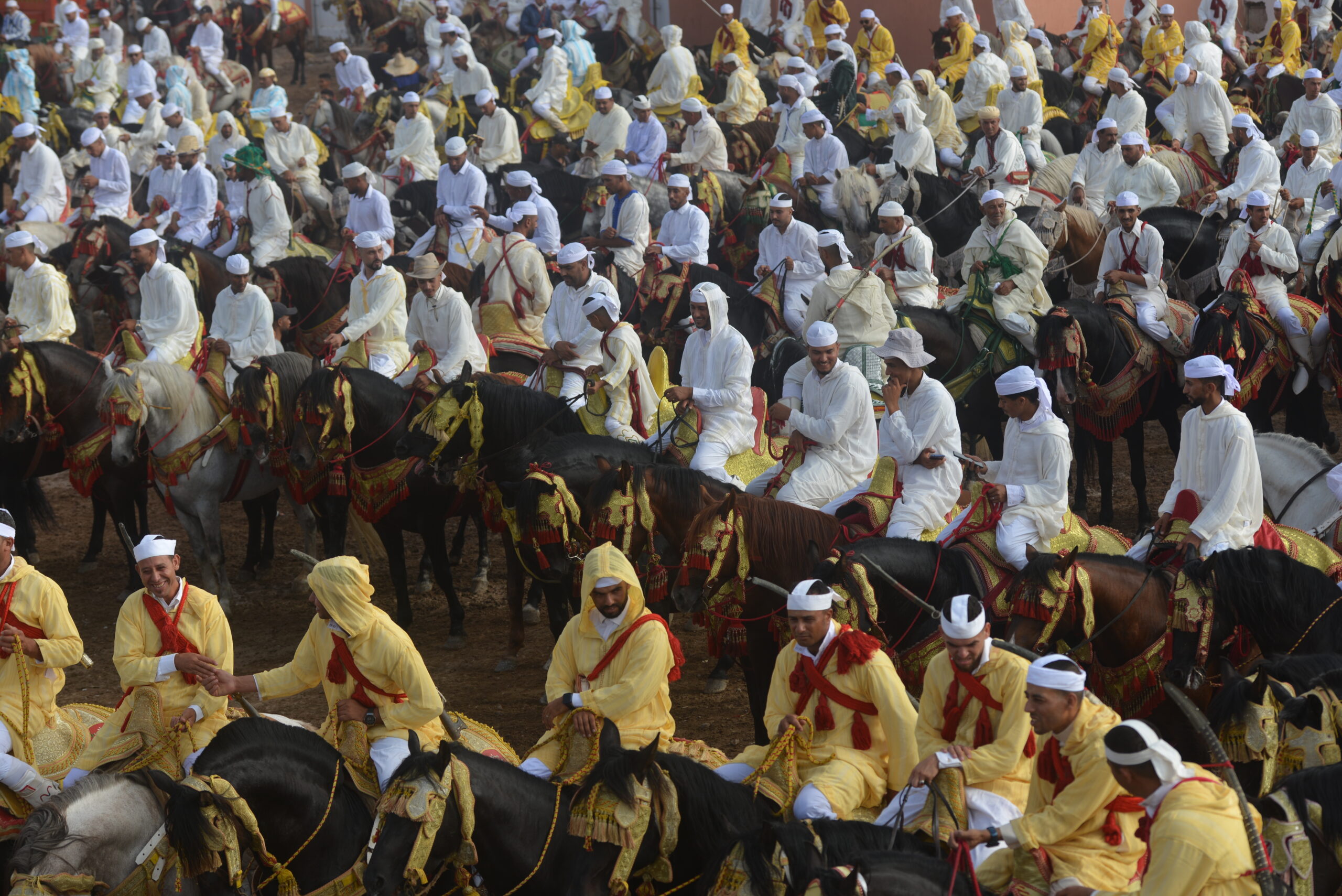
Five million visitors, 35,000 tents, more than 2,200 horses and 123 fantasia troupes ready to charge under the August sun. This isn’t just another festival—we’re talking about the Moussem of Moulay Abdellah Amghar, the largest gathering in the Kingdom, halfway between a pilgrimage and a giant fair where baraka meets gunpowder and couscous.
And to make sure this age-old machine doesn’t descend into chaos, the municipality of Moulay Abdellah has just rolled out two public tenders, as discreet as they are purposeful. The seaside site of Sidi Bouzid and the festival zone are about to be brought up to the level of the event. Done properly, as the horsemen would say.
For centuries, the Moussem has been that suspended moment where spirituality, equestrian traditions, and popular fair blend together without getting in each other’s way. It honors Moulay Abdellah Amghar, a patron saint whose teachings still cling to the Moroccan soul like mint tea clings to the glass. People sing, dance, pray, and bargain over carpets and falcons. Families come from everywhere—from the Rif to the Sahara, and even from abroad. It is at once an act of faith, a form of collective therapy, and a massive village celebration. But when five million people show up between August 7 and 15, the toilets need to work, water must run, electricity must hold, and the ground must not turn into mud fields after the first tbourida display. Hence the two public contracts.
The first project (opened on May 14) concerns the development of the Sidi Bouzid seaside site. It includes structural works as well as floor and wall finishes, along with plumbing, electrical, and lighting installations. The allocated budget is estimated at 1,312,540.80 dirhams. Timeline? Three months flat, starting from the service order. No frills—just solid, functional work that can withstand 40°C heat and 50,000 footsteps a day.
The second (opened five days later, on May 19) focuses on upgrading the area dedicated to the Moussem. It notably includes carpentry work—both wood and metal—as well as the extension of the drinking water network, in addition to the facilities needed to organize the festivities. The projected cost stands at 1,579,816.80 dirhams, with a four-month completion deadline so everything is ready in time. You can sense the contracting authority’s determination not to let baraka drown in a plumbing issue.
The Moussem is not just an event—it’s a driver of the local economy (artisans, horsemen, restaurateurs, associations—everyone benefits). It’s also a living showcase of what Morocco does best: allowing the sacred and the profane to coexist without one devouring the other. By modernizing these two areas, the municipality isn’t just preparing for a big week—it’s ensuring that this heritage remains alive, popular, and dignified. No way this grand celebration should look like a wasteland.
Now it remains to be seen who will win the contracts. Local companies are already rubbing their hands. As for the millions of visitors, they don’t care much about public tenders. They just want everything to be perfect on August 7, when the tbourida charges forward in a cloud of dust. So that tradition—that old rascal—can keep celebrating without blushing.