Kingdom
Mohamed Lahbabi: “The first priority is to reform the economic model of the pharmacy”
The pharmaceutical sector is facing a series of challenges. Several major reforms are happening at once: the generalization of AMO (mandatory health insurance), the digital transformation of the health system, medicine regulation reform, and reflection on the economic models of community pharmacies.

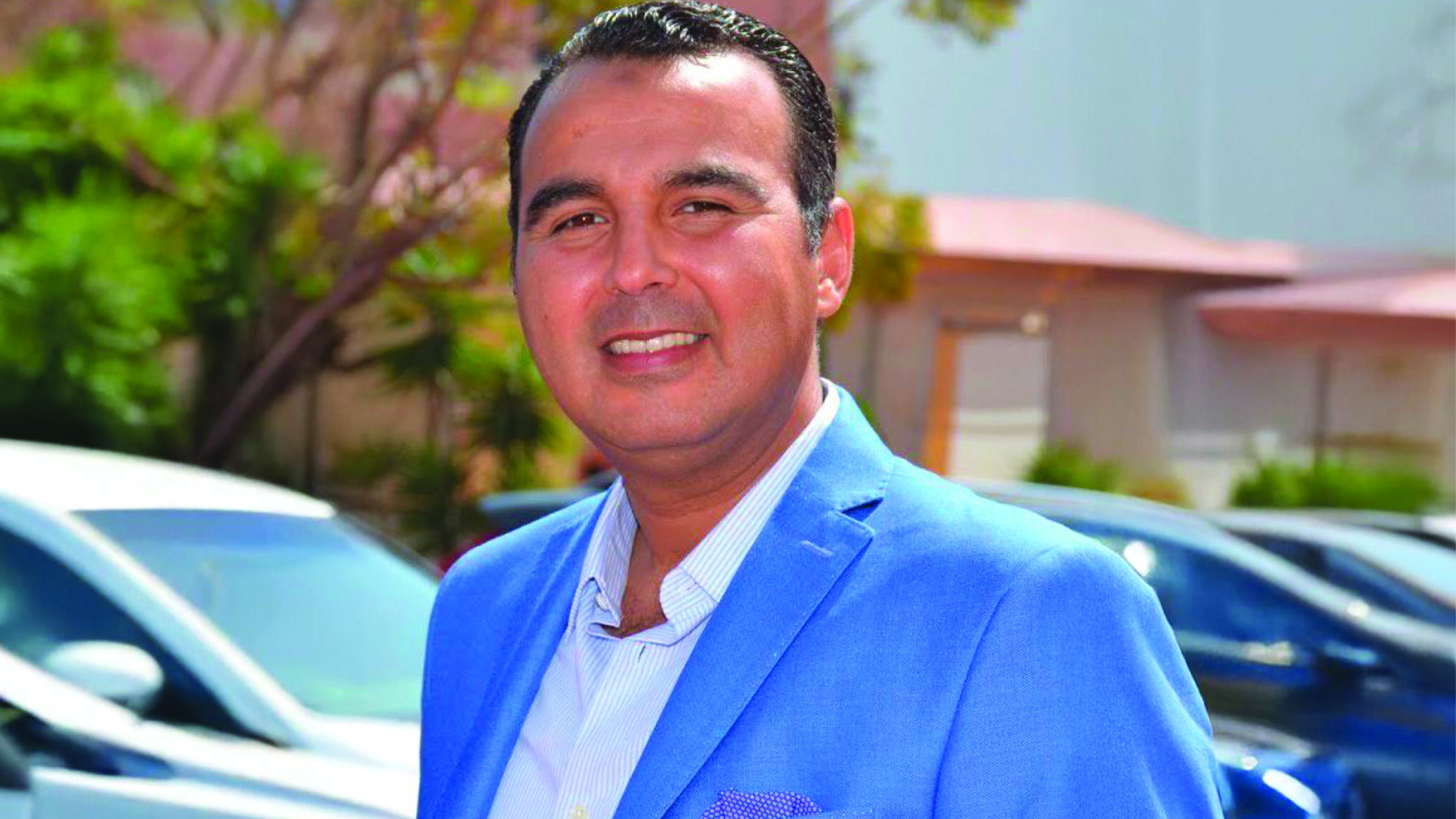
Mohamed Lahbabi, president of the Confederation of Pharmacists’ Unions of Morocco (CSPM), reviews the main hot topics shaking the profession. He also presents the profession’s proposals.
The Confederation announced in early May the launch of a strategic support mission entrusted to the firm Linkers Advocacy. Why this mission and what are its objectives?
In the current context, we considered it necessary to move away from a purely reactive or emotional logic. The profession needs structured arguments, economic data, legal analyses, strategic projections and an overall vision in order to be able to dialogue with national institutions and decision-makers.
It is in this spirit that this support mission was launched with Linkers Advocacy, with a steering committee made up of pharmacists each having specific expertise: health economics, regulation, community pharmacy practice, governance or public policy.
The objective is not only to defend the profession, but also to propose realistic and sustainable solutions to preserve the territorial network of pharmacies, secure access to medicines, accompany major social reforms and modernize the pharmacist’s role in the Moroccan health system.
This study aims precisely to reposition the community pharmacy within this new health architecture. It should provide an objective, scientific and forward-looking vision on the future of the pharmacy in Morocco. The study will produce concrete proposals on the economic, regulatory and organizational levels.
Will the study also evaluate opening pharmacy capital?
The National Council of the Order of Pharmacists has launched, with the same firm, a contradictory study to analyze scientifically and economically the potential consequences of this recommendation on the future of the Moroccan pharmaceutical sector.
The goal is to conduct an analysis away from imported models that do not always take into account the country’s economic, social and health realities.
Opening capital is one of the topics that raises the most concern within the profession. The position defended by a large number of pharmacists is very clear: we are opposed to opening capital, whether to non-pharmacists or even between pharmacists. Because we believe that this orientation risks altering the philosophy of the Moroccan community pharmacy model.
The pharmacy is not a commercial business like any other. It is above all a local health establishment founded on the pharmacist’s professional independence, personal responsibility and direct link with patients.
Will the health system overhaul and the generalization of AMO concretely change pharmacists’ work?
Yes, profoundly. The pharmacist is increasingly becoming a central actor in access to care. The generalization of AMO increases patient flows, needs for traceability, administrative exchanges and digitalization requirements.
All this also implies significant investments for pharmacies: software, equipment, training, data security, adaptation of procedures. We support digitalization, but it cannot be conceived without pharmacists. Today, the pharmacist is a public health actor and an essential link in prevention and therapeutic follow-up.
Should we therefore consider that the current pharmacy model has become obsolete?
The current model clearly needs to be reformed. It is not a matter of saying that the pharmacy must become more commercial. On the contrary. We must move away from a system where economic survival depends solely on the volume and price of boxes sold.
Today the pharmacist plays a much broader health role than twenty or thirty years ago. He can no longer be perceived only as a simple dispenser of medicines. He is a local health actor, accessible without appointment, present daily with citizens and playing an essential role in the care pathway.
He provides therapeutic education, detects drug interactions, directs patients, participates in prevention, supports chronic patients, does on-call shifts, manages public health emergencies and often serves as an informal first medical recourse. All these missions have health and economic value for the State.
We must therefore move toward a hybrid model: margin on medicines, but also remuneration for pharmaceutical services and acts. But this evolution must come with means and a new economic model. We cannot ask more missions of the pharmacist without recognizing or paying for these new responsibilities.
That is precisely why the profession today defends the idea of a mixed model, where the pharmacist’s remuneration would no longer depend solely on the margin on medicines, but also on the valuation of pharmaceutical acts and services. The evolution of the pharmacist’s role is therefore not optional. It is a necessity to strengthen the Moroccan health system and meet citizens’ expectations while preserving the balance of pharmacies.
In the absence of a comprehensive reform, do you fear the disappearance of the neighborhood pharmacist?
Yes, that risk really exists if current economic difficulties continue to worsen without a structural reform of the sector. The neighborhood pharmacist does not represent just a local business.
He is a true public health actor, often the first professional to whom a citizen turns for advice, guidance or first-line care.
In many neighborhoods, notably in working-class, rural or remote areas, the pharmacist plays a social role, knows his patients, monitors their treatments, detects risky situations and ensures continuity of local care that few structures can offer.
But today, many pharmacies face growing economic fragility.
For several years now, costs have been rising while margins have been shrinking. Successive reductions in medicine prices, rising operating costs, payment delays and market changes are putting many pharmacies in difficulty.
If this situation continues without support measures, the risk is that small and medium independent pharmacies will gradually disappear in favor of economic concentration that could weaken the community pharmacy model.
Indeed, there has been increasing talk of pharmacy closures in recent years…
Unfortunately, in the absence of official figures, we cannot quantify this phenomenon. But on the ground, signs of fragility are visible everywhere: pharmacies sold at a loss, indebted pharmacies, cash-flow difficulties, supplier payment delays, declining profitability, inability to hand over certain family pharmacies and, in some cases, outright closure.
The problem is particularly worrying in small towns, working-class neighborhoods and rural areas, where economic viability is already fragile. The real danger is that, over time, some regions become less attractive for pharmacists to settle in, which would pose a direct problem of access to care and medicines.
Access to medicines is another sector issue that has suffered several shortages of certain products in recent years. Is the situation improving today?
There are sometimes sporadic improvements, but overall the problem remains worrying. Shortages affect medicines for chronic diseases as well as antibiotics, certain psychotropics, pediatric treatments and hospital specialties. The pharmacist is often the first to manage patients’ distress in the face of a shortage.
He must look for alternatives, reassure families, contact doctors and sometimes manage very significant tensions at the counter. Yet, paradoxically, pharmacists remain insufficiently involved in shortage management mechanisms.
We advocate for a transparent national platform for monitoring shortages, with real involvement of community pharmacists, wholesalers, manufacturers, the Moroccan Agency for Medicines and Health Products and health authorities.
Is Morocco too dependent on pharmaceutical imports?
Morocco has a pharmaceutical industry recognized at the regional level, and that is a real strategic strength. But we remain dependent on foreign sources for several raw materials, some innovative molecules and certain strategic medicines.
Morocco must further strengthen local production, encourage national generics, secure its strategic stocks and develop industrial policies enabling greater autonomy.
Beyond shortages, the policy of lowering medicine prices, initiated in 2013, also poses problems for the sector…
Saying that medicines are expensive in Morocco without nuance is an incomplete reading of reality. We must distinguish several categories of medicines.
The majority of medicines used daily by Moroccan citizens remain, especially when compared to several countries, relatively accessible. The real problem mainly concerns one specific category: very expensive medicines, notably T3 and T4, which represent a large share of health insurance spending.
Figures presented during sector discussions have shown that a limited number of medicines, mainly T3 and T4, alone concentrate a very large share of CNSS expenses. It is therefore on these very high-value medicines that the cost issue genuinely arises.
It should also be recalled that the pharmacist is not responsible for the medicine’s price. The final price depends on several elements: manufacturing or import cost, research and innovation for certain treatments, logistics, taxes and the margins of the different stakeholders…
How should the price issue be managed then?
The solution does not lie in generalized and blind price cuts, but in an intelligent reform of medicine policy, targeting primarily high-expenditure medicines such as T3 and T4, while putting in place compensation measures to preserve pharmacies’ economic balance.
The experience of the 2013 decree, lacking compensation measures, severely weakened pharmacies’ economics. That is why the Confederation insisted in all meetings on a clear principle: no new price reductions should be applied without simultaneous economic compensation measures.
The question is therefore not only to lower prices, but to build a balanced reform that protects citizens’ purchasing power, the finances of health insurance and the economic survival of pharmacies.
What urgent measures should be taken regarding medicine policy?
The first urgency is to reform the economic model of the pharmacy. We cannot continue to ask pharmacists for ever more missions while continuously reducing their resources.
Next, progress must absolutely be made on the right of substitution, which exists in many countries and would both reduce health expenditures and enhance the pharmacist’s role.
It is also necessary to protect the legal medicine circuit, fight parallel circuits, strengthen pharmaceutical sovereignty, truly integrate pharmacists into digital health policies, and revise certain texts that have become obsolete.
The real reflection must be global and balanced: guarantee citizens’ access to costly treatments, preserve health insurance finances, but also protect pharmacies’ economic viability.
Have pharmacists been consulted and been able to give their point of view on the various reforms?
We have been consulted on several topics, but often insufficiently or late. Very often, professionals discover certain directions once decisions are already advanced. We demand true participatory health governance.
Pharmacists must be involved from the design stage of reforms, because they represent the last link in the medicine chain and the health professional most accessible to a large part of the population.