Kingdom
Manufacturing Industry: Companies Expect an Increase in Production in the First Quarter
This development would be mainly attributable to an increase in activity in the “Food Industry,” the “Chemical Industry,” and the “Manufacture of Metal Products, except Machinery and Equipment.”

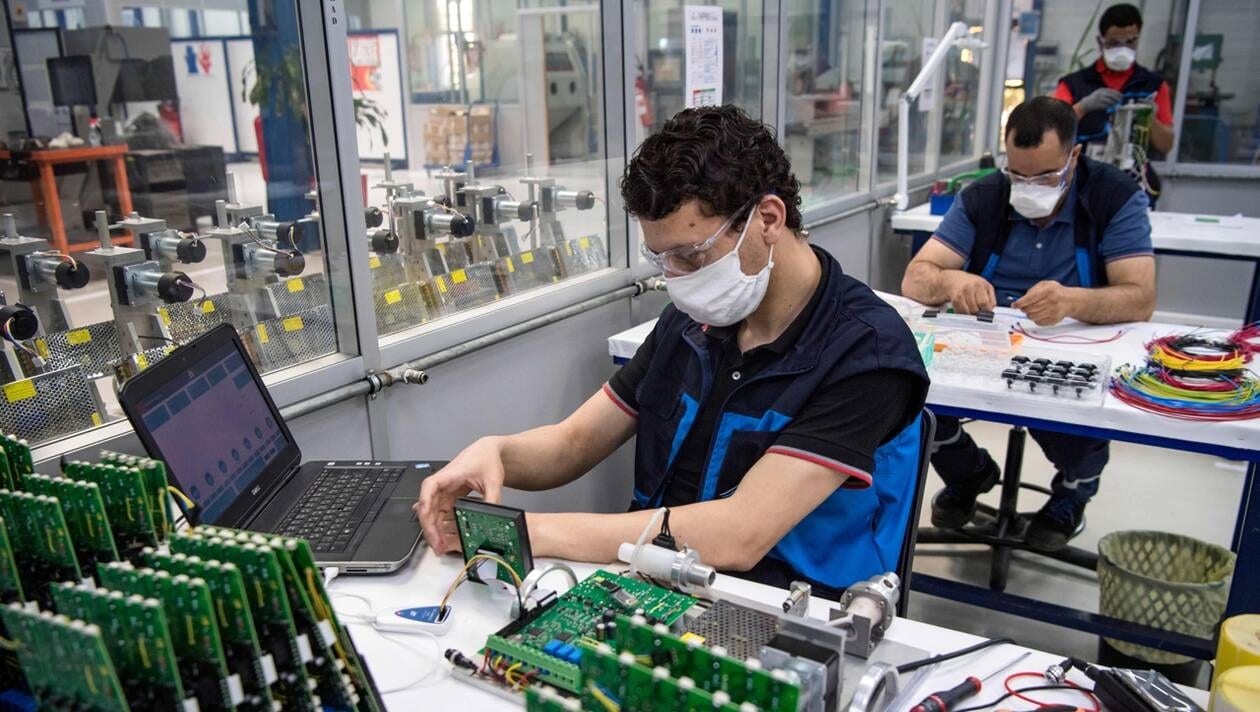
Companies in the manufacturing industry anticipate an increase in their level of production in the first quarter of 2026, indicates the High Commission for Planning (HCP) in its recent note on the quarterly business surveys in the manufacturing, extractive, energy, and environmental industries, as well as in the construction sector.
This development would mainly be attributable, on the one hand, to an increase in activity in the branches of the “Food Industry,” the “Chemical Industry,” and the “Manufacture of Metal Products, except Machinery and Equipment.” On the other hand, it would be due to a decrease in activity in the “Automotive Industry” and the “Manufacture of Other Non‑Metallic Mineral Products.”
Regarding employment expectations, manufacturers overall foresee a slight increase in the number of employees, the same source notes.
As for the extractive industry, companies in this sector expect a decline in their production in the first quarter of this year. This development would mainly be attributable to a decrease in phosphate production. In terms of employment, employers in this sector expect an increase.
Energy production expected for the first quarter of 2026 would experience a decrease attributable to the decline in the “Production and Distribution of Electricity, Gas, Steam and Air Conditioning.” As for employment, it would see a decrease in the workforce during the same quarter.
Increase in production in the fourth quarter of 2025
For the same quarter, companies in the environmental industry anticipate stability in production, particularly in the activities of “Water Collection, Treatment and Distribution,” and stability in the workforce.
The HCP also specifies that in the fourth quarter of 2025, manufacturing industry production would have experienced an increase, resulting from a rise in production in the branches of the “Automotive Industry,” the “Chemical Industry,” the “Manufacture of Other Non‑Metallic Mineral Products,” and “Metallurgy,” and from a decline in production in the branches of the “Food Industry” and the “Manufacture of Electrical Equipment.”
Order books in the sector are considered to be at a normal level by business leaders. As for employment, it would have remained stable. Overall, the capacity utilization rate (CUR) in the manufacturing industry would have stood at 74%.
In the fourth quarter of 2025, 35% of manufacturing companies would have encountered difficulties in the supply of raw materials, mainly those of foreign origin. Raw material inventories during this quarter would have been at a normal level and cash flow would have been considered “difficult” by 18% of business leaders. By branch of activity, this proportion reaches nearly 40% in the “Pharmaceutical Industry.”
Decline in production in the energy industry
As for production in the extractive industry, it would have experienced stability during the same period, resulting from stagnation in phosphate production. The selling prices of products in this sector would have decreased and employment would have remained stable.
Production in the energy industry, for its part, would have recorded a decline, mainly attributable to the decrease in activity in the branch “Production and Distribution of Electricity, Gas, Steam and Air Conditioning.”
The selling prices of the sector’s products would also have decreased. Employment, for its part, would have followed the same trend, recording a decline over the period.
As for production in the environmental industry, it would have remained stable due to stagnation in the activity of “Water Collection, Treatment and Distribution.” Regarding order books in this sector, they would have been at a normal level and employment would have remained stable.
The replacement of part of the equipment and the expansion of activity would have been the main investment expenditures carried out in 2025, according to the majority of business leaders in the manufacturing, extractive, and energy industries.