Kingdom
Industrial Premises: a Promising Niche
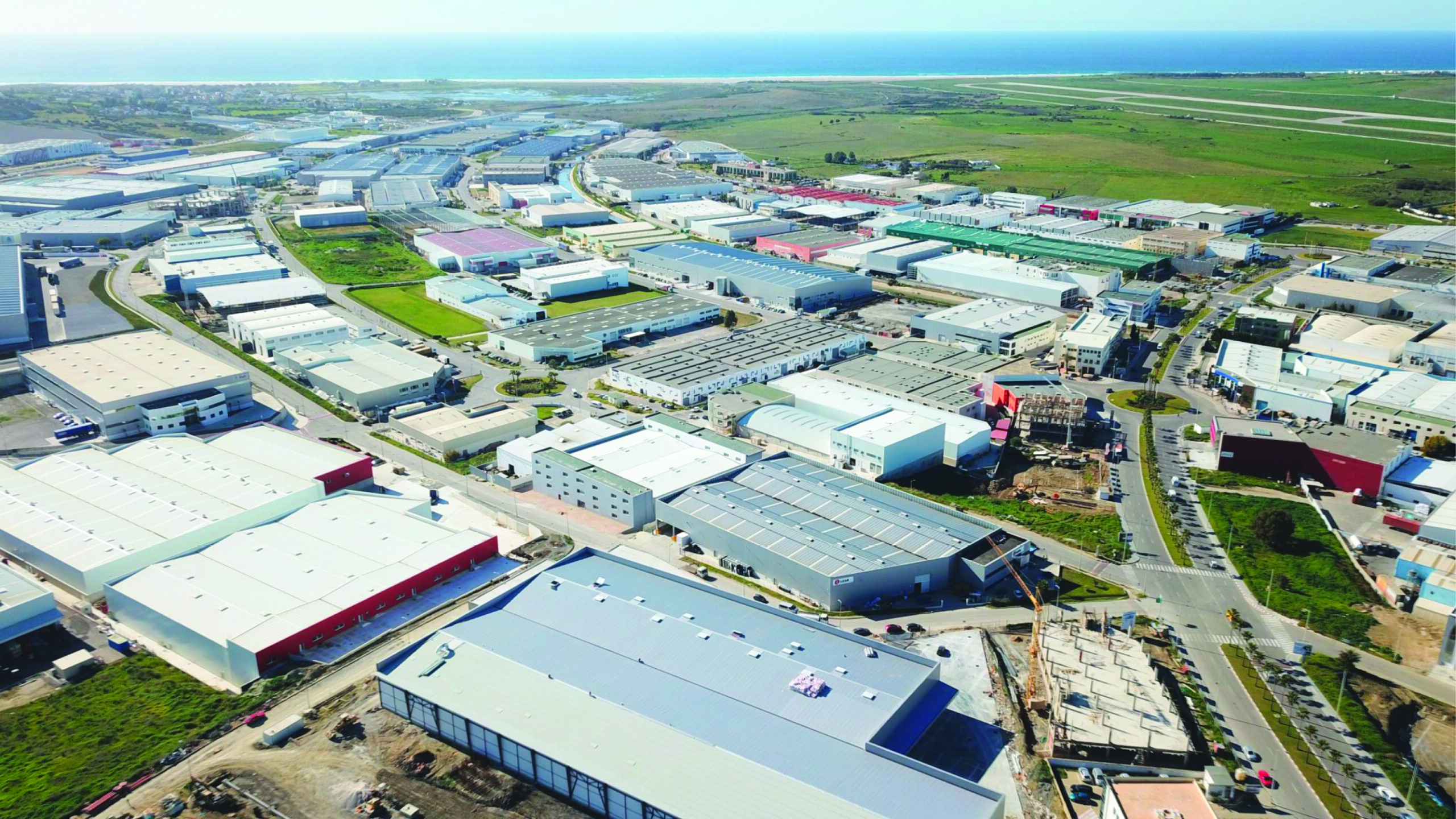
In the view of many professionals, this activity—still regarded as a niche—meets rising demand, driven by industrial expansion and the growth of logistics in Morocco.

Known as a leading indicator of the national economy, the real-estate sector in 2026 displays a cluster of characteristics. Worth noting are the mismatch between supply and demand (with demand higher) and the pressure on prices (high), particularly in the Kingdom’s most sought-after major metropolitan areas.
Clearly, this configuration is not merely an advantage for the real-estate market, which is being boosted to some extent by public investment linked to hosting AFCON 2025 and the approaching 2030 World Cup.
In this context of mixed conditions, professionals view certain niche activities as a growth relay and a lever for future diversification. This is the case for Amine Nokta, Vice President of the National Federation of Real Estate Developers in Morocco (FNPI), who considers industrial real estate a promising niche segment in Morocco.
“We don’t talk enough about industrial real estate in our country. And yet this activity is booming, notably due to political will and the support of His Majesty King Mohammed VI.
The priority given to ‘Made in Morocco’ is driving a very strong new industrial dynamic nationwide, as evidenced by the promotion of industrial zones in the country…,” our source explains, in essence. And he predicts: “Industrial real estate will experience major growth between 2026 and 2030.”
An opportunity for investors
Official figures from the Ministry of Industry and Trade confirm the strong development potential of industrial real estate in Morocco. According to the ministry, developed national industrial land—which continues to expand—covers a total area of around 14,500 hectares, distributed across more than 157 zones.
Better still, this asset base conducive to the expansion of industrial real estate will be strengthened by projects currently being developed covering 2,400 hectares, to which will be added other projects planned over the next five years, estimated at an additional 3,100 hectares.
Beyond these telling figures for the future, it should be noted that industrial real estate is now establishing itself as an investment opportunity in Morocco.
In the view of many experts, this activity—still seen as a niche—meets rising demand, driven by industrial expansion and the growth of logistics.
Another favorable trend: beyond the traditional industrial محور (Tangier, Kenitra, Casablanca, and Settat), there is a real desire on the part of the Ministry of Industry to promote the expansion of dedicated industrial land and industrial zones across the various regions, which are expected to deepen their industrial vocation.
This is within the framework of implementing advanced regionalization. In terms of profitability, it is important to note that returns on industrial assets are very often higher than those of conventional residential or commercial properties.
Moreover, warehouses or factories have the advantage of offering low-volatility and, moreover, predictable profitability, since long-term leases very often include indexation clauses, thus ensuring income that reflects price developments (inflation).
Finally, real-world conditions show that demand for eco-responsible infrastructure (sustainable solutions, renewable energy, recycling, etc.) is among the emerging trends in industrial real estate.