Kingdom
Date Imports: Licensing Requirement to Reorganize the Market
Subjecting date imports to a licensing requirement is part of a market-steering approach, not an effort to close the market. The stated objective is to reconcile security of supply, protection of the national product, and price stability in a context where the sector is gaining momentum.

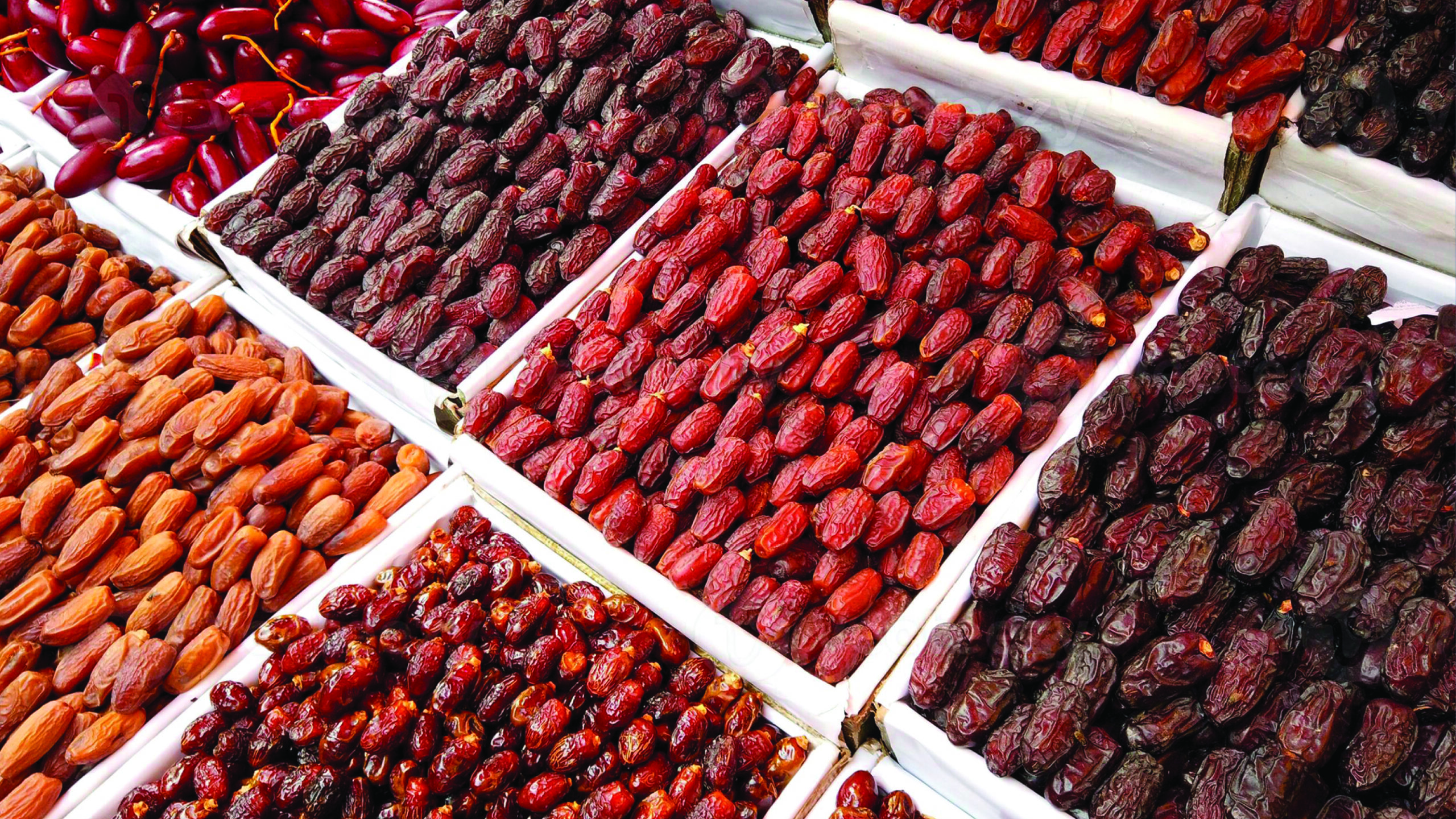
The decision to subject date imports to a prior license in no way constitutes a quantitative restriction, sector professionals insist.
It is above all a measure to organize and regulate the market, introduced following repeated demands from national operators who in recent years have faced a massive influx of imported dates.
According to professionals, the Moroccan date market has been heavily destabilized by annual imports approaching 100,000 tons, mainly under the Agadir Agreement.
These flows come chiefly from Tunisia, Egypt, and the United Arab Emirates, at roughly 30,000 tons each. Imports from Jordan—another country covered by the free-trade agreement—remain marginal, due to a premium, more expensive product.
The world’s second-largest importer of dates after India, Morocco must tighten the screws this year to protect this strategic agricultural sector.
On the ground, all imports made before December 24 are automatically authorized and will be released onto the market, “provided the importer proves their commitment to their suppliers and that the shipment was en route before December 24,” explains Kamel Bennouna, director of Maroc Dattes.
According to the association, 23,000 tons of dates are currently in the ports of Casablanca and Tangier and should be released onto the market to cover the needs of the holy month. By contrast, applications filed after December 24, covering nearly 15,000 tons, will be processed later depending on how the market behaves.
The new measure comes, Bennouna explains, at a key moment: on the eve of Ramadan, a period of high date consumption in Morocco. National demand is estimated at between 35,000 and 40,000 tons during this month.
This requires strict management of supplies, Maroc Dattes continues, in order to avoid imbalances in prices and volumes. The import license will make it possible to better synchronize imported supply with the availability of local product, without creating shortages.
According to figures from the association—which brings together producers, importers, and packers—imports reached about 128,000 tons last year, a third of which, having been unable to be sold, would still be in stock today.
“With quality having deteriorated, several tons will thus be destined for animal feed. It is an unfortunate waste that the new measure will help remedy,” Bennouna emphasizes.
He adds that beyond organizing the market, it is also a mechanism to protect national production, which has seen a significant increase this year of around 55%. According to figures from the Ministry of Agriculture, for the 2025–2026 season it stands at 160,000 tons of dates.
Support for farmers
Worth about 2 billion dirhams, the market comprises 34 recorded varieties, of which four overwhelmingly dominate demand: Majhoul, Boufeggous, Jihel, and Aziza.
The last of these, produced exclusively in the Oriental region, is a niche product. For Bennouna, “regulating imports is essential to preserve the value of these local varieties, support producers’ incomes, and ensure fairer competition.” He is careful to note that the market is characterized by fierce competition from Tunisian dates.
These are very popular—particularly the Defla—with consumers preferring it to Jihel, a local product of the same quality sold at the same price: 30 to 35 dirhams per kilo.
Demand for Egyptian dates, at 15 to 16 dirhams per kilo, is limited to certain social categories. While Jordanian Medjoul remains expensive and uncompetitive (160 to 180 dirhams per kilo), Moroccan Majhoul is increasingly in demand, especially during Ramadan. Its price per kilo ranges between 90 and 130 dirhams depending on size and quality.
This performance, the highest ever recorded in Morocco, is explained by climatic conditions favorable to the development of date palm cultivation, particularly in the Drâa-Tafilalet region, which remains the main production area, contributing 76% nationally, followed by the Souss-Massa and Oriental regions at 11% each.
Beyond improved climatic conditions, the rise in production is also the result of efforts to develop the sector under the Green Morocco Plan, which are continuing under the Generation Green strategy.
The sector is undergoing gradual modernization, even though it still faces climatic, water-related, and phytosanitary challenges. The date palm sector covers nearly 69,000 hectares, or about 1% of the nation’s utilized agricultural area.
In terms of geographic distribution, the date palm is located mainly in Drâa-Tafilalet with a share of 80%, Souss-Massa 13%, Oriental 4%, and Guelmim-Oued Noun 3%. The diversity of supply makes it possible to cover several market segments, from premium products to the most affordable dates.
Beyond the economic and agricultural aspects, socially the sector directly or indirectly provides livelihoods for nearly 2 million Moroccans. It plays an important role in combating rural exodus and helps preserve know-how and cultural heritage linked to oasis life.
Because of its economic and social importance, the sector is part of a renewed momentum, according to the Ministry of Agriculture, in line with the Generation Green strategy.
Thus, in May 2023, a program contract dedicated to its development was signed, allocating a budget envelope for the 2021–2030 period of about 7.47 billion dirhams, including 3.6 billion contributed by the interprofessional association and 3.87 billion by the State.
The main objectives by 2030 include planting 5 million date palms, including 3 million within traditional oases; expanding planted areas outside traditional oases to reach 21,000 hectares, up from 14,000 hectares in 2020; improving national production to reach 300,000 tons; raising the storage rate to 50%, compared with only 8% in 2020; increasing the value-added (processing/valorization) rate to 10%, compared with 0.3% in 2020; and finally developing exports to reach 70,000 tons, compared with 3,600 tons in 2020.
In this way, the program contract for developing the date palm sector aims to secure sustainable agricultural development by strengthening packing and storage capacities, modernizing marketing and distribution channels, and improving the competitiveness of cooperatives.
In practical terms, these actions will translate into improved date quality, stimulation of processing, and diversification of derived products—without forgetting the creation of job opportunities and support for the economic and social development of oasis areas.