International
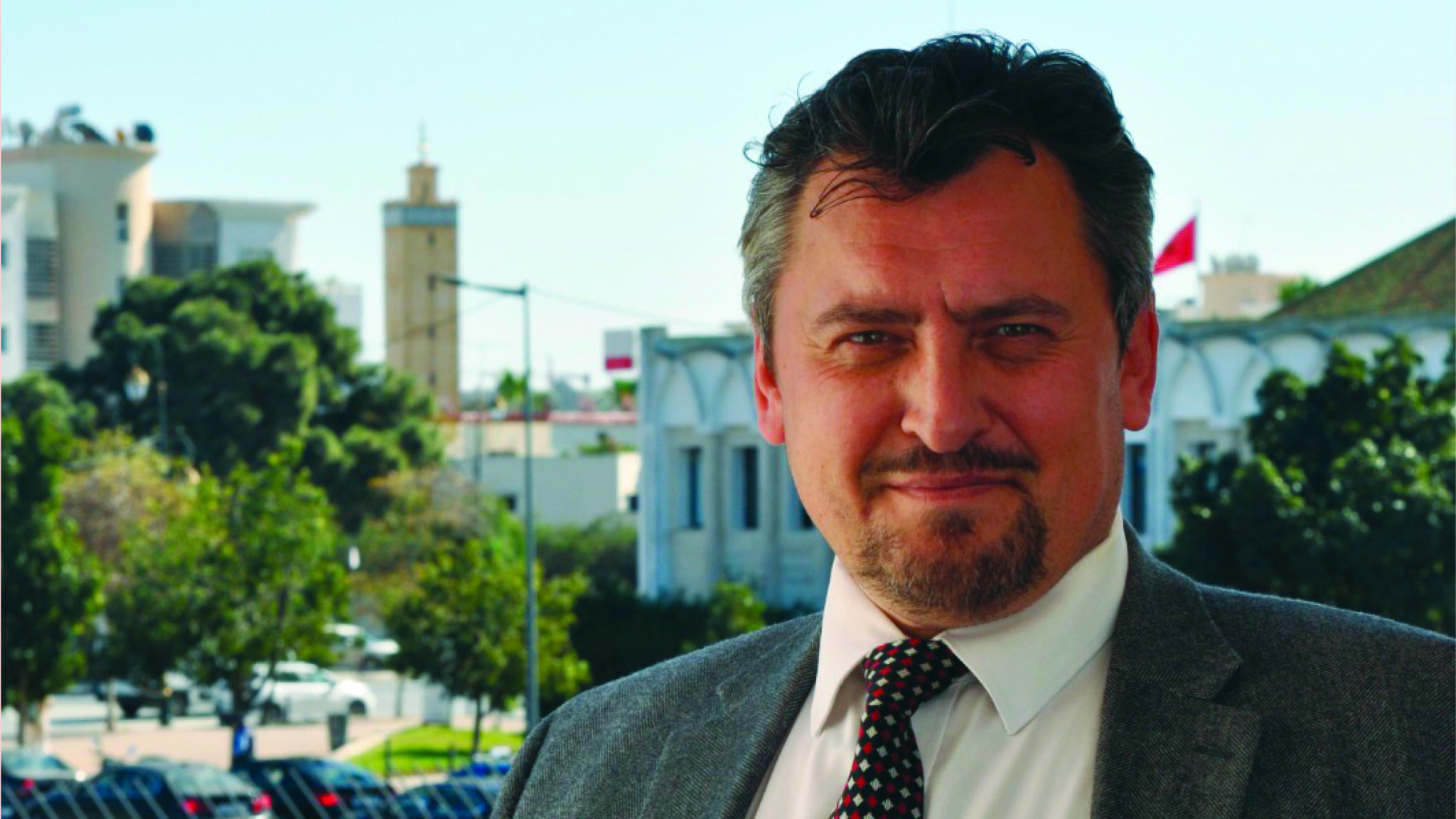
Alexey Andreev: “We seek to promote exports and strengthen cooperation”
Trade, investment, logistics, health, digital… opportunities are multiplying between Morocco and Russia. Alexey Andreev, Trade Representative of the Russian Federation to the Kingdom of Morocco, explains the new axes of cooperation and the most promising sectors.

Economic relations between Morocco and Russia are accelerating. As both countries seek to diversify and deepen their economic ties, the phosphate and fertilizer sector, agri-food, fisheries, pharmaceuticals, digital technology and infrastructure show strong growth potential.
Alexey Andreev, Trade Representative of the Russian Federation to the Kingdom of Morocco, explains the evolution of bilateral exchanges and the most profitable sectors.
What are the flagship products of Moroccan exports to Russia and Russian imports to Morocco today?
The structure of our trade is built on the basis of the objective needs of our two countries: each party supplies the products that meet the partner’s demand. Bilateral exchanges are mainly based on strategic and highly demanded product categories.
On the Russian side, these notably include agricultural raw materials, metals, as well as industrial and chemical products, including urea, which plays an important role for Moroccan agriculture.
Morocco exports to Russia high-quality fruits, berries and seafood, products that have traditionally enjoyed sustained demand on the Russian market. It is important to emphasize that our partnership is based on durable mutual interests and pragmatic cooperation.
On our side, we seek not only to promote exports, but also to strengthen deeper cooperation. Russian companies are already present in the pharmaceutical field, notably through the supply of insulin, anticancer drugs and vaccines.
At the same time, Russian solutions in the field of cybersecurity are also being deployed in Morocco. We are also working to diversify the structure of trade exchanges, in particular through the development of “Halal” certification. The potential for cooperation remains considerable, and our common objective is to enrich this partnership with new joint projects, including in the industrial sector.
Is Morocco still considered one of Russia’s top trading partners in Africa?
The Kingdom of Morocco has traditionally been among Russia’s five main trading partners in Africa, and Russian companies’ interest in the Moroccan market is showing notable growth.
This dynamic is reflected both in trade statistics and in the increased number of business missions.
Russian companies are sending more and more delegations to Morocco, participating in trade fairs and actively exploring cooperation opportunities.
This development is explained by the search for new development niches, adaptation to the new geography of Russian exports, and companies’ desire to sustainably strengthen their presence in the region.
Of course, each visit does not automatically result in a contract. However, a clear trend is emerging: Russian companies are actively developing their economic contacts with Morocco.
It is also telling that, according to the Russian press, the number of business trips to the Kingdom by employees of Russian companies has increased significantly in recent years. Direct flights linking Casablanca to Moscow and Saint Petersburg also play an important role, facilitating business exchanges and making the establishment of new partnerships faster and more efficient.
Morocco is also attracting growing tourist interest from Russian citizens. According to some estimates, the Kingdom is on track to become one of the main African destinations for Russian travelers.
Six months after the signing of the new cooperation agreement on maritime fishing, on October 17, 2025, what assessment do you make of its implementation? What are the first concrete results for Russian fleets and for Morocco’s fisheries sector?
The Kingdom of Morocco holds a leading position in Africa in the maritime fishing sector. Cooperation between our two countries in this area dates back to 1978.
Russian vessels operate in Moroccan waters and regularly use the Kingdom’s ports for transshipment of catches as well as for maintenance and repair operations.
Within the framework of the 8th session of the Russia-Morocco Intergovernmental Joint Commission on Economic, Scientific and Technical Cooperation, a new cooperation agreement in the field of maritime fishing was indeed signed.
The document was signed, in the presence of the Deputy Prime Minister of the Russian Federation, Dmitry Patrouchev, by the director of the Russian Federal Agency for Fisheries, Ilia Chestakov, and the Minister of Foreign Affairs, African Cooperation and Moroccan Expatriates, Nasser Bourita.
This agreement sets the main parameters of Russian vessels’ fishing activities and consolidates the legal framework for bilateral cooperation. It should allow improving the efficiency of Russian fishing operations in the Atlantic zone of the Kingdom of Morocco.
The text also provides for continued cooperation in the fields of fisheries research, the development of fishing and seafood processing technologies, and the training of specialists in maritime trades.
In practical terms, the first results for the Russian fleet translate notably into progressively easier access to certain fishing areas and into reinforced scientific and technical cooperation, particularly in the areas of stock assessment and sustainable resource management.
This contributes to making exploitation conditions more stable and predictable. For Morocco’s fisheries sector, the first effects appear through increased investment, technology transfers and a rise in the added value of products. It is also worth underlining the development of joint projects as well as specialist training initiatives, which contribute to the modernization of the sector.
How do the new agreements on international road transport and the amendment to the air services agreement, signed in early April 2026, concretely facilitate exchanges?
You are right: Russia and Morocco signed several important transport agreements in early April 2026.
The documents were signed by the Minister of Transport of the Russian Federation, Andrei Nikitin, and the Moroccan Minister of Transport and Logistics, Abdessamad Kayouh.
The intergovernmental agreement on international road transport establishes a solid framework for the development of freight and passenger transport between our two countries. One of the main objectives is to simplify authorization procedures, harmonize regulatory requirements and reduce administrative barriers.
The protocol amending the intergovernmental agreement on air services updates provisions related to dispute resolution in accordance with the model developed by the International Civil Aviation Organization (ICAO).
This document offers greater flexibility to airlines, notably regarding flight frequency and route organization, thus contributing to better connectivity between our countries.
In the long term, we expect an increase in transport flows between Russia and Morocco, a reduction in transaction costs and an intensification of economic exchanges. These developments should have a positive impact on business relations and create more favorable conditions for the development of tourism and investment.
Furthermore, we also see significant potential for the development of maritime links between Russia and Morocco. Work is currently underway on a draft cooperation agreement in the field of maritime transport.
We are also ready to develop cooperation in the rail sector. Moroccan partners have been invited to join the “Russian-African University Transport Network” project, which builds on initiatives from the second Russia-Africa Summit aimed at creating a shared educational space between Russia and African countries.
What is the status of discussions on the intergovernmental agreement on the promotion and protection of investments between Russia and Morocco?
Russian companies are actively investing in the African economy. To date, six intergovernmental agreements on investment protection have been concluded between Russia and countries on the continent.
The Russian and Moroccan parties have indeed stepped up their work on the draft bilateral agreement concerning the reciprocal encouragement and protection of investments, in accordance with new trends and current standards of international investment law. The two parties have agreed on a schedule of expert consultations for the current year.
Within this framework, consultations are conducted based on a consolidated version of the draft agreement, while mutually acceptable approaches regarding the scope and content of the future document are being developed.
Which priority sectors show the most interest from Russian companies to invest in Morocco?
Russian companies show sustained interest in projects in Morocco across several traditional and emerging sectors. Among the main areas is agriculture and agro-industry, where a positive dynamic of trade exchanges has already been established and where significant development potential remains, notably in the supply of cereals, animal feed and fertilizers.
Promising prospects also exist in agricultural technologies, notably in seeds, crop protection products, as well as digital solutions applied to agriculture.
The maritime fishing sector also plays an important role in bilateral cooperation. This cooperation is structured and sustainable and today relies on a renewed legal basis.
At the same time, interest from Russian companies in projects in the fields of health and the pharmaceutical industry continues to grow. Given the rapid development of the Moroccan market and its export potential within the African Continental Free Trade Area (AfCFTA), new opportunities appear in industrial cooperation, notably in the production of medicines and medical devices.
Significant interest is also observed in the energy sector, notably in projects related to the development of reception, regasification and transport infrastructure for liquefied natural gas (LNG), an area where Russian companies have advanced technological expertise and are ready to participate in the implementation of major infrastructure projects.
Morocco is currently undertaking major programs to modernize transport infrastructure, develop wind power capacity and expand the rail network.
In this context, sectors traditionally presenting export potential from Russia to the Moroccan market include metallurgy, the chemical industry including petrochemicals, notably ammonia and polyethylene, as well as construction-related sectors, particularly wood-based materials.
In addition, attention to the digital transformation of the Moroccan economy is progressing notably.
Major Russian technology companies are studying possibilities to participate in digitization projects, notably in the development of services, platforms and digital solutions intended for different sectors of the economy.
In general, Russia is ready to develop mutually beneficial cooperation with Morocco across a wide range of fields. We closely monitor the evolution of the Kingdom’s economy, whose positive and sustained dynamics we observe, and we have a good understanding of national priorities as well as of the major structuring projects currently under way.
How does the Russian Trade Representation concretely support Russian companies wishing to establish themselves in Morocco?
The Russian Trade Representation provides comprehensive support to Russian companies wishing to enter the Moroccan market at all stages of project implementation.
Its activity aims to develop external commercial relations, expand and diversify Russian exports and create favorable conditions for the promotion of competitive Russian products.
Special attention is paid to the involvement of small and medium-sized enterprises as well as to the development of industrial cooperation, including through the integration of Russian companies into international value chains.
In practice, this support includes advisory, organizational and informational assistance for business initiatives, help in finding and vetting potential partners, as well as support on certain legal aspects related to economic activity in Morocco.
The Trade Representation also facilitates company participation in trade fairs and business missions, provides advisory support within the framework of public and private tenders and prepares analyses on market conditions, demand and the most promising export niches.
Furthermore, when necessary, assistance can be provided in the amicable resolution of commercial disputes, thereby helping to reduce the risks associated with entry into a new market.