Kingdom
Ahmed Znibar: “Building an integrated ecosystem, from research to recycling”
With a local integration rate of between 60% and 70%, OCP Green Water now aims to structure a fully-fledged Moroccan desalination industrial sector, covering the entire value chain. Its Managing Director outlines its key features in detail.

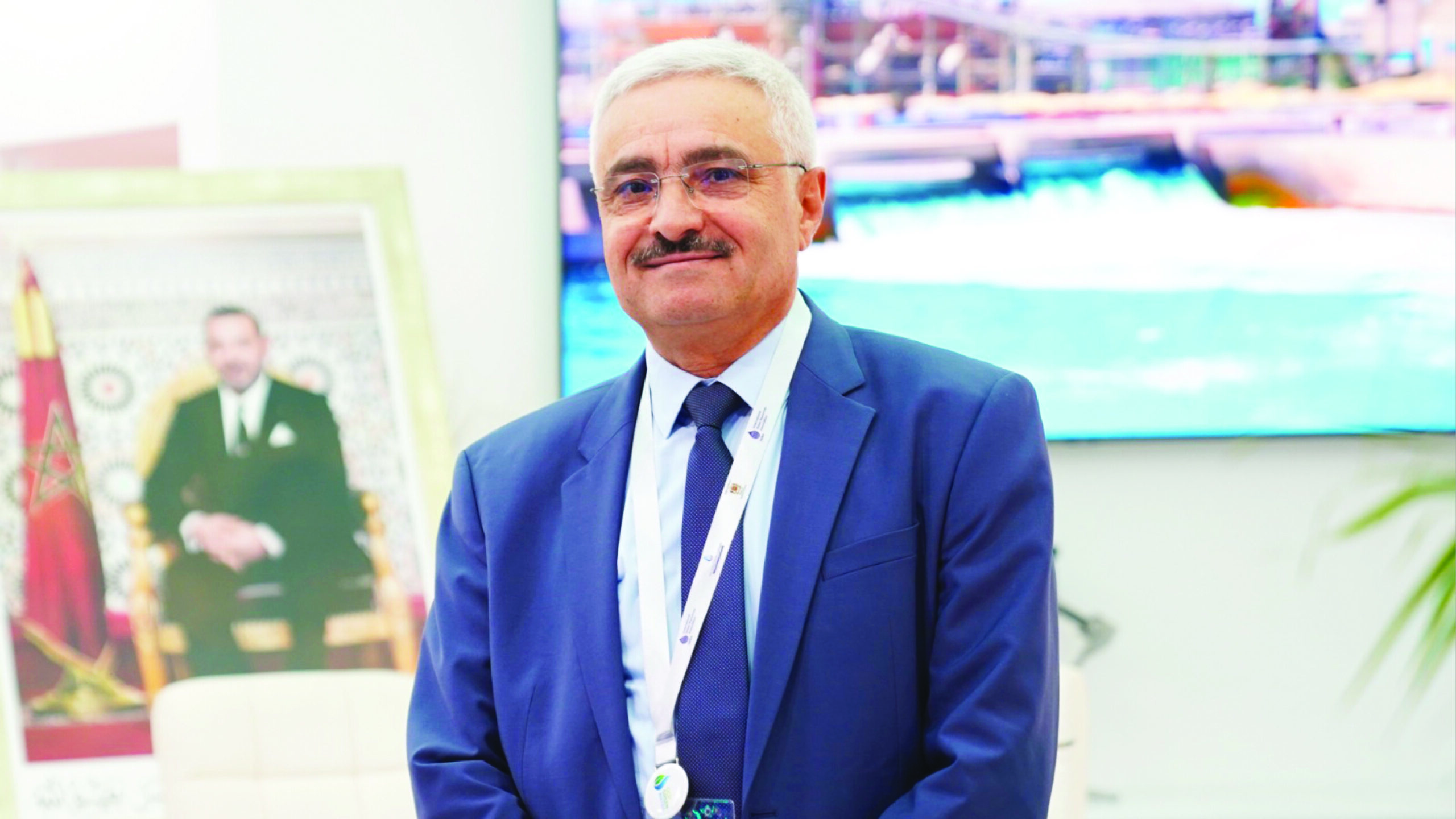
Senior in industrial management, Ahmed Znibar, who has headed OCP Green Water since November 2022, brings over 30 years of experience within the OCP Group. He has led mining operations and major engineering projects across mining, chemicals, infrastructure, and modernisation, incorporating advanced technologies.
He has also spearheaded initiatives in desalination and water reuse, and now drives the Group’s ambition in sustainable water management, with concrete solutions to strengthen water resilience.
You report a local integration rate of 60–70%. What does this concretely cover?
OCP Green Water is deploying a strategy aimed at structuring an integrated industrial ecosystem around desalination technologies. Our approach is based on identifying and leveraging strategic opportunities, along with establishing structuring partnerships to stimulate innovation, optimise operations, and strengthen sustainability, while contributing to local economic development.
Today, between 60% and 70% of projects are carried out locally, from the design phase through to construction, thanks to the mobilisation of a network of Moroccan companies. This approach relies on structuring partnerships that promote innovation, operational performance, and sustainability. However, certain highly technology-intensive equipment is still imported due to a lack of local production capacity.
Which ones?
These include reverse osmosis membranes, high-pressure pumps, and certain specialised equipment used in filtration trains. These components embody high technological value and are currently produced by a limited number of players worldwide.
Have you identified opportunities for local manufacturing of these components?
Several segments present development potential in Morocco, both upstream and downstream of the value chain, covering equipment, consumables, and chemical products used in desalination processes.
This primarily concerns the manufacturing of pressure vessels, skids, cartridge filters, chemical products such as antiscalants, as well as certain piping and assembly elements. These technological building blocks represent key levers to gradually structure a national industrial base, with eventual expansion into engineering, operations, and maintenance.
Membranes currently remain at the technological core of desalination. Is there real potential to develop production in Morocco over time?
In collaboration with UM6P, we have launched a structured research programme focused on membrane technologies and process optimisation. The work focuses on improving performance, reducing energy consumption, limiting fouling, and developing end-of-life valorisation and recycling solutions within a circular economy framework.
Several projects are also exploring the development of filtration solutions based on ceramic membranes, hybrid pre-treatment processes, as well as the contribution of nanomaterials. At the same time, we are developing partnerships with international industrial players, research centres, and national companies to promote technology transfer and, ultimately, partial local production.
The ambition is to build a comprehensive ecosystem covering research, materials, engineering, assembly, maintenance, and recycling, thereby strengthening Morocco’s technological sovereignty in the field of non-conventional water resources.
What share do they represent in costs?
Membranes generally account for between 15% and 25% of equipment costs and can reach up to 30% of operating costs due to their replacement and maintenance requirements.
Their strategic nature makes them a major lever for strengthening local industrial integration, reducing logistical costs, and securing supply chains.
Beyond UM6P, OCP also collaborates with InnovX in R&D. In which specific niches?
In desalination, plant performance largely depends on seawater pre-treatment, a critical stage for ensuring the efficiency, reliability, and durability of reverse osmosis systems, particularly in coastal environments characterised by high variability in water quality.
In this context, we mobilise UM6P’s research capacities, as well as its international platforms in Paris and Canada, and work with InnovX within a framework of industrial co-development. The work focuses, in particular, on technological and industrial solutions adapted to the Moroccan context.
We also collaborate with startups to test innovative solutions under real operating conditions, especially in energy optimisation, new membrane materials, process digitalisation, and by-product valorisation.
Can ongoing desalination programmes structure an industrial sector?
The large-scale deployment of these projects constitutes a structuring lever for the emergence of a local industrial sector. It generates stable and sustained demand, an essential condition for triggering industrial investment and encouraging the establishment of production capacity.
These projects create a spillover effect across the entire value chain, facilitating the structuring of industrial partnerships, the development of local skills, and the scaling up of engineering and operational capabilities.
They also contribute to creating an environment conducive to innovation and the progressive integration of local content. Beyond water production, desalination thus becomes a driver of industrial transformation, technological sovereignty, and economic resilience.
Are you observing interest from international groups in establishing operations in Morocco?
We are seeing growing interest from international players, whether in production, assembly, or technology provision. Morocco is perceived as a high-potential market, driven by major projects in desalination, wastewater reuse, and hydraulic infrastructure.
These projects stand out for their use of cutting-edge technologies and particularly competitive delivery timelines.