Business
Agadir: A Hotel Supply That Needs Strengthening
The city had a good summer season, with occupancy rates approaching 80% in August. But professionals are sounding the alarm: without new supply, the destination is reaching its ceiling.

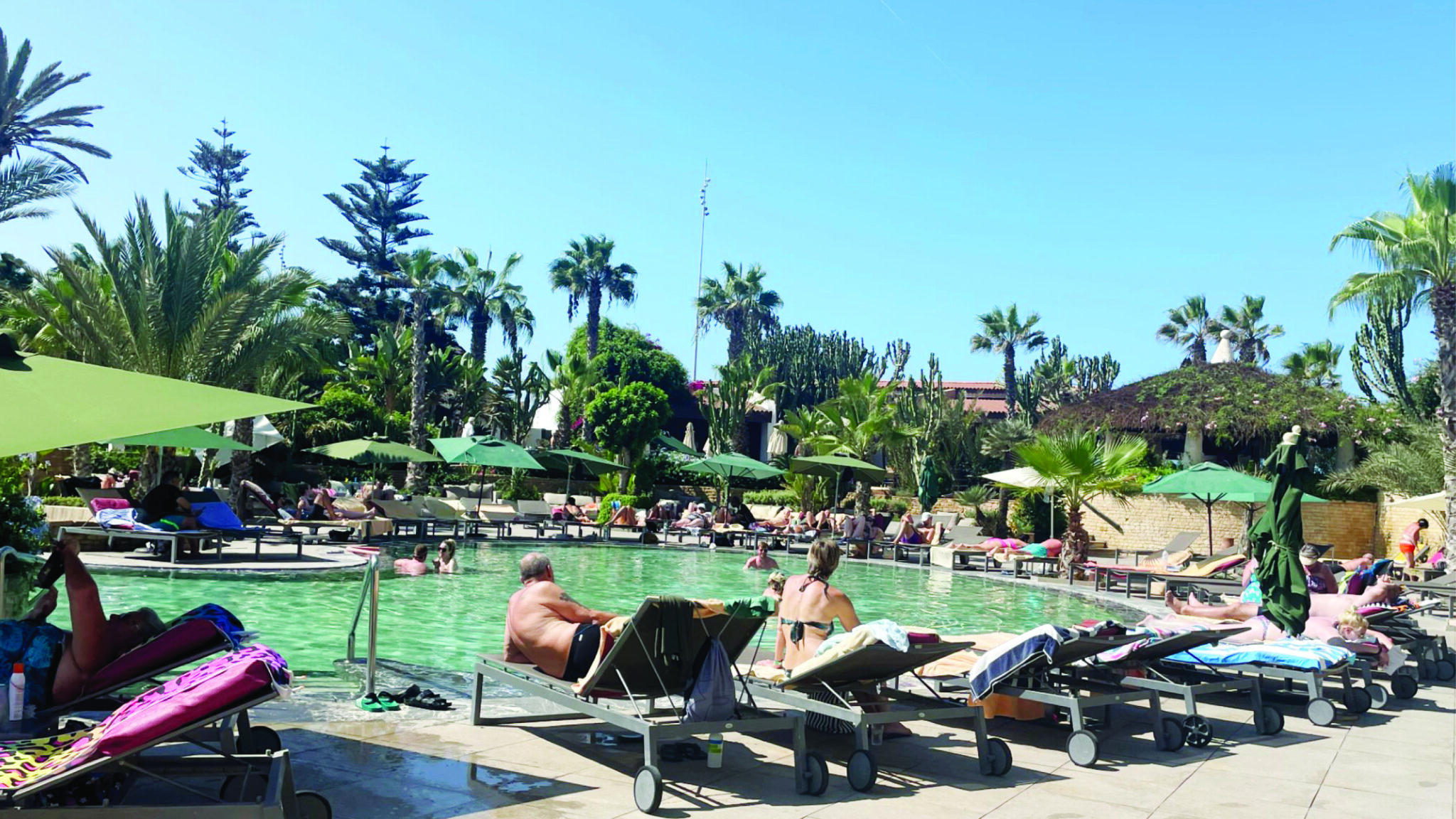
Agadir and Taghazout Bay had a great summer. The destination lived up to its promises, maintained its trajectory and confirmed its place among the leading tourist destinations in the Kingdom.
September is maintaining the same momentum. And on the Taghazout Bay side, hoteliers, supported by already strong demand, are expecting an excellent month of October.
The tourism machine is running in the region. But in Agadir itself, it is tending to reach its limits. The figures for August 2026 reflect this reality precisely.
Overall, arrivals increased by 2.4% compared with August 2025, while overnight stays rose by 2.64%. The average occupancy rate in classified hotels crossed the symbolic 80% mark, reaching 80.34%.
Over the first eight months of the year, the trend is even more pronounced: arrivals up 4.59%, overnight stays up 6.71%, and an occupancy rate of 68.67%, compared with 65.93% in 2025. Agadir is performing well. Very well, even.
The 5-star segment continues to drive growth. In August, arrivals in this category jumped by 7.86% and overnight stays by 10.89%. Over the first eight months, the increase was spectacular: +23.93% in arrivals and +26.82% in overnight stays. The destination’s repositioning toward the high-end segment is producing results. Taghazout Bay, with its high-end establishments, embodies this growing momentum.
Market diversification is continuing. Poland is confirming its growing importance, with arrivals up 43.3% over the first eight months. The Netherlands recorded +53.27%, Portugal +14.33%, and Canada +23.4%.
These markets are enriching a mix historically concentrated on the United Kingdom and France. The British market remains the leading foreign market, with 246,431 cumulative arrivals and an increase in the average length of stay to 5.80 nights. France, on the other hand, declined by 3.77% cumulatively and by 12.23% in August. A signal to monitor.
The domestic market increased by 4.54% over the first eight months, accounting for more than 51% of arrivals in August. Moroccan customers with high purchasing power remain a structural pillar of the summer season.
But this is where the fundamental question arises. Salah Eddine Benhamane, president of the Agadir Souss-Massa Regional Tourism Council (CRT), puts it bluntly: Agadir is reaching saturation.
With an occupancy rate approaching 80% during the high season and a capacity of 31,827 beds, the room to absorb additional demand without new supply is limited. Airlines are continuously strengthening their service to Agadir (new routes, new frequencies, new markets).
This growing air connectivity is a valuable asset that can only produce its full effect if accommodation capacity keeps pace.
Two projects are essential. The first: investing in new hotel supply.
Not to grow at all costs, but to avoid losing demand that the destination is no longer able to absorb. The second concerns the 4,500 outdated beds still present in the destination.
These deteriorated establishments weigh on the overall image and occupy valuable land. Bringing them onto the market at a fair price, renovating them or converting them can no longer wait.
The status quo is no longer an option for a destination that now plays in the premium league. Agadir has successfully completed its season. The next step is to give itself the means to do better. And that requires investment, not just good figures.