Influences
Festivals: The North Shows Its Cinema
Between Tangier and Tetouan, northern Morocco presents itself on dual screens: two film festivals, two waves of emotion, and the same passion for the image. From the National Film Festival to the Mediterranean Cinema Festival, the Kingdom unfolds its reels of exile, memory, and freedom, affirming more than ever that cinema is a gentle, clear-eyed, and necessary weapon.

Events focused on the 7th art bloom like primroses in spring. After the joyful prelude that was the National Film Festival, which closed its Tangier curtains on October 25th amid flashes and applause, the Mediterranean Cinema Festival follows, well worth the visit.
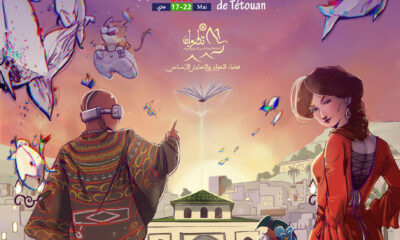
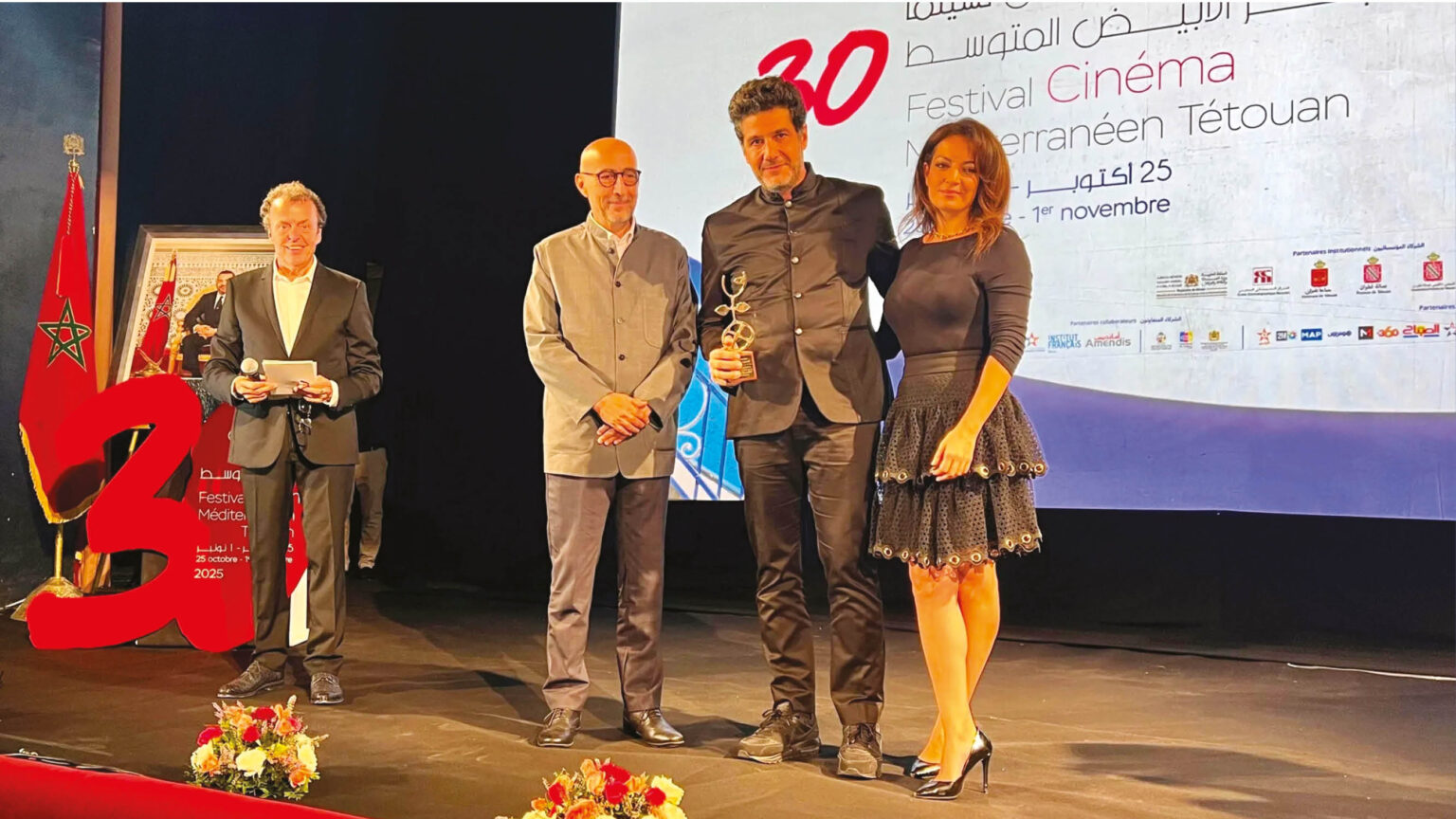
Tetouan, the white pearl of the North, adorns itself with reels and projectors for its 30th edition, held until November 1st, as if to remind us that cinema is not just cosmopolitan entertainment: it is a tide that floods borders, winds, and silences.
Forty years after its birth in 1985, in a modest cine-club of the Association of Friends of Cinema that dared to defy the silent screens of post-colonial Morocco, this festival — under the theme “Three decades of creativity and dialogue” — stands firm like a beacon in the storm.
“It is the consecration of forty years of passion for the 7th art, a symbol of adventure made of perseverance, pleasure, and creative stubbornness,” highlights Ahmed El Housni, president of the festival foundation. Wars, crises, pandemics: nothing has defeated it. Because here, cinema is not a luxury. It is a weapon.
The Tangier Festival, meanwhile, showed boldness and imagination. Forget the shiny red carpets of Cannes: here, Moroccan cinema is shaken up with audacity.
The 25th edition of the National Film Festival, presided over by juries sharp as blades, attracted a record attendance (nearly 2,500 accredited and 6,500 spectators) for a vibrant panorama of national vitality, focused on themes of exile, collective memory, social fractures, and human resilience.
It was not just a showcase but an incubator for a new generation of committed filmmakers, where films, often intimate and rooted in everyday Moroccan life, questioned the invisible and identity mirages with poetic urgency.
Sharp as blades, the juries awarded Saïd Hamich Benlarbi’s La Mer au loin the Grand Prize for Fiction Feature Films, a poetic shockwave on exile and Atlantic mirages that left the audience breathless.
Refreshed with a Best Direction Prize and awards for supporting roles (Rym Foglia and Omar Boularkirba), this portrait of a young illegal Moroccan in Marseille also won the Critics’ Prize, praised for its stripped-down direction that “sweeps away certainties like an Atlantic tidal wave,” Benlarbi said.
Not to be outdone, Daoud Aoulad-Syad’s Le Lac bleu won the Production Prize, the Screenplay Prize (co-written with Abdelmjid Seddati and El Houcine Chani), and Original Music Prize (Mourad Zdaidat), an aquatic fable about the depths of collective memory and an inner quest of a blind child in the desert that strikes deeply — a special mention honored the young actor Youssef Kadir’s performance.
The Special Jury Prize, shared between Mauvais Temps by El Ghazouani Madane (also winning Best First Work and Best Male Role for Abdenbi Beniwi) and Everybody Loves Touda by Nabil Ayouch (with Best Female Role for Nisrine Erradi, plus prizes for cinematography and sound), spotlighted stories of resistance and social fractures, from the cannabis culture in Ketama to regional paradoxes.
In short films, L’Mina by Randa Maaroufi won the Grand Prize with a documentary rage screaming about social urgency over mining injustices in Jerada: “Cinema holds up a mirror to the invisible to ward off oblivion,” said the director, voice trembling at the awards ceremony, while Miroir à vendre by Hicham Amal and Chikha-Queen by Ayoub Layoussifi & Zahoua Raji completed a sharp podium.
In documentaries, Fiers, suspendus et obstinés by Mohamed Akram Nemmassi triumphed with the Grand Prize, a visceral plea for queer identities in Morocco that boldly confronts taboos, closely followed by The Departure by Sidi Mohamed Fadel El Joummani (Creation Prize).
And what about film schools? The Tangier team (by Achraf El Afia) won gold, proof the new generation is already eager on the scene, followed by Le Dernier silence by Mahmoud El Asri.
An emotional tribute closed the celebrations, paying tribute to the actress Fatima Attif, icon of Moroccan theater and cinema, for her prolific career from Volubilis to Mass Dolce, a career dedicated “to those who believed in my talent.”
Tangier, in short, not only projected images: it lit fires, confirming Moroccan cinema’s strong standing: rich, assertive, and ready to conquer screens worldwide.
A “Strait” of Reels
Leaving the winds of Tangier, we head for the fresh airs of Tetouan. The 30th Mediterranean Cinema Festival, in full swing in the whitewashed alleys, exhales a scent of olive trees and sea salt.
The grand opening with Il ladro di bambini by Gianni Amelio (Italy, 1992), a nod to the festival’s roots — this Sicilian child thief already questions exile and lost innocence — set the tone: a pact of friendship and sharing, as reminded by Noureddine Affaya, professor and “(friend) of the festival.”
Over 40 films from 15 Mediterranean countries flood the screens, but it is the official competition that makes the seats tremble: ten features and documentaries weaving threads of identity, exile, and collective anger.
Among the jewels of the official competition, Vermiglio ou La Mariée des montagnes by Maura Delpero (Italy, France, Belgium), an Alpine tale on migration’s unsaid words, squeezes the throat like a vice. “Mediterranean cinema unites through fracture: a sea that separates as much as it connects,” the Italian director notes.
Daoud Aoulad-Syad doubles the stakes with Le Lac bleu (already awarded in Tangier), competing in the feature film competition, and La Mosquée, shown in a special section of “Emblematic Films from Previous Editions” — or “heritage films revisited” marking the 30th anniversary— two dives into the murky waters of faith and Moroccan heritage, one fresh and contemporary, the other timeless and ironic about filmmaking in a Moroccan village.
“Filming is digging for nomadic roots,” he says with a sly smile. Add to that Bande sonore d’un coup d’État by Johan Grimonprez, a sound documentary dissecting failed revolutions with sharp Belgian irony, in official competition…
Not forgetting, in the same section bathed in revisited classics, 3000 Nuits by Mai Masri, a Lebanese cry about imprisonment of bodies and souls, or La Puerta abierta by Marina Sereti, which opens wide the doors to Greek silences.
For favorites, Everybody Loves Touda by Nabil Ayouch is an anthem for women vibrating to the rhythm of the aïta.
Tetouan does not just show films: it dialogues, confronts, and lets the films steep like overly strong mint tea. Tributes? Shocking shots that scratch the soul. Nabil Ayouch, Moroccan cinema’s boss, applauded for his impactful filmography.
“Creation is an individual act, but cinema remains a collective work. To love your country is to criticize it while seeking the beautiful,” he stresses.
No respite: Eyad Nassar, Jordanian actor, awarded for roles that break through shields — from Selat Rahem (best actor prize at the Arab Drama Critics Awards 2025) to his voiceovers in Assassin’s Creed: “I know only one language, that of acting. I want to remain always an actor,” he whispers, reserved, almost shy under the flashes.
Tributes extend to Aïda Folch, the Catalan actress who lights up Iberian screens since Le Sortilège de Shanghai, embodying this Mediterranean that refuses oblivion — familiar faces, gestures linking Tarragona to Tetouan.
But the festival is not just about stars. There are round tables shaking things up, like the one on “Mediterranean Women Directors: A New Wave?” moderated by Mohamed Oulad Alla and gathering the French Laura Piani, our Zakia Tahiri, Tunisian Hind Meddeb, and Italian Caterina Carone.
No theoretical blah-blah: bursts of humor and fury. “They call me a Mediterranean director even though I live in Paris and shot a film about England!” Piani jokes. Meddeb, a nomad of shores, claims to be “a woman between two shores, two languages, and three countries. Cinema is listening, a refusal of ready-made ideas and injustices. [My] films are born from encounters; they look for promises of change in revolutions.” Carone, moved by Morocco as a return to roots: “To omit pioneering women of cinema is to erase a history of resistance.”
The debate bursts forth: Tahiri on Number One, her fiery critique of Moroccan taboos (“A painful film, to speak to women—not to turn them against men”); Meddeb on youth dreaming of dignity (“Far from clichés, poetry is a form of resistance”); Piani defending romantic comedy as an act of freedom (“A film that makes you smile as you leave the theater”).
“Women creators all talk about freedom. I want free, joyful, and conscious cinema,” Carone concludes. A wave, yes, but not candy pink. A tsunami.
And the kids in all this? The festival does not forget: “Hello World,” a youth program by Anne-Lise Koehler and Eric Serre, a stubborn tradition to open the doors of Spanish and train a generation in images rather than obedience.
“To establish a visual culture long marginalized in our Arab world, we start with children,” an organizer says. Far from TikTok flat screens, these screenings forge critical views, “Hello World” without hate or rejection.
With workshops for the new generation shaping tomorrow’s reels—ten budding projects watched by a jury like Layaly Badr, a Palestinian screenwriter shaped in Berlin, and Big Apple, defending cinema “sincere, authentic, effortless, and faithful to its artistic language”: “Art refuses silence. The freer the human, the more he can touch others,” she says, emphasizing that “culture is the first tool of freedom for humans” and advising young people: “What matters is confidence in yourself, in what you submit. The jury is not a monster; it’s a learning opportunity.” This festival is a crossroads where northern Morocco dreams of being a cultural beacon, radiating far beyond the shores.
As Fatima Ifriqi, a sharp pen, says: festivals are “a window on human stories, a space of aesthetic pleasure that brings art closer to citizens, encourages experimentation. Not just red carpets: a cultural impact that etches into the soul.”
“Good or Bad Film”
In 2025, these two festivals in the North join like the shores of a connected strait, weaving a fluid dialogue between national intimacy and the Mediterranean horizon.
In Tangier, the 25th edition celebrates emerging Moroccan creativity through themes of inner exile, social resilience, and fractured memory — stories rooted in the desert or mines, where cinema becomes a tool to ward off collective forgetfulness.
In Tetouan, the 30th edition expands this vision under the prism “Three decades of creativity and dialogue,” turning these personal quests into bridges: intergenerational transmission, diversity of female perspectives, and geopolitical engagement making the Mediterranean a space of meeting rather than fracture.
The visceral link? Le Lac bleu by Daoud Aoulad-Syad, triumphant in Tangier before diving into the murky waters of Tetouan, and Everybody Loves Touda by Nabil Ayouch, awarded in the North before being ovationed in tribute there — nomadic reels embodying shared vitality, linking Tangier’s new generation to Mediterranean nomads in a coherent cultural wave where Morocco dreams not of isolation but as a beacon connecting the shores of identity and freedom.
And to finish, one phrase caught our ear: the overused label “good or bad film.”
In the whirlwind of awards and heated debates, you hear it everywhere: hasty judgments, sticky labels that stifle the raw magic of the screen. So, we decided to take this binary as a fresh breeze.
The North, with its cascading festivals, reminds us that cinema is neither good nor bad — it is necessary, provocative, essential. It overturns us, questions us, makes us human.
And so what if that disturbs: in Tangier as in Tetouan, the 7th art does its job with panache. See you next year, reel in hand, for the continuation of this northern odyssey.