Kingdom
1 May: The social dimension, a central priority of government public policies
For this purpose, the government has allocated “an unprecedented cumulative budget, approaching 50 billion dirhams,” the Minister Younes Sekkouri stated in a speech delivered on the occasion of Labour Day.

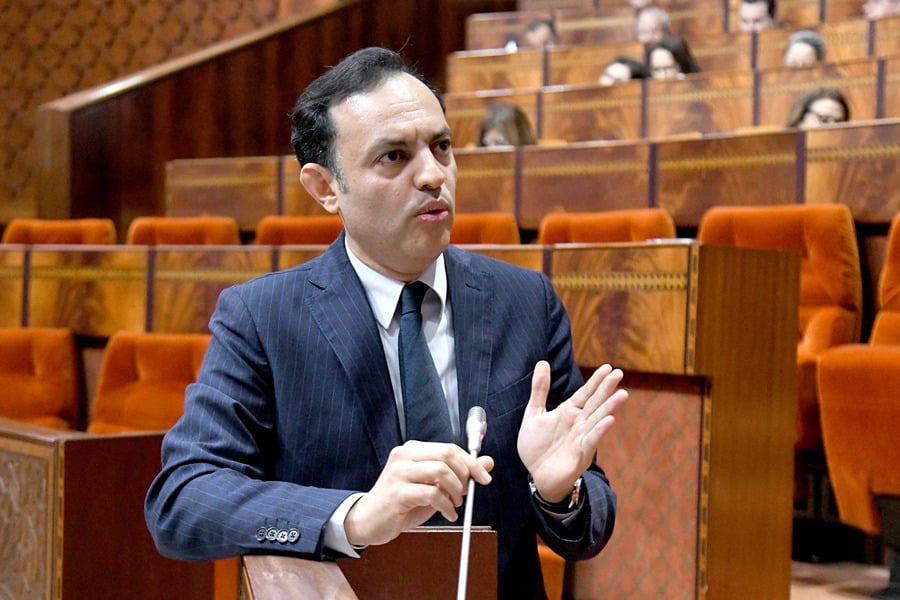
The Minister of Economic Inclusion, Small Enterprise, Employment and Skills, Younes Sekkouri, stated on Thursday that the government, in implementation of the High Royal Directives, has made the social dimension a central priority of its public policies, fully aware of the scale of present and future challenges.
To this end, the government has allocated “an unprecedented cumulative budget, approaching 50 billion dirhams,” Mr Sekkouri specified in a speech delivered on the occasion of Labour Day, stressing that this effort “reflects a genuine determination to entrench social justice and improve citizens’ living conditions.”
He added that the total cost of the social dialogue up to the end of the current government term in 2026 amounts to 48.3 billion dirhams, noting that this figure is expected to reach 49.7 billion dirhams by 2027.
The minister also underlined that the number of salaried beneficiaries stands at 4.25 million, including 1.25 million in the public sector and three million in the private sector.
Among the gains achieved for the public sector, the minister cited a general salary increase of 1,000 dirhams net per month for 1,127,842 civil servants working in public administrations, territorial authorities, and public institutions who had not previously benefited from a salary revision.
With regard to the national education sector, a general salary increase of 1,500 dirhams net per month—rising to as much as 5,000 dirhams at the end of a career—has been granted to nearly 330,000 civil servants, at an overall cost exceeding 18.47 billion dirhams, he added.
As for the health and social protection sector, the minister noted that a comprehensive improvement in salaries and allowances has been implemented, with an annual financial impact approaching four billion dirhams. Monthly salaries for doctors have thus been increased by 3,000 dirhams, while those of nurses and technicians have risen by between 1,400 and 1,600 dirhams.
According to Mr Sekkouri, the higher education sector has also undergone a new reform of the status of teacher‑researchers, with an estimated annual financial impact of two billion dirhams. The monthly salary of teacher‑researchers has consequently been increased by 3,000 dirhams.
He further referred to the revision of the allowances scheme for labour inspectors and the strengthening of their professional status. The average monthly net salary has likewise risen from 8,237 dirhams in 2021 to 10,600 dirhams in 2026, representing a total increase of 28.7%, while the minimum net salary rose from 3,258 dirhams to 4,500 dirhams—an increase of nearly 50% over five years.
In addition, the minister highlighted the increase in the promotion quota from 33% to 36%, as well as the introduction of a paid 15‑day paternity leave in the civil service.
With regard to progress in the private sector, the minister recalled that the statutory minimum wage in non‑agricultural activities (SMIG) has been increased by 20% over the 2021–2026 period, raising the monthly wage from 2,828.71 dirhams to 3,422.72 dirhams as of January 2026—an increase of around 600 dirhams per month.
As for the statutory minimum wage in agricultural activities (SMAG), it has been increased by 25%, with the gross monthly wage rising from 1,994.20 dirhams to 2,533.44 dirhams as of April 2026, representing a monthly increase of approximately 540 dirhams, he specified.
Mr Sekkouri also referred to the reduction of the minimum eligibility threshold for old‑age pensions, which has been lowered from 3,240 days (the equivalent of ten years of contributions) to 1,320 days (four years of contributions), with retroactive effect for insured persons who retired as of 1 January 2023.
He also addressed the possibility for private‑sector insured persons who have reached the legal retirement age and accumulated at least 1,320 days of contributions to recover both the employee and employer contributions.
The minister listed a series of achievements affecting both the public and private sectors, notably the increase in family allowances for the fourth, fifth and sixth children, from 36 to 100 dirhams per month, as well as the reform of the income tax system effective from 1 January 2025 for employees in both sectors. This reform amounts to 400 dirhams for middle‑income earners and includes raising the income‑tax exemption threshold from 30,000 to 40,000 dirhams per year, at a total cost of 7.6 billion dirhams.
Creation of productive and sustainable jobs
In line with the High Guidelines of His Majesty King Mohammed VI, the government has committed to implementing an integrated vision based on the creation of productive and sustainable jobs, the upgrading of skills, the alignment of training with labour‑market needs, and the promotion of entrepreneurship.
This vision places particular emphasis on the integration of young people and women, the improvement of governance, and the strengthening of coordination among the various stakeholders, Mr Sekkouri stated in his Labour Day address.
In this regard, the minister recalled the launch of the “Awrach” programme, aimed at jobseekers and enabling beneficiaries to receive income over a defined period. Nearly 250,000 people benefited from the programme in 2022 and 2023, with a budget allocation of 2.25 billion dirhams for 2022.
He also reported an increase in the number of beneficiaries of services provided by the National Agency for the Promotion of Employment and Skills (ANAPEC), which has reached more than four million jobseekers.
In the same context, Mr Sekkouri referred to the launch of a national employment roadmap, placing economic inclusion at the heart of social justice through the empowerment of young people and women, the regulation of precarious activities, and the reduction of territorial disparities.
Significant structural advances have been made to broaden access to these programmes—particularly for non‑degree holders—and to strengthen ANAPEC’s role in implementing public employment and vocational‑integration policies, while consolidating its position as a central, inclusive and integrated public service that takes into account categorical, territorial and sectoral dimensions, the minister continued.
He specified that between 2021 and 2025 the Agency achieved several notable results, including contributing to the integration of more than 694,000 jobseekers through employment programmes, nearly 595,000 of whom benefited from the “Idmaj” programme, as well as supporting more than 99,000 beneficiaries under the “Tahfiz” programme.
It was also decided to extend ANAPEC’s interventions to individuals without diplomas, enabling them to access the same services, incentives and training opportunities available to graduates.
The minister further highlighted the “work‑study training” programme, a new model combining training and employment and open to various levels of education.
Despite a difficult economic context, Mr Sekkouri stated that the labour market is experiencing a positive and qualitative evolution, marked by “the predominance of decent employment as a result of the programmes and policies implemented.”
Labour‑market indicators show the creation of 851,000 jobs between 2021 and 2025 in non‑agricultural sectors (services, industry—including handicrafts—and construction and public works), compared with a loss of around 527,000 jobs in the agricultural sector.
In 2025, the national economy also recorded a notable recovery in job creation, with 193,000 net jobs created nationwide, compared with 82,000 in 2024, he added.
The minister also reported a decline in the national unemployment rate between 2024 and 2025, from 13.3% to 13%. The rate fell by 0.5 percentage points among graduates, from 19.6% to 19.1%, and by the same margin among non‑graduates, from 5.2% to 4.7%. By place of residence, unemployment decreased in urban areas from 16.9% to 16.4% and in rural areas from 6.8% to 6.6%.
He further noted an increase of around 740,000 in the number of employees registered with the National Social Security Fund (CNSS) between 2021 and 2024.
In another vein, Mr Sekkouri emphasised that the government has undertaken several major social initiatives requiring significant financial effort and yielding tangible gains.
He cited in particular the continued implementation of the project to generalise social protection in its various components, including universal compulsory health insurance coverage for all social categories, improved access to healthcare services, and reforms related to pensions and family allowances.
In this context, the government achieved significant results, notably increasing the number of health‑insurance beneficiaries from around 7.8 million to more than 23 million citizens, he said.
The Executive has also worked, the minister added, to implement the High Royal Vision that makes housing support a genuine lever in the service of citizens. The total number of beneficiaries of direct housing aid has exceeded 96,274 people, with state financial contributions approaching 7.88 billion dirhams, benefiting 52% of young people under 40 and 44% of women.
Mr Sekkouri further indicated that, in execution of the High Royal Instructions, the government has adopted a proactive approach and a comprehensive strategy to address the severe water stress affecting Morocco as a result of successive years of drought.
This approach has enabled seawater desalination capacity to be multiplied by nine between 2021 and 2025, the construction of seven major dams with a total storage capacity of around 1.7 billion cubic metres, as well as inter‑basin water‑transfer projects designed to secure 400 million cubic metres per year, he concluded.