Kingdom
Health: Completion of the Rehabilitation Program for 1,400 Healthcare Facilities
The work focused on improving infrastructure, modernizing medical equipment, and strengthening digital transformation, notably through the widespread implementation of an integrated information system.

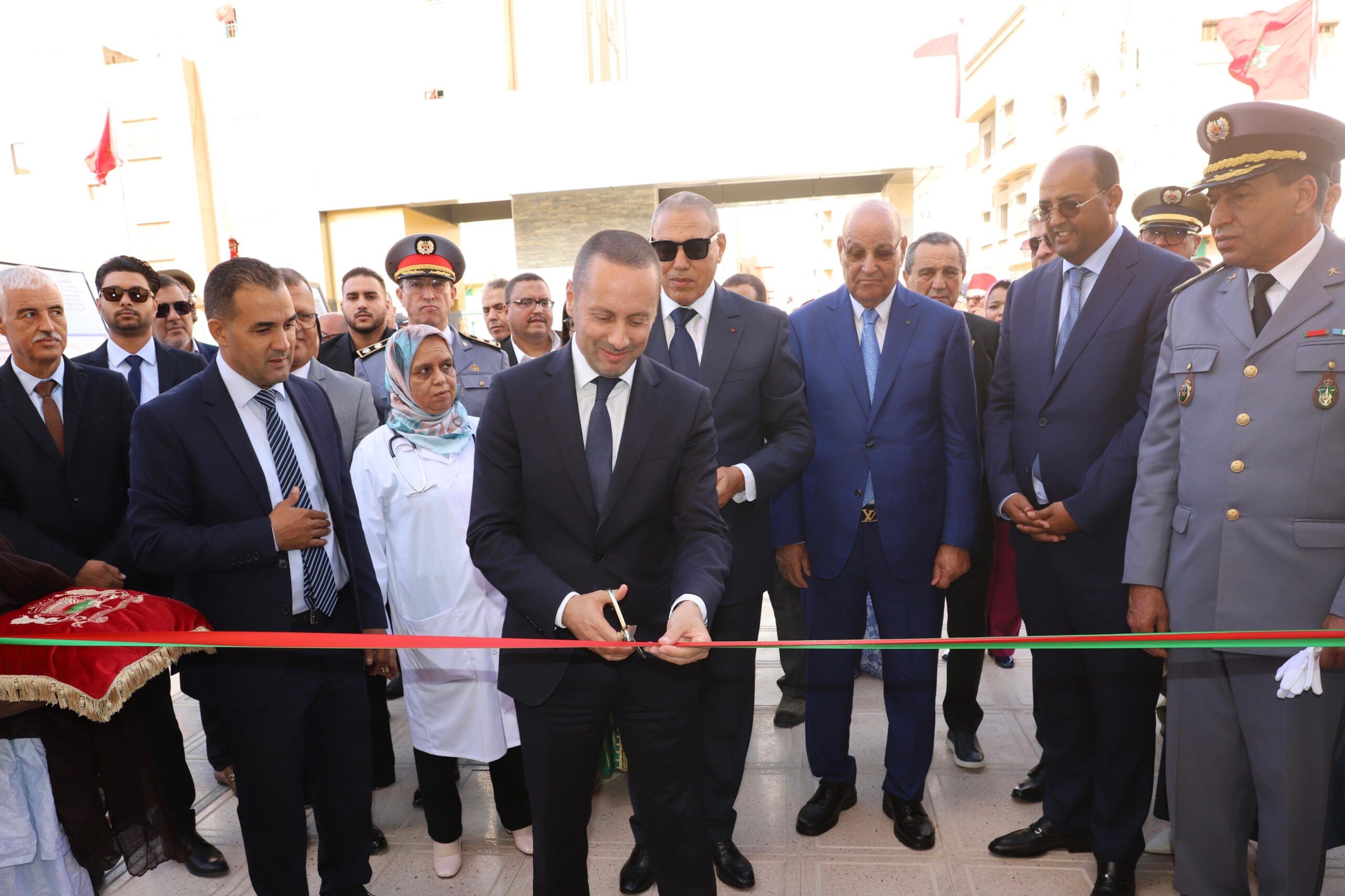
In a structuring step that illustrates the efforts made to improve healthcare provision and bring it closer to citizens, the Ministry of Health and Social Protection announces the completion of the government program to rehabilitate 1,400 primary healthcare facilities across all regions of the Kingdom.
This program is one of the most significant projects in the healthcare sector in terms of primary care, both for the number of facilities involved, its nationwide deployment, and its direct impact on improving the quality of health services. Its completion follows the launch of services at the Aït Ourir local hospital and the “Tazart” level-two rural health center in the province of Al Haouz. It is part of the implementation of the high directives of His Majesty King Mohammed VI, aimed at reforming the national health system, strengthening primary healthcare, and ensuring equitable and universal access to health services.
The program is also aligned with framework law No. 06-22 relating to the national health system, as well as with the Sustainable Development Goals, particularly Goal No. 3 concerning Universal Health Coverage by 2030.
A total investment of more than 6.4 billion dirhams
It represents an ambitious model of public investment, enabling the rehabilitation of 1,400 health facilities across the 12 regions of the Kingdom, with a total investment exceeding 6.4 billion dirhams. More than 20 million citizens, in both urban and rural areas, have benefited from this initiative.
The work carried out focused on improving infrastructure, modernizing medical equipment, and strengthening digital transformation, notably through the widespread adoption of an integrated information system. These actions have helped optimize patient flow, reduce pressure on hospital structures, and improve the quality of services provided.
The rehabilitated facilities are distributed across all regions of the Kingdom. Thus, 127 facilities were upgraded in the Tangier-Tetouan-Al Hoceima region (579 million dirhams), 111 in the Casablanca-Settat region (511 million dirhams), and 90 in the Rabat-Salé-Kénitra region (408 million dirhams). The Marrakech-Safi region benefited from the rehabilitation of 139 facilities (664 million dirhams), while 229 facilities were upgraded in the Fès-Meknès region (more than 1,024 million dirhams).
Additionally, 143 facilities were rehabilitated in the Béni Mellal-Khénifra region and 183 in the Souss-Massa region, with respective investments of 667 million and 811 million dirhams. The Oriental region recorded the rehabilitation of 164 facilities (723 million dirhams).
Regarding the southern regions, 31 facilities were rehabilitated in the Laâyoune-Sakia El Hamra region (139 million dirhams), 8 in the Dakhla-Oued Eddahab region (38 million dirhams), 119 in the Guelmim-Oued Noun region (591 million dirhams), and 56 in the Drâa-Tafilalet region (276 million dirhams).
Expansion and construction of new facilities
The program was implemented according to unified standards in terms of equipment and infrastructure, taking into account the territorial and cultural specificities of each region, in both urban and rural settings. This approach has helped strengthen equity in access to quality healthcare.
Its main objectives were to bring healthcare services closer to populations, particularly in remote areas, to improve the quality and continuity of care, and to strengthen the role of primary healthcare facilities as the entry point into the care pathway. The program has also contributed to improving user satisfaction, strengthening maternal and child health monitoring, the management of chronic diseases, school health, and preventive actions, while also improving the working conditions of healthcare professionals.
The momentum continues through the implementation of preventive maintenance for rehabilitated facilities, the generalization of electronic medical records, the strengthening of continuous training for healthcare professionals, as well as the overall evaluation of the impact of the completed phase.
Future prospects focus on extending the program to the entire national network of health facilities and constructing new structures, thereby contributing to consolidating the reform and sustainably improving the quality of care.