Kingdom
Al Moutmir in The Service of More Sustainable Livestock Farming
In the face of climate change and pressure on resources, Al Moutmir’s Animal Production program supports Moroccan livestock farmers in transitioning toward more autonomous and sustainable systems by combining training, local advisory support, agronomic innovation, and digital tools.

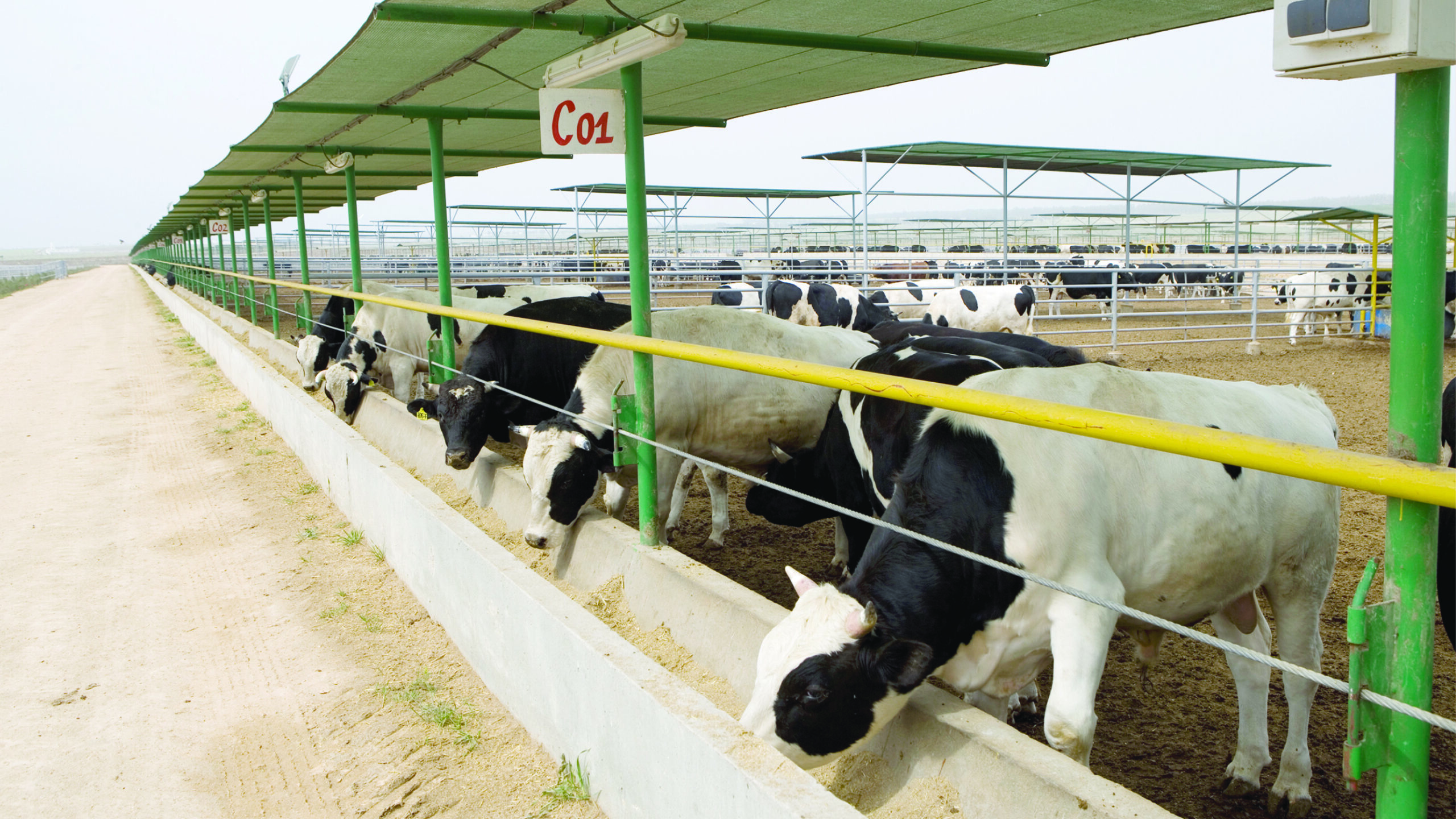
Faced with climate and economic challenges, Moroccan livestock farming must now reconcile performance, sustainability, and resilience. In this context, Al Moutmir’s Animal Production program is deploying an integrated approach in the field aimed at supporting farmers in improving their practices, while strengthening the autonomy and sustainability of their operations.
Driven by a logic of innovation and knowledge sharing, this program is built on a central principle: strengthening synergies between crop farming and livestock farming, two activities that have historically been complementary within Morocco’s agricultural system.
In many regions of Morocco, farms rely on a close interaction between crops and livestock. Crop residues feed the herds, while manure helps fertilize the soil and maintain its productivity.
This integrated model offers many advantages. It helps reduce farm costs, diversify farmers’ incomes, and strengthen their ability to cope with climate variability. It also plays a key role in the sustainability of the agricultural system and in maintaining food security.
Today, this balance is being put to the test. Increased climate variability, pressure on water resources, and rising input costs are weakening farms. In this context, supporting farmers in adopting more suitable practices appears to be a decisive lever.
This is precisely the ambition of Al Moutmir’s Animal Production program, which is rolling out a series of initiatives aimed at supporting livestock farmers at the technical, agronomic, and organizational levels.
Training
At the heart of the program, strengthening skills is a central lever. The challenge is twofold: facilitating access to technical information and accelerating the adoption of more efficient practices in the field.
To achieve this, the program relies on a combination of complementary formats. Theoretical training provides essential foundations in animal nutrition, reproduction, health management, and the valorization of forage resources.
These are complemented by Farmer Field Schools, where learning takes place through direct contact with field realities. Observation, experimentation, and analysis of concrete situations enable farmers to gradually master the techniques.
Experience sharing also plays a central role. Through communities of practice, farmers, technicians, and experts regularly exchange on their constraints and appropriate solutions. This dynamic is reinforced by a peer-learning approach, based on feedback from reference farmers.
At the same time, the program leverages digital tools to broaden access to knowledge. Educational content is disseminated via Agripedia and across various digital channels, ensuring continuous diffusion of best practices.
Support
Beyond training, the program also provides personalized support to farmers. Each intervention begins with a diagnostic assessment of the farm’s needs, making it possible to identify potential areas for improvement.
On this basis, farmers receive tailored recommendations regarding herd feeding, reproduction, as well as hygiene and health management practices.
One of the major objectives is to help farms optimize their feeding strategies by making better use of locally available resources. This approach notably aims to reduce dependence on imported concentrated feed, whose prices can fluctuate significantly, while ensuring the animals’ nutritional balance and maintaining zootechnical performance.
Livestock feeding is indeed a central issue for the sustainability of animal production. In order to identify solutions adapted to local conditions, the program has set up several demonstration platforms for forage crops across different regions.
These platforms serve as real open-air laboratories, making it possible to evaluate the performance of different crops and technical practices. Some platforms focus on optimizing crops already widely used by farmers, such as alfalfa or forage maize.
Others explore the potential of species that are more resilient to climate constraints, notably forage sorghum, triticale, and vetch-oat mixtures.
Finally, comparative platforms allow several crops or varieties to be analyzed simultaneously in order to identify the most productive and water-efficient solutions.
These mechanisms help generate technical references adapted to local conditions while facilitating the dissemination of more sustainable agricultural practices.
The program also relies on digital tools to improve livestock management.
In this regard, the Al Moutmir team has developed SmartFeed, an application designed to help farmers formulate balanced feed rations. Accessible free of charge via the @tmar platform, this tool makes it possible to integrate various data (animals’ physiological needs, available forage resources, or production objectives) in order to propose suitable rations.
The application also offers the possibility of simulating several feeding scenarios, thereby facilitating decision-making and optimizing feed costs.
By linking data from forage production to the herd’s nutritional needs, SmartFeed helps bridge field management and feeding performance.
Key figures
Since its launch, Al Moutmir’s Animal Production program has already mobilized a significant number of stakeholders in the agricultural sector.
More than 1,200 farmers have benefited from technical support, while over 120 forage demonstration platforms have been set up in the field.
The program has also enabled the organization of more than 100 training sessions and the creation of a community of practice bringing together more than 2,000 members.
Through these initiatives, Al Moutmir is pursuing a clear objective: supporting the transition toward more resilient, more autonomous livestock systems better adapted to the agricultural and climate challenges of tomorrow.