Business
Royal Air Maroc: The Development Plan at Cruising Speed
A little more than three years after the signing of the program contract with the State, RAM’s development plan has taken off, involving the expansion of its fleet and the introduction of new international and domestic routes. An overview.

It has been a little more than three years since the State and Royal Air Maroc (RAM) concluded an ambitious program contract, intended both to accelerate the airline’s expansion and support the National Tourism Strategy, whose performance has been historic (see box).
In summary, in July 2023, Head of Government Aziz Akhannouch and Abdelhamid Addou, CEO of RAM, signed the 2023-2037 program contract, which provides for an increase in the State’s stake in the capital of Royal Air Maroc.
This is part of the government’s support for the airline’s vast investment project, valued at several billion dollars. As a reminder, under the program contract, RAM is expected to almost quadruple its aircraft fleet, increasing it from 50 aircraft (July 2023) to 200 aircraft over the next 15 years.
In addition, the airline is responsible for developing additional air connections (in line with the tourism sector strategy), by launching new international destinations.
The company headed by Abdelhamid Addou is also required to consolidate domestic air connections, with the creation of 46 new routes, thereby contributing to the beneficial opening up of certain regions of the Kingdom.
In short, in terms of destinations, the public entity, which has been pursuing new ambitions since July 2023 regarding the improvement of its competitiveness and the digitalization of its services, ultimately aims to bring the number of destinations it serves to 143.
Beyond this reminder, it is useful to take stock of the progress and implementation of RAM’s development plan, structured around several areas: fleet expansion, the opening of new international and domestic destinations, digitalization…
The fleet expands
It took RAM less than a year after signing the program contract with the State to launch (in April 2024) the international tender for the acquisition of 188 aircraft, for an amount expected to be around $15 billion.
That said, given the relatively long delivery times in the aviation sector, the airline has resolutely opted to lease aircraft in order to meet growing demand and support its development.
This is while awaiting delivery of the first aircraft purchased, which is expected to take place between 2028 and 2029 (with an average of 15 aircraft delivered per year).
Over the past few years, the national airline has regularly communicated about expanding its fleet through leasing. Currently, 69 aircraft make up RAM’s fleet, following the recent delivery (in August 2026) of a Boeing 737 MAX 8, acquired through leasing.
It should be noted that during the first eight months of 2026, RAM received eight aircraft, an average of one aircraft per month. It aims to increase its fleet to 72 aircraft by the end of the current year.
Clearly, this pace of acquisitions reinforces the airline’s intention to consolidate its operational capacities in line with the objectives of the program contract, which also makes the launch of new routes a central pillar.
A wave of launches
Between 2023 and 2025, RAM increased its frequencies to several strategic destinations and opened around twenty additional international routes.
In addition, in mid-December 2025, the national airline announced, for the following year, the launch of ten new direct connections to Europe, America and Africa.
This initiative, structured around the medium-haul network and the expansion of long-haul connections, is being implemented in 2026. It should be noted that following the announcements of Casablanca–Saint Petersburg (starting in January 2026) and Casablanca–Los Angeles (starting in June 2026), Royal Air Maroc had planned to launch, as early as April 2026, five new routes departing from Casablanca: Pointe-Noire (Congo), Tripoli (Libya), Beirut (Lebanon), Bilbao and Alicante (Spain).
The airline had also indicated that the Casablanca–Palma route would complement its Spanish network, which already serves Madrid, Barcelona, Malaga, Valencia and Seville.
Other flagship measures include the addition of the direct Casablanca–Verona route, starting June 20, 2026 (adding to the seven existing connections), the opening of the Casablanca–Lille route in July 2026, as well as an increase in frequencies on several strategic long-haul routes (São Paulo, Miami, Washington and Dubai).
Regarding domestic routes, in October 2025, the airline announced a plan to strengthen its flights to the Southern provinces. Thus, two new strategic routes were inaugurated in October 2025 (Marrakech–Laayoune and Marrakech–Dakhla).
In addition, for the first time, a direct air route between Casablanca and Es-Smara was launched on November 6, 2025, on the occasion of the 50th anniversary of the Green March.
Clearly, the national airline has strengthened its presence in the regions of Dakhla-Oued Eddahab, Laayoune-Sakia Al Hamra and Guelmim-Oued Noun. As evidence, between 2005 and 2025, RAM’s air service in the Southern provinces increased from an average of 6 flights per week (90,000 seats) to 63 weekly flights, or nearly one million seats.
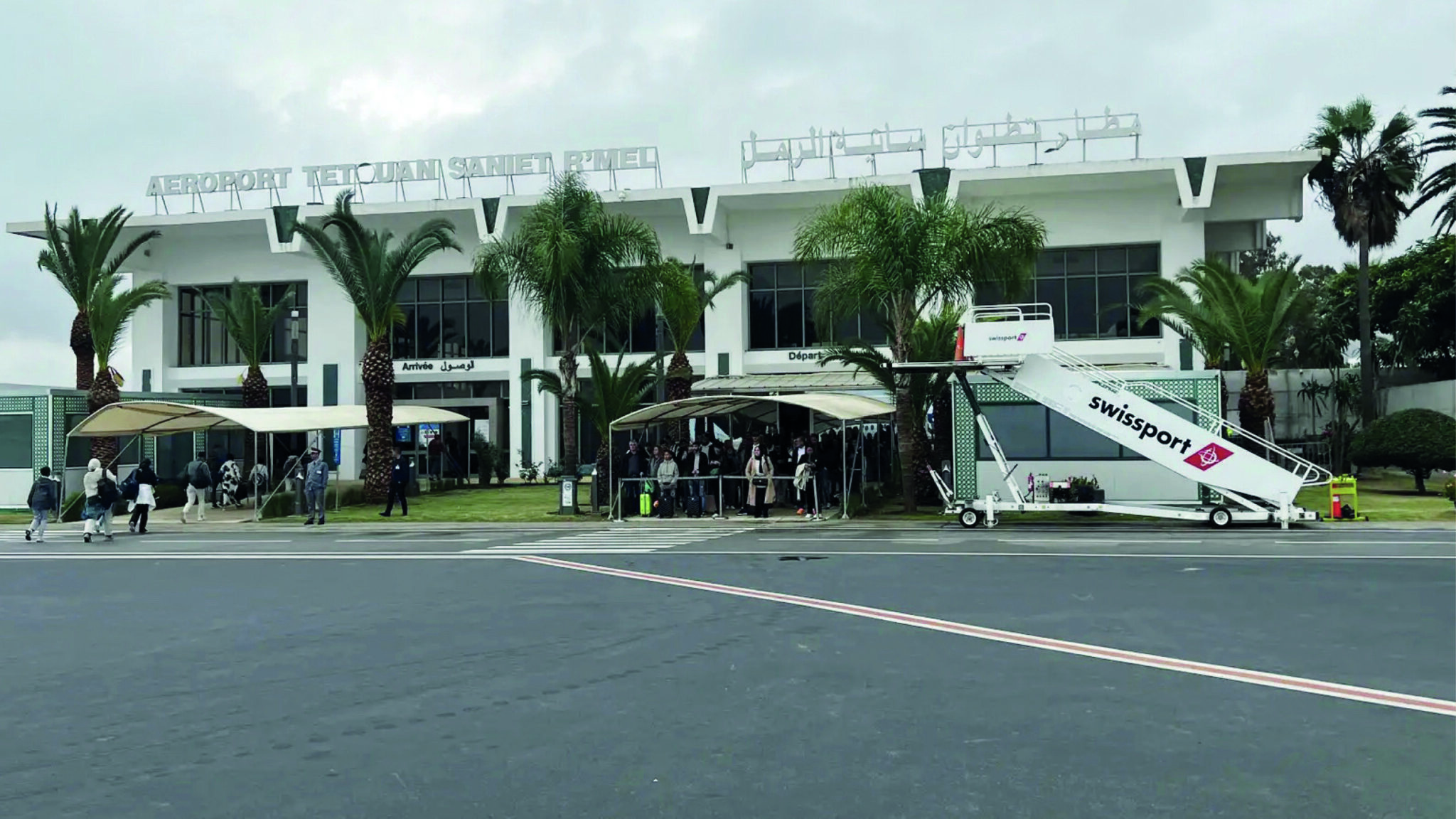
Along the same lines, more recently, in 2026, the airline opened a new base at Tetouan-Sania R’mel Airport.
This initiative enables it to strengthen direct connections between Tetouan and Casablanca (with the addition of three weekly frequencies), while also expanding its offering from Tetouan by connecting this northern city to Paris, London-Gatwick, Brussels, Barcelona, Madrid and Malaga.
Ultimately, RAM’s development plan, which aims for revenue of MAD 94 billion in 2037, has clearly taken off in terms of fleet expansion and the establishment of new international and domestic routes.
A correlation with the performance of the tourism sector
The program contract between the State and RAM aims to inject new momentum into the air transport sector. It is also part of the government’s support for the Strategic Roadmap for the Tourism Sector 2023-2026, whose objectives were widely exceeded as early as 2025.
The improvement in air connectivity and RAM’s offering, driven by the program contract, contributed to the historic performance of the tourism sector, which is dependent on air transport.
By the end of December 2025, foreign-exchange revenues generated by this promising sector had reached MAD 138 billion (against the target of MAD 120 billion set by the roadmap), thanks to the historic record of 20 million visitors.
However, the 2023-2026 Tourism Strategy is targeting 17.5 million visitors in 2026. Even better, the Kingdom welcomed 14.1 million tourists by the end of August 2026, an increase of 4.5% compared with the same period in 2025.
Another unprecedented development: August 2026 surpassed the 2-million-visitor mark for the first time, representing a 3% increase year-on-year.