Kingdom
Rachid El Houdaïgui: “For the great powers, Morocco has become a geoeconomic anchor point”
After the adoption on October 31 of resolution 2797, the course of events will depend, of course, on the tactical and strategic sense of Moroccan diplomacy, but also on the good faith of the other parties. This is in addition to the real involvement of the United States, the political evolution in Algeria, or even a possible reorganization of the dissident representation of the Polisario.

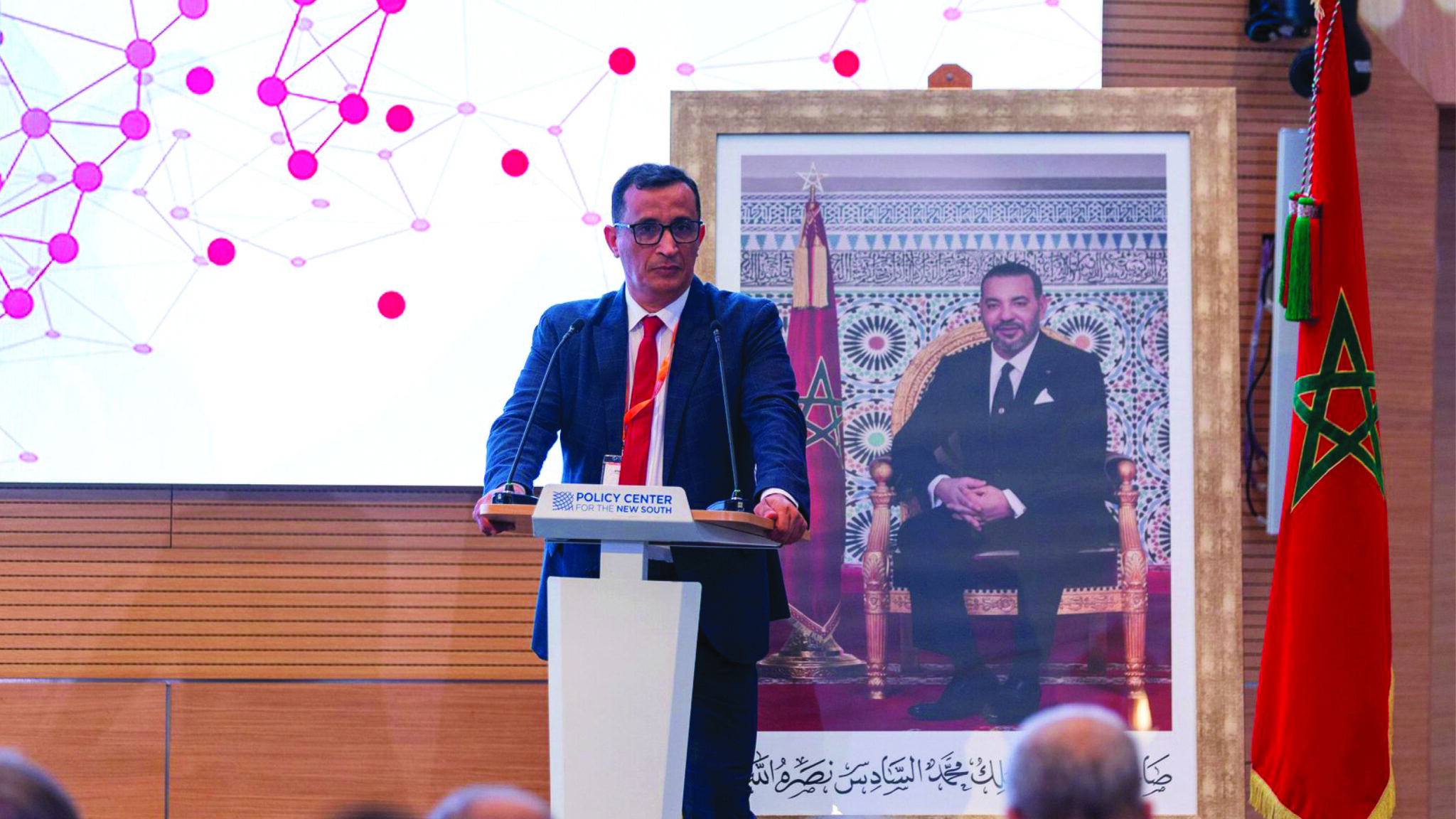
Rachid El Houdaïgui is a professor of international law at Abdelamalek Essaâdi University in Tangier. He is a Senior Fellow at the Policy Center for the New South and an associate professor at Mohammed VI Polytechnic University.
He is also a professor at the Royal College of Advanced Military Studies in Kenitra. His areas of expertise include international relations, geopolitics, defense, and security, with a specialization in the Mediterranean region, North Africa, and the Arab world.
How does resolution 2797, adopted Friday, October 31, mark a turning point in the process to resolve the Sahara conflict?
The resolution indeed constitutes a major turning point in the process of resolving this long-standing conflict. It draws its strength from three levers of action: first, unlike previous resolutions that mentioned autonomy more marginally, resolution 2797 constitutes a real paradigm shift as it now makes autonomy the basis for negotiations between the parties and consequently empties the principle of self-determination of its fixed binary meaning: independence or integration.
Secondly, the proposal is no longer simply Morocco’s but is enshrined by the United Nations Security Council (UNSC) and the international community, which changes the balance of power in favor of Morocco. Finally, the UNSC appears to want to plan the strategic evolution of MINURSO by tasking the UN Secretary-General with carrying out a “strategic review” within six months. This approach opens the way for possible adaptation of the mission to new directions in the political process — an option that requires attention and vigilance to avoid any strategic surprises.
After its adoption, what political prospects does resolution 2797 open for a lasting resolution of the Sahara conflict?
The resolution undoubtedly opens windows of opportunity for a lasting resolution of the conflict. It is a chance for the Maghreb to reorganize around a new balance point capable of guaranteeing its stability and prosperity.
Currently, the logic and divergent interests of the actors involved suggest a particularly complex process. While Morocco is strengthened in its position and declares its commitment to new negotiations, Algeria and the Polisario front face a strategic dilemma: either engage in negotiations at the risk of de facto recognizing the framework of autonomy under Moroccan sovereignty, or refuse to participate at the risk of further isolation.
The timetable remains unclear, but one thing is certain: the path is long and full of uncertainties, especially regarding concessions that the parties will have to make in good faith to reach an agreement under Moroccan sovereignty. I would still like to highlight three unknowns that could influence the process’s evolution: the real involvement of the United States, which will determine the scope of negotiations; a possible political upset in Algeria that could change its priorities; and a possible reorganization of the dissident Sahrawi representation (for example, the Sahrawi Movement for Peace, which considers itself an “expression of the natural evolution of Sahrawi society,” reiterates its willingness to contribute “constructively and responsibly” to this new phase) that could shift the red lines of the current position.
In all cases, Morocco controls the four vital components of its on-the-ground strategy: military, economic, political, and — since resolution 2797 — diplomatic. The circle is complete in terms of posture. However, it is imperative to show resilience to maintain control of the negotiation process and ensure the full implementation of the autonomy agenda.
The Sahara issue was in a deadlock, and Morocco was in a weak position in the late 1990s. How has the Kingdom reversed the trend over the last two decades?
It is basically the combination of diplomatic openness, geoeconomic realism, and internal Sahrawi dynamics (in the Saharan provinces) that has allowed Morocco to transform the international perception of the Sahara question by making its autonomy initiative the most realistic and sustainable path toward a definitive resolution of the conflict.
First, Morocco multiplied initiatives aimed at establishing a climate of calm and sincere dialogue with Algeria, thus demonstrating its willingness for openness and regional cooperation. Through the “outstretched hand” diplomacy (advocated by King Mohammed VI) and its transparency strategy, Rabat sought to defuse tensions and reframe the dispute within a political negotiation framework. This moderate and constructive stance highlighted the rigidity of the opposing camp, helping to strengthen the image of a pragmatic, peaceful Morocco concerned with regional stability.
Then, the major powers — the United States, European countries, even China and Russia — progressively recognized Morocco’s central role in the Northwest African region.
In a regional context marked by political uncertainties in North Africa, instability in the Sahel, the terrorist threat, and international competition for access to African markets and resources, the Kingdom appeared as a reliable, stable, and economically dynamic actor.
Its geographic position, modern infrastructure, economic openness, and ambitious African policy made it an essential geoeconomic anchor point for the great powers seeking to secure their interests in the region. This trend was reflected in several strong diplomatic and economic signals: the United States and France showed growing interest in the economic development of the Southern provinces; the stopover in Morocco of Chinese President Xi Jinping (on November 21, 2024).
Upon landing at Mohammed V International Airport in Casablanca, the Chinese head of state was welcomed by Crown Prince Moulay El Hassan, marking a strategic moment. Another significant element shaping international perception of the Sahara question is the presence of Sahrawi actors advocating a renewed discourse, breaking with the rigid rhetoric of the Polisario Front and Algeria.
These actors, some from civil society and Sahrawi elites established abroad, have contributed to consolidating internal dynamics based on a pragmatic approach to resolving the conflict. Their involvement gives the autonomy project local legitimacy and new political reach, thus strengthening the credibility of Morocco’s position internationally.
It is the culmination of a long 26-year process. In your opinion, how has the Sahara issue shaped Moroccan diplomatic doctrine over the last five decades?
There is no doubt that Moroccan doctrine has undergone profound evolution, shifting from an absolute sovereignty claim to a more pragmatic autonomy-based approach. In the first phase, starting in 1975, Morocco asserted full sovereignty over the territory, considering the Sahara an integral part of the Kingdom based on historical allegiance ties.
Facing military deadlock and international pressure, Morocco took a courageous position in 1984 by accepting the principle of a self-determination referendum under UN aegis, realized by the 1991 ceasefire. However, the failure to implement this referendum led to doctrinal reconfiguration, marked by the search for a negotiated political solution guaranteeing territorial integrity.
It is within this framework that the Moroccan proposal for an autonomy regime for the Sahara, enshrined by resolution 2797 (2025), fits. This trajectory reflects the shift from an integral sovereignty doctrine to pragmatic sovereigntism, reconciling national unity principles with openness to a sustainable political compromise.
This first turn in 1984 was accompanied by Morocco’s withdrawal from the OAU. What impact did its (near) African isolation after leaving the organization have on the country?
This withdrawal caused a shift in Morocco’s African policy. Deprived of an institutional platform on the continent, Morocco adopted an essentialist and bilateral diplomacy, seeking to compensate for its absence from pan-African structures by reinforcing political relations with friendly states, notably those in Francophone Africa.
This strategy relied on building partnerships in which these friendly countries often played the role of diplomatic intermediaries, defending and relaying Moroccan positions within African and international organizations. However, this relay diplomacy tended to weaken over time as the African scene evolved and new regional balances emerged.
The creation of the African Union (AU) in 2002, replacing the OAU, marked a major institutional turning point that gradually reduced the effectiveness of this indirect approach. This period coincided with the launch of a new Moroccan African policy based on direct presence, sustained economic cooperation, and renewed commitment to continental integration, preluding the Kingdom’s return to the pan-African organization in 2017.
What was the effect of Morocco’s return to the AU in 2017?
This return took place in an international, continental, and regional context making it imperative for the Kingdom to reengage on the African institutional scene. Indeed, it became necessary for Morocco to reintegrate the pan-African organization to prevent African institutional construction from continuing in its absence.
Clearly, this reintegration offered the Kingdom a legitimate diplomatic platform to defend its position on the Sahara question by spreading a legal and political discourse alternative to its opponents’, based on the principle of national sovereignty and the autonomy option as a realistic and lasting solution.
This choice is also explained by the growing importance of African Union derived law, which has become an essential normative source influencing the domestic law of member states. By rejoining the AU, Morocco sought not only to defend its strategic interests but also to influence African legal and political production, especially on governance, development, and economic integration issues.