Business
Medicines: Tehraoui Immune to Lobbies
In the shadow of parliamentary turmoil over a public contract, dark forces lurk, seeking to pressure the government and discredit its efforts to counter a crucial reform.

Chemical Abbreviation: KCl. This potassium chloride emerged from the silence of hospital intensive care units—where it is a vital serum—to make noise under the parliamentary dome with a shockwave on public opinion.
It began with one of those endless monologues by troublemaker Abdellah Bouanou, concerning medicine imports, ending with one of his accusations that seemed tossed into the air. Yet this one illustrates a convergence between opposition designs and the interests of certain private operators. One of those manifestations of the powerful, influential, and discreet lobbies that are eating away at the Health sector…
False Accusations
According to the head of the PJD parliamentary group, “a company that produces potassium chloride was denied market authorization to favor the importation of this medicine by another company, owned by a minister’s family.” But what was intended as a chemical weapon, dropped to damage the government’s credibility, turned out to be a pitiful dud: fabrications based on approximations and figures taken out of context.
To support his argument, Bouanou waved documents showing an increase in contracts between 2024 and 2025 awarded to Pharmaprom, a company owned by the family of Minister Mohamed Saâd Berrada.
However, this was insufficient to deceive those familiar with public procurement, who offered a significant nuance: “A tender launched in 2023 can sometimes be awarded in 2025: a delay often due to bureaucracy in the Administration, but also sometimes due to delays from industrialists,” explained a regular participant in tenders issued by the Health department.
Bouanou, who may have made the effort to compile and aggregate the public procurement portal’s announcement reports, therefore did not account for these potential delays between the issuance of a tender and its actual execution.
Rather than refining his analysis, the opposition MP preferred to sow doubt and suspicion by bringing up his favorite theme: “conflict of interest” regarding the contract won by the company that Saâd Berrada had acquired with his brother, long before his appointment to the government and of which he is no longer an administrator (see box).
“Certainly, Pharmaprom had benefited from a temporary use authorization (ATU) for KCl, but the ministry did not even need to resort to its services, since another Moroccan company (Sothema), which produces it locally and had market authorization (AMM), was able to fulfill all orders,” clarified a source familiar with the matter.
Precedent of Transparency
In fact, the Ministry of Health was quick to communicate this clarification to cut the ground from under the polemicists’ feet. Amine Tehraoui even went so far as to use a parliamentary communication mechanism rarely employed by government members: while usually it is elected officials who request a minister’s presence in Parliament, this time it was the government that summoned the House of Representatives’ Committee on Social Affairs.
A meeting during which Tehraoui, calmly, provided all necessary explanations before recalling this undeniable fact: “Public contracts are awarded to legal entities, according to legal requirements, and are open to all companies,” he stated before the MPs, brushing aside the opposition’s false accusations with a wave of his hand.
At heart, the minister is undoubtedly aware that this new attack conceals a pressure maneuver against the government. The intervention of PJD MPs around the KCl controversy is structured to serve not only the opposition’s argument but also as advocacy for another pharmaceutical company.
The aggrieved company, according to Bouanou, is none other than Promopharm, which for many years held a near-monopoly on the production and marketing of KCl in the Kingdom. Business was so good that the subsidiary of the international group Hikma Pharmaceuticals decided to invest in expanding its production line, which was temporarily halted.
After frequent exchanges of technical documents between the company and regulatory authorities in 2023 and 2024, the new production line was expected to be operational by the first half of 2025.
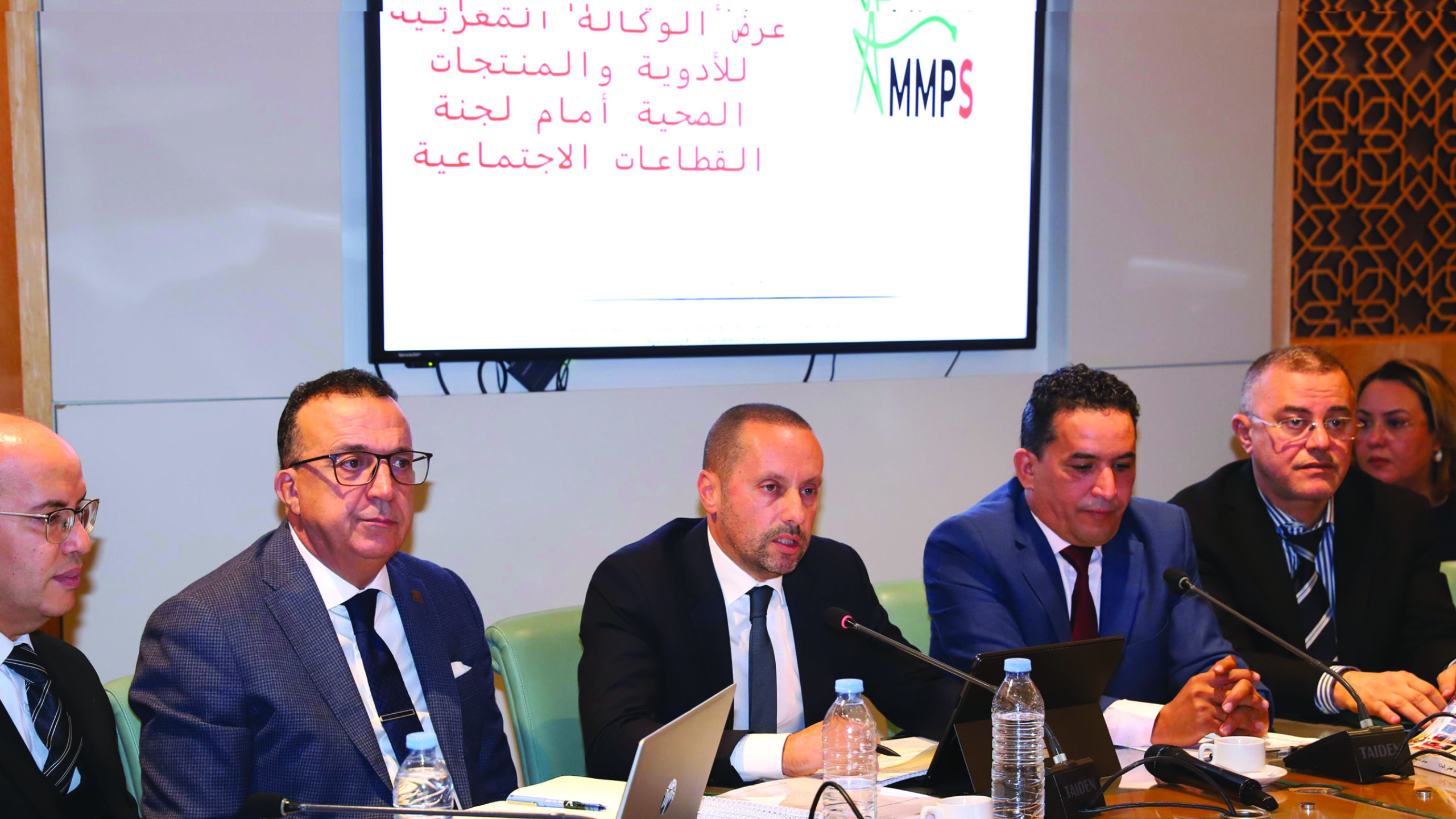
“Preliminary results of an inspection conducted in February 2025 revealed that certain essential equipment was not yet operational: weighing center, sampling area, sterilization equipment…,” as explained by the director of the Moroccan Agency for Medicines and Health Products (AMMPS) in his presentation to the Committee on Social Affairs.
He added: “After several visits, the new unit was authorized to operate on May 28, 2025. The company confirmed that production was in its final phase, pending the submission of the updated market authorization dossier to the agency.”
Troubled Relations
Did Promopharm’s managers regret this delay, which cost them a rather lucrative contract, to the extent that they might have been tempted to make waves by involving politicians? The hypothesis is not excluded, according to a source familiar with public relations in the pharmaceutical sector, who notes that “the connections between pharmaceutical groups and the political world are an open secret.”
And adds: “Several actors and operators in the medical world gravitate around the political galaxy. We have already seen owners of private clinics or presidents of pharmacists’ unions publicly associating with opposition party leaders.”
For him, it is no coincidence that opposition interventions are particularly targeted in the health sector, since their mouthpieces are carefully briefed… The troubled relations between certain politicians and powerful players in the health sector have often intrigued public opinion.
Often, truncated or unverifiable truths are passed on to well-identified elected officials, with the sole objective of sowing confusion and putting pressure on the government. This is valid everywhere in the world, and of course the phenomenon does not spare Morocco.
Especially since the Kingdom is leading a real revolution in the health sector, obviously involving a revision of medicine pricing policy. A decree regulating the tariff grid is currently following its legislative circuit, fueling the appetites of forces acting in the shadows at various levels.
Another example can be noted through the pharmacists’ outcry over these more restrictive decrees regarding price reductions. The protest is often led by a pharmacist elected under the banner of the Party of Progress and Socialism: Mohamed Lahbabi, for it is he, who federates through the Confederation of Pharmacists’ Unions of Morocco (CSPM) the last hundred pharmacies still opposing this draft decree currently submitted to the Competition Council.
Networks & Means
From different sides, health lobbies have well-honed techniques to achieve their ends. Their networks of advisors and delegates multiply meetings and scientific days to expand, consolidate, and activate their portfolio of contacts within the health professions of various categories.
And even within the Administration, where former practitioners are often found—up to the top of the hierarchy—they have no shortage of access. However, the arrival of a political leader from outside the sector has disrupted their modus operandi. The anomaly Amine Tehraoui does not fit into a pre-established mold, giving them a headache to figure out the character.
“They did not stop knocking at his door and used phenomenal means at their disposal to inquire about him and detect his weaknesses. Except they found nothing juicy, and the character was not interested in playing their game nor in letting oversized contracts pass,” explains our public relations source.
It is true that the first months of Amine Tehraoui’s tenure were marked by an unfair challenge to his public procurement management policy. Notably the denunciation of the medical record digitalization contract, initially awarded for 180 million dirhams before being reassigned for only 15 million dirhams.
Tehraoui recalled this before the parliamentary committee members: “At the time already, I was subjected to a presumption of guilt as if it were about awarding it to a particular company,” recalls one who seems to have grown accustomed to this kind of attack. His sense of duty and respect for his public function and responsibility constitute a shield for him.
Doubtless what gave him the courage to cancel public contracts worth hundreds of millions of dirhams. Transactions that reeked of under-the-table arrangements. Enough to enrage a lobby that will never admit defeat…
The Minister of Education is no longer an administrator of any company
Mohamed Saâd Berrada, Minister of National Education, Preschool, and Sports, did not remain indifferent to the accusations against him. In a public statement, he wished to recall that he presented his resignation from all companies where he was an administrator, immediately after his appointment to the government.
“These resignations were officially registered on October 24, 2024, with the competent authorities in Casablanca. I also notified my resignation, without notice, to the boards of directors, inviting them to undertake the necessary steps with the competent authorities.” The resignation even concerns BIP Partners, a participation and non-commercial company in which he could have remained an administrator as permitted by law.
As for the fact that his name still appears in the trade register of his entities, Saâd Berrada recalls that “registration in the Trade Register is a declarative act and not a constitutive act establishing the legal consequences of resignation from the company’s management bodies.” The matter is settled!
Strategic Reserve for KCl
Potassium chloride (KCl) is considered a vital and essential component in intensive care, surgery, and anesthesia services.
It is indispensable due to its role in stabilizing patients’ vital functions. As such, it is regarded as an essential medicine for which maintaining a strategic reserve stock is mandatory under regulatory requirements.
The national market recently experienced a severe shortage following the temporary halt in production of this substance by Promopharm, due to expansion and modernization work at its production unit.
Faced with this situation, the Moroccan Agency for Medicines and Health Products (AMMPS) intervened to support the company in accelerating the resumption of its national production after completing compliance and qualification procedures.
The AMMPS also supported the company Sothema in producing the same substance, to strengthen local supply and ensure pharmaceutical sovereignty.
While awaiting the return to full national production capacity, several companies were exceptionally authorized, subject to strict quality and compliance conditions, to temporarily import this vital substance from abroad. This authorization is open to all companies meeting the required legal and technical criteria. But priority remains with local production…