Influences
Essaouira, the Home Port of World Music
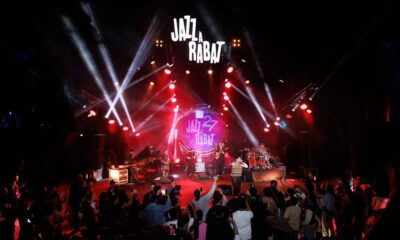
There are festivals that simply schedule performances. And then there are those that tell a story. The Essaouira Gnaoua and World Music Festival, scheduled from June 25 to 27, does more than line up names—it weaves a narrative. That of a port city, of a memory in motion, and of a music that has never ceased to travel.

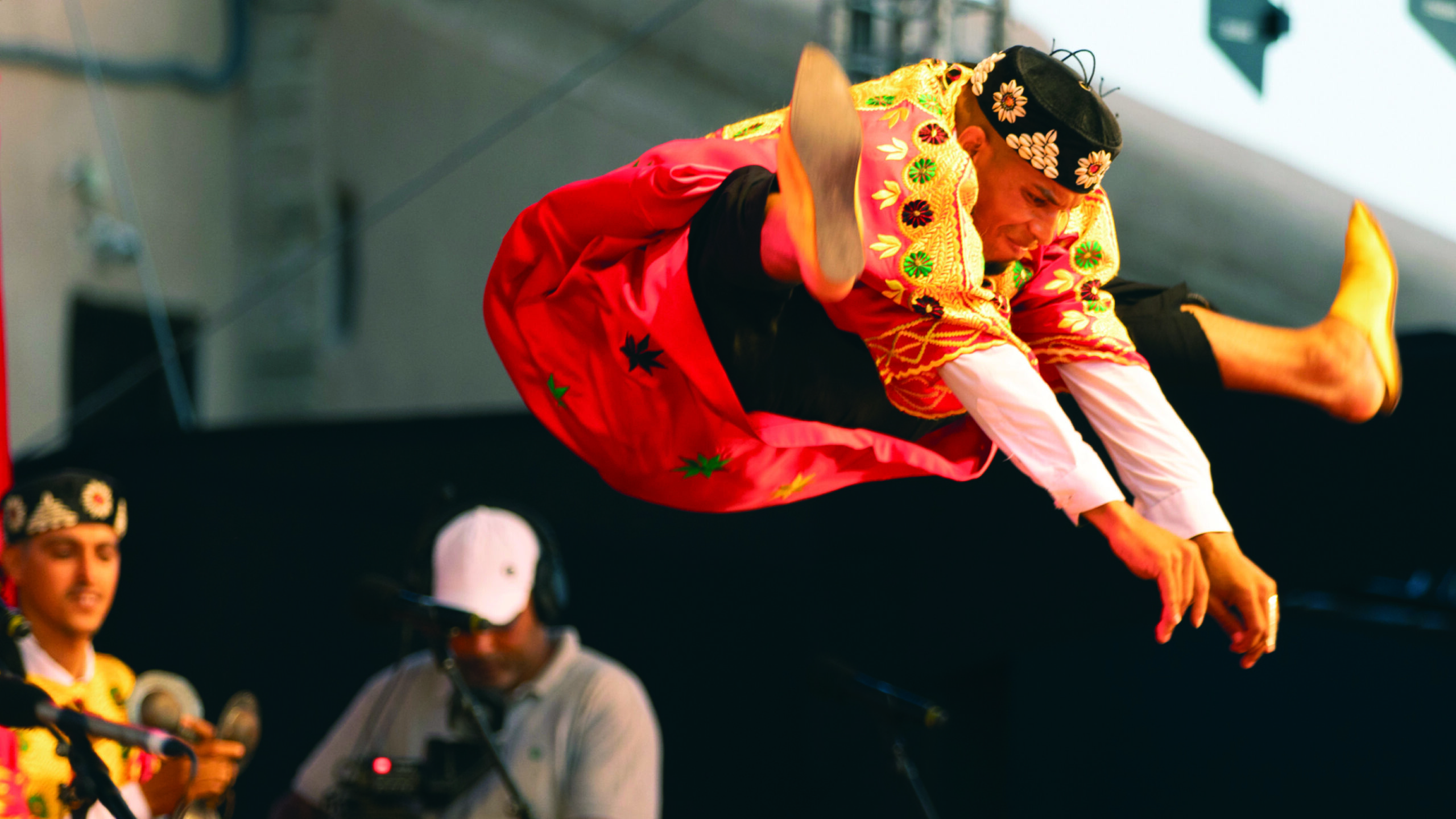
Essaouira does not simply host a festival. It embodies one. This former Mogador, conceived as early as the 18th century as a commercial and human crossroads, continues to circulate far more than goods.
It circulates sounds, stories, and memories. From June 25 to 27, the 27th edition of the Essaouira Gnaoua and World Music Festival fully embraces this long history—that of an open port where cultures do not meet by chance, but because they are called there.
In this city shaped by movement, Gnaoua music escapes any rigid heritage logic.
It is a living memory. Passed down, according to accounts, from Black slaves deported from Sudan under the Saadian sultans, from the Black Guard serving Sultan Moulay Ismaïl whose members dispersed across major cities and ports after his death, or from Senegalese riflemen engaged by the French army during the colonial period, it was forged through displacement, constraint, and transformation.
Even today, it retains this rare ability to absorb without losing itself, to engage in dialogue without erasing itself. It is precisely this dynamic that the festival has cultivated since 1998—and that it pushes even further in 2026.
Rather than imposing an overly explicit theme, this edition weaves a subtle narrative thread by inviting artists from port territories—from Lebanon to Brazil, from India to the United States, from Cameroon to Palestine—geographies marked by maritime circulation and cultural hybridization.
This coherence is immediately felt in the lineup. On one side, a dense and structuring Moroccan scene featuring Mehdi Nassouli, Hoba Hoba Spirit, Sara Moullablad, Asma Lmnawar, Meryem Aassid, and Oudaden.
On the other, international artists who extend this logic of circulation, such as the Palestinian collective 47SOUL, Lebanese singer Yasmine Hamdan, Cameroonian bassist Richard Bona, and Brazilian icon Carlinhos Brown.
What stands out is not diversity in itself, but the way it is structured. Nothing here is a matter of simple accumulation. Everything works through echoes and resonance, as if each proposal naturally found its place within an unprecedented horizon.
Cultural Guembri‑olage
This sense of continuity is evident from the opening. Far from a conventional inaugural concert, the festival opts for a creation conceived upstream, developed over several months, and finalized in Essaouira.
Around Mehdi Nassouli, the voice of Ganavya from India, the Rwandan troupe I Buhoro, singer Sara Moullablad, and musician Sylvain Barou come together to build a collective piece where traditions intersect without clashing.
The guembri becomes a passageway, voices respond to one another, rhythms sketch and connect continents. This founding moment sets the tone. Here, encounter is never a pretext—it is the very heart of the project.
This ambition reaches its fullest expression in the fusion concerts. Since its early days, the festival has made these creations its signature. Yet this is not fusion in a superficial sense.
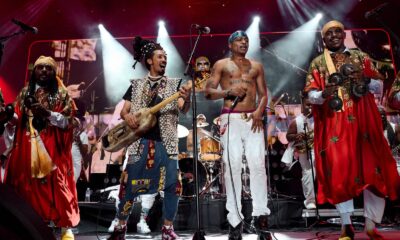
Each meeting is built on genuine listening, understanding, and composition. When maâlem Hamid El Kasri enters into dialogue with Carlinhos Brown, two musical histories deeply rooted in African legacies respond to each other.
When Mehdi Qamoum shares the stage with the Harlem Spirit of Gospel, an entire Afro‑Atlantic memory resurfaces, blending spirituality, rhythm, and transmission.
Similarly, the meeting between maâlem Mohamed Montari and Ethiopian artists reveals shared structures that run across the continent. In all cases, the stage becomes a space for research as much as for performance.
Alongside these major stages, the festival also preserves more intimate spaces for breathing. The lilas take over emblematic venues in Essaouira such as zaouïas, Dar Souiri, and Bayt Dakira. There, the relationship to music changes radically.
The audience draws closer, listening intensifies, and the experience becomes almost physical. These moments, inspired by traditional ceremonies, remind us that Gnaoua is not reduced to a sonic aesthetic.
It engages the body, memory, and a form of spirituality that resists overly direct spectacle. This tension between openness and fidelity is also evident in the tribute paid to maâlem Mustapha Baqbou.
Having passed away in 2025, he left a lasting mark on the Gnaoua scene through both his playing and his role as a cultural transmitter. By honoring him through a film and a concert bringing together those close to him, the festival does more than celebrate a figure.
It reaffirms a lineage—a way of thinking about transmission as a continuous movement rather than as museum‑style preservation.
Broad‑Minded by Nature
Yet this idea of transmission goes far beyond the artistic realm. It permeates the entire festival, particularly through the Human Rights Forum. Now in its 13th edition, the forum focuses on youth worldwide and their tensions between freedom, identity, and the future.
In a global context marked by climatic, political, and technological crises, youth emerge as both a barometer and a driving force.
By bringing together thinkers, artists, and public decision‑makers, the forum extends the reflection initiated on stage and anchors the festival in a broader space of debate.
Music thus becomes a gateway to a more nuanced understanding of contemporary transformations.
This transmission logic also takes concrete form with the return of the Berklee College of Music to Essaouira. From June 22 to 27, ahead of the festival, the third edition of the “Berklee at the Gnaoua and World Music Festival” program brings together musicians from around the world for a six‑day immersive experience.
Far from a conventional workshop, the program offers an approach rooted in intercultural listening and experimentation.
Under the direction of Leo Blanco, supported by an international teaching team, participants are invited to understand the world’s musical structures in order to better integrate them into their own musical language.
Since 2024, 118 musicians from 30 countries have taken part—clear evidence of the growing appeal of this form of learning, which prioritizes collective experience and encounter.
The experience naturally extends into the festival itself, as participants attend concerts and present their work during a final showcase.
As the days progress, it becomes clear that the festival overflows its stages. It inhabits the entire city—its streets, squares, and public spaces.
More than 400 artists, including 42 maâlems, contribute to this effervescence that transforms Essaouira into a true world‑city.
Here, music circulates freely, without hierarchy or barriers. It emerges where it is least expected, reminding us that the festival is not a closed space, but a movement that traverses the city.
Ultimately, what truly distinguishes this 2026 edition is not only the richness of its lineup, but its ability to hold together elements that might otherwise seem contradictory.
Tradition and modernity, local roots and global openness, artistic rigor and accessibility—all coexist without cancelling each other out.
In a festival landscape often dominated by headline acts and short‑term profitability, Essaouira continues to defend a different temporality—one shaped by genuine encounters, deliberate risk‑taking, and creations that are allowed the time to exist.
And perhaps that is where its true strength lies: in making the festival not a simple event, but an experience. A journey, in the most literal sense of the word.