Business
Businesses: CGEM claims a “solid” 2023–2026 track record
CGEM President Chakib Alj presented a 2023–2026 report marked by concrete progress in favor of businesses, particularly VSMEs, centered on reforms to the business climate, human capital, and innovation.

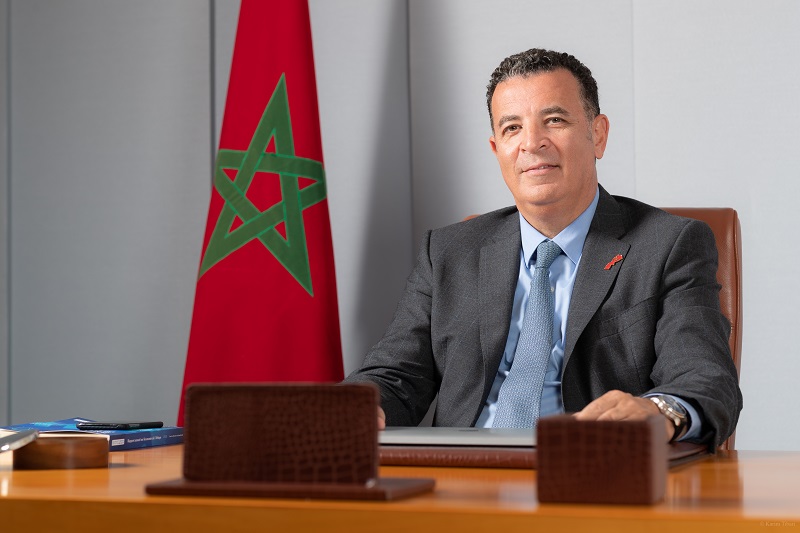
The President of the General Confederation of Moroccan Enterprises (CGEM), Chakib Alj, presented on Wednesday in Casablanca a “solid” assessment of the 2023–2026 term at the head of the Confederation, highlighting “concrete” progress in service of Moroccan businesses, particularly VSMEs (very small, small, and medium-sized enterprises).
“After a first term (2020–2023) marked by strong mobilization to support businesses in a context of crisis while also addressing structural economic projects, this second term has been one of unleashing energies, recovery, and implementation,” said Alj during a press conference dedicated to presenting the 2023–2026 review of the CGEM presidency.
He continued: “Today, I am proud to say that the CGEM, like the companies it represents, has succeeded in consolidating its position at the heart of the economic transformation dynamic our country is experiencing, under the leadership of His Majesty King Mohammed VI.”
In this regard, Alj indicated that the Confederation continues to embody a committed force for proposals, a constructive actor, and a rich and diversified ecosystem, carrying the voice of Moroccan businesses from all sectors, all regions, and of all sizes.
According to him, the CGEM has also been able to capitalize on the synergy between all its components—sectoral, regional, thematic, and legislative—as well as its internal team, to strongly advocate for the concerns and ambitions of the national private sector.
The CGEM president reviewed in detail the tangible achievements of the 2023–2026 mandate program, which was structured around four main pillars: “Improving the business climate for VSMEs,” “Unlocking and developing human capital,” “Promoting economic, social, and territorial inclusion,” and “Preparing the economy of tomorrow.”
In this context, the first pillar notably addressed the law on payment deadlines, the decree on public procurement, taxation with the achievement of a corporate tax (IS) rate of 20% for SMEs (small and medium-sized enterprises) and 35% for large companies by 2026, the establishment of a corridor with the Foreign Exchange Office, and support for improving companies’ logistics competitiveness.
The second pillar concerned continuing vocational training, the launch of the Morocco Innovation Lab project, the promulgation of the organic law on the right to strike, CGEM’s mobilization for the modernization of the Labor Code, and the annual launch of a new cohort of the Confederation’s Social Academy.
As for the third pillar, the employers’ organization worked to structure responsible governance, corporate social responsibility, and economic inclusion, notably through the development of the CGEM CSR label, the Responsible SME Label, and the promotion of good corporate governance. The fourth pillar focused on accelerating innovation, decarbonization, and the emergence of new growth drivers.
Furthermore, Alj stressed that CGEM’s international action naturally extends its national efforts, with the requirement to generate concrete impact for Moroccan businesses, with economic diplomacy serving as a real driver of growth.
In this regard, the Confederation acted on four levers: “strengthening strategic partnerships,” “diversifying markets by targeting high-potential regions,” “reinforcing the presence of the Moroccan private sector in Africa,” and “revitalizing CGEM business councils,” he explained.
According to Alj, during this term the Confederation chose to support its convictions with concrete analyses by conducting several studies, including those on employment and on complementarities between African value chains, as well as other internal studies, emphasizing the scale of the work accomplished in the deep modernization of the CGEM.
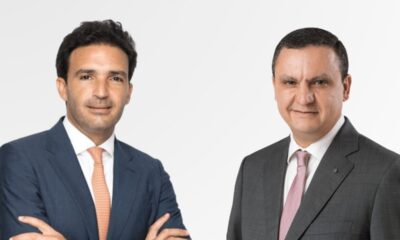
He also recalled that the Confederation’s board of directors, meeting this Wednesday in Casablanca under his chairmanship, approved the candidacy of the duo composed of Mehdi Tazi and Mohamed Bachiri, respectively candidates for the positions of president and vice-president general for the 2026–2029 term.
This candidacy, which meets all eligibility requirements set out in the CGEM’s statutes and internal regulations, will be submitted to a vote at the ordinary elective general assembly (AGOE) to be held on May 14, 2026.