Influences
Expo: “The Origins of Life” or the Big Bang of the Living
In Marrakech, a unique exhibition on the origins of life, organized by Cadi Ayyad and Poitiers universities, with OTED as a partner, immerses the public in four billion years of living history. Fossils, rocks, holograms, and interactive experiments put Africa at the heart of the scientific narrative from November 2025 to February 2026.

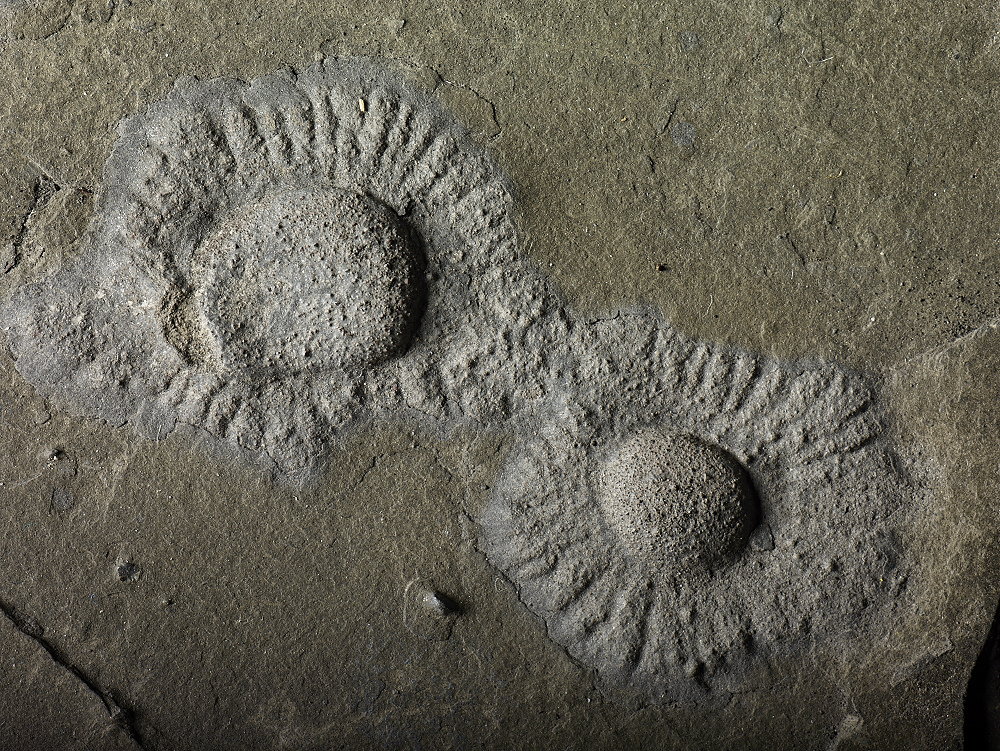
Starting November 28, Cadi Ayyad University transforms into a true time machine. Gone are the exhibitions where visitors politely stroll between dusty showcases. Here, life is offered in grand scale, movement, and story. Africa regains its place at the center of the history of life and asserts itself as the original scene of an adventure four billion years old. This landmark exhibition, the first of its kind on the continent, unfolds the grand narrative of origins without complexes or filters, making rocks, fossils, immersive technologies, and scientific knowledge interact.
In a city that is a crossroads of cultures and ideas, the installation provides a sensory journey from the subsoil to the infinitely small. Marrakech becomes the setting for an odyssey where geology tells stories, stones whisper, and holographic images reinvent the past. Africa appears not as an exotic backdrop but as a living archive, a mineral and terrestrial memory of the biosphere’s formation. Where Europe theorized, Morocco exhibits, shows, and materializes.
The experience relies on a “museum +” scenography that captures attention from the entrance. Directional LED lighting, twelve illuminated showcases, a giant timeline, and a scenographic garden form a scientific playground for observing, comparing, and handling. Fourteen explanatory islands and eleven interactive experiments let visitors explore big questions: how did life emerge, how are its foundational molecules organized, what do the oldest rocks tell us, and how far can we imagine life elsewhere in the Universe? The exhibition adopts an accessible tone without sacrificing rigor, allowing everyone to understand the slow rise in complexity of the living—from prebiotic chemistry to the first hominids.
A common thread runs throughout: repositioning Africa at the center of origins. The continent’s discoveries, Morocco’s geological formations, and the fossil traces that mark its territory become key parts of a assumed narrative. Because it is here that the oldest archives can be read, stromatolites still outcrop, and Earth’s memory remains intact. The exhibition transforms these sometimes technical sciences into a fluid, almost novelistic story where science regains its epic dimension.
Families, students, young researchers all have access to a space where science is practiced, questioned, and passionately told. The event also attracts content creators, media, and tech communities, drawn by holograms, 4K projections, and filmable manipulations.
The exhibition ends with a simple yet powerful promise: understand where life comes from, see how it takes shape, and leave with a fierce desire to know more. It is not just a visit but an initiation—an invitation to view Earth differently, to measure what we owe to those first carbon molecules that once decided to assemble. It is also an invitation to recognize Africa for what it is: the deep, silent, spectacular cradle of our own history.