Business
Notes of music and banknotes, the big June agreement
The major festivals held this month generate significant economic fallouts through ticketing, sponsors and tourism. They thus constitute a major cultural and economic lever, despite funding models still heavily dependent on private and institutional partners.

Each June, Morocco enters a period of cultural effervescence where stages come alive and collective emotions mingle with gnaoua rhythms, bursts of laughter and sounds tinged with nostalgia.
If costs approach 150 million dirhams for flagship events, revenues (ticketing, sponsors, tourist spillovers) paint an equally impressive picture.
Far from being a mere expense, these festivals impose themselves as true economic engines and showcases of soft power, where culture is traded as collective pride, multiplied dirhams and everlasting memories. A dive into the financial backstage of a colorful high season.Ticketing remains the backbone for paid or hybrid festivals. It offers direct income while shaping the audience’s experience.
In Casablanca, Comediablanca (June 4–6) bets on accessible humor with a 3-day Festival Pass at 800 DH (Blind Pass at 700 DH in presale). This event, which attracts a middle class eager for Moroccan and francophone stand-up, fills the Mohammed V Complex and generates solid revenues through themed galas, VIP offers, Family & Friends packs and an immersive village.
Less elitist than others, it retains a local audience while attracting regional fans, proving that laughter sells well when it stays close to people.
Nostalgia Lovers (June 18–20 at the Casablanca Velodrome) plays in another league. The Iconic Pass Early Bird for 3 nights is listed at 1,600 DH. Targeting thirty- and forty-somethings nostalgic for the ’80s, ’90s and 2000s, with XXL scenography, international legends and premium production, the formula is a hit.
The high price reflects an immersive experience (vintage atmosphere, merchandising, hospitality), allowing coverage of a significant portion of the 40 MDH budget while generating comfortable margins.
In Fès, the Festival of Sacred Music (June 4–7) adopts a more intimate and premium approach. The full Festival Pass “Esprit de Fès” was priced from 3,000 DH, offering access to all concerts and events (Bab Al Makina, Jnan Sbil, etc.). Individual tickets for the main evenings vary by category.
This event attracts a demanding international audience who see it as a true cultural pilgrimage. Ticketing revenues support a spiritual model where quality and authenticity prevail over mass.
Cascade of fallouts
If ticketing provides a direct flow, the real revenues spring forth like a cascade, driven by sponsors, tourism and the multiplier effect.
The Gnaoua and World Music Festival in Essaouira (June 25–27) is the archetype. The large stages remain largely free, but the 3-day Pass for Scène Moulay Hassan is 1,200 DH, while the intimate concerts (Zaouia, Bayt Dakira, etc.) are around 250 DH per night.
With a budget around 22–30 MDH, the event attracts hundreds of thousands of visitors. The economic fallouts are spectacular, with some historical studies mentioning up to 17 dirhams generated locally per dirham invested, thanks to full hotels, crowded restaurants, boosted artisan activity and increased transport traffic.
Essaouira becomes, for a weekend, the world capital of trance and musical crossbreeding.
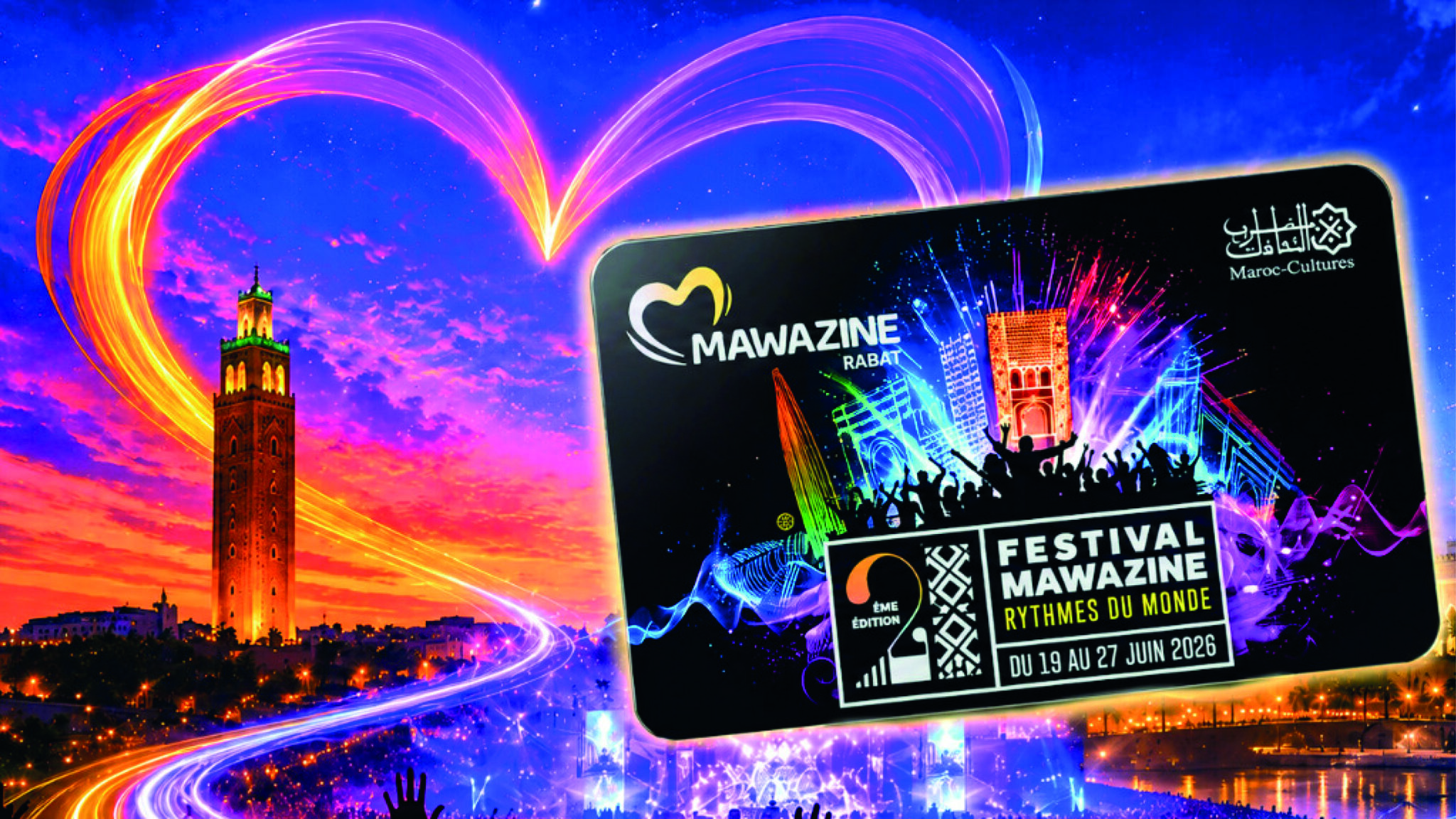
Mawazine in Rabat, the colossus of the month (June 19–27), embodies the perfect balance between popular free access and premium. The majority of stages are free to access, drawing millions of spectators.
The paid zones at OLM Souissi are around 1,200 DH for major headliners, while Gold Cards (6,500 DH), Fast Gold (8,500 DH) and Black (up to 52,000 DH) bring in large sums.
Major sponsors (telecoms, banks, industrials) cover a substantial part of the colossal budget (60–70 MDH), attracted by massive visibility. Own revenues (ticketing, merchandising, hospitality) officially limit the public budgetary impact, while the effect on Rabat (overnight stays, commerce, international image) amplifies everything.
Multipliers of 3 to 17, depending on the event, are often cited in studies on Moroccan festivals.
These revenues are not just a numbers game. They finance seasonal jobs (security, technical, stalls), training and heritage preservation.
As one organizer points out, attracting an international headliner is expensive, but the returns in image, social cohesion and tourist dirhams are worth their weight in gold. These festivals, like roses in bloom under the June sun, wither quickly but sow the cultural and economic ground durably.
A critical analysis is nevertheless necessary. The geographic concentration on Casablanca, Rabat, Fès and Essaouira deepens territorial disparities. Dependence on sponsors exposes organizers to economic vagaries, and the “almost all free” model builds audience loyalty while complicating financial autonomy.
June is no longer an enchanted parenthesis; it becomes a strategic chapter of Moroccan development through culture.
Thus, although these festivals content themselves with making crowds vibrate, they weave an invisible web of prosperity, linking artists, artisans, hoteliers and visitors in the same melody.
Beyond the dirhams, they bring back above all that unique spark, that feeling that, for a month, all of Morocco dances, laughs and dreams in unison. And that is an invaluable return.