Kingdom
Omar Moudden: “We Want to Structure the Sector and Strengthen the Sustainability of Structures”
The president of the recently created Interprofessional Federation of Testing and Control Laboratories (FILEC) discusses the organization’s objectives, the ecosystem of construction testing laboratories in Morocco, as well as their constraints and prospects.

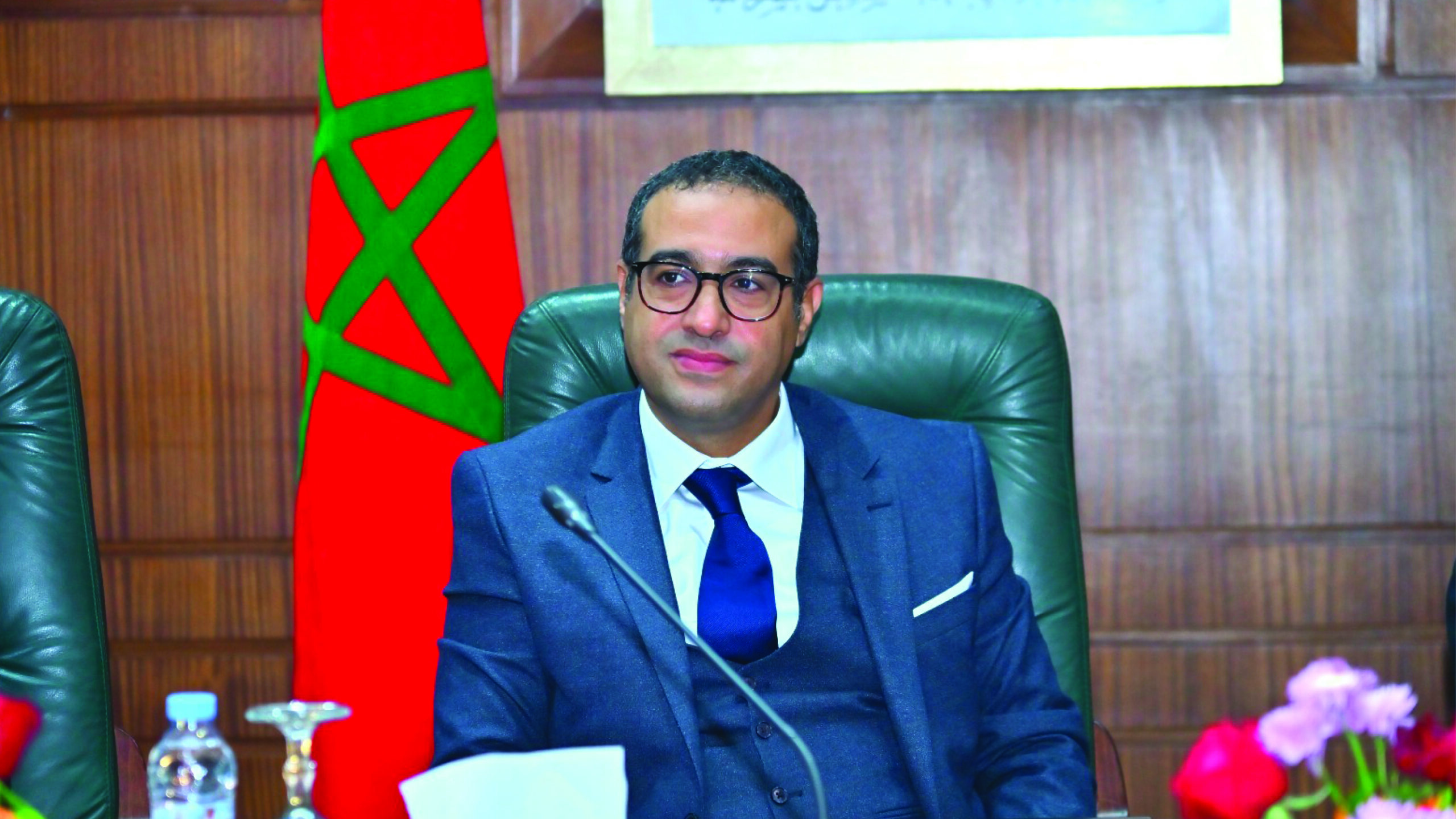
A State Engineer in civil engineering and head of the Moroccan Association of Testing and Control Laboratories (AMLEC), Omar Moudden was elected to lead FILEC on December 8 last year in Rabat.
This new entity aims to structure the sector and federate technical and scientific stakeholders, enhance the quality of controls, and promote the professionalization of the field.
What reasons motivated the birth of FILEC, and how many companies have joined?
The creation of FILEC is part of a dynamic to structure and consolidate the sector in Morocco. After more than ten years of work and consultation, AMLEC took the initiative to bring together, within a single federation, the associations operating in this domain, with the main objective of ensuring unified representation of the profession, strengthening consultation among stakeholders, and having a credible and structured interlocutor with public authorities and institutional partners.
To date, the laboratories adhering to the member associations of FILEC represent about 150 testing and control laboratories, demonstrating the significant commitment of the profession to this federative approach.
Structuring construction testing laboratories in Morocco is among the priorities of your 2025-2030 strategic plan. How do you explain this organizational deficit, and what concrete actions do you intend to implement to remedy it?
The organizational deficit of construction testing laboratories in Morocco is mainly explained by the dispersion of stakeholders, the absence of a single federative framework, and the heterogeneity of technical and organizational practices. This situation has long hindered the harmonization of procedures and the quality improvement of the sector.
Through its 2025-2030 strategic plan, FILEC intends to remedy this by federating laboratories around a common vision, promoting the harmonization of practices, respect for standards and professional ethics, and strengthening skills and support towards accreditation. The objective is to structure a credible and high-performing sector serving the quality and sustainability of structures in Morocco.
You also wish to regulate access to the profession in the private sector. What are the main shortcomings observed at this level?
Today, access to the profession in the private sector suffers from an incomplete and insufficiently precise regulatory framework. There is only one text mentioning the specialized laboratory engineer, without clearly defining the actual conditions for practicing the profession. However, a laboratory is not limited to a title: it produces technical values from tests, which must be carried out according to precise standards, with adequate equipment and qualified personnel.
In the absence of a clear reference, nothing currently guarantees the reliability of these results. This situation fosters unfair and non-compliant practices, with sometimes serious consequences. We observe incidents, including building collapses, where the quality of tests and controls is directly called into question.
Aware of these risks, we have begun, in consultation with the Ministry of Housing, preparing a draft law aimed at regulating access to the profession and defining clear criteria for accrediting laboratories. However, this process has not been finalized at this stage. Today, through the Federation, our objective is to relaunch this initiative and bring this text to fruition in order to clean up the sector, strengthen fair competition, and guarantee the safety and quality of structures.
Precisely, does your project for a national label dedicated to the reliability of public and private laboratories aim to clean up the sector?
This national label is part of a continuous improvement approach to the quality and reliability of laboratories, whether public or private. It aims to establish a common reference, encourage good practices, strengthen technical competence, and elevate the entire profession. It is a tool for support and valorization, intended to clean up the sector through quality and transparency.
Do you have figures on the number of qualified laboratories in Morocco and on the economic weight of the sector in recent years?
To date, the number of qualified and officially classified construction testing laboratories in Morocco is about 35 laboratories. The exhaustive and regularly updated list is published on the portal of the Ministry of Equipment and Water, which guarantees the transparency of the qualification system.
On the other hand, regarding the overall economic weight of the sector, there are no consolidated and officially published data yet. FILEC actually considers this lack of reliable statistics a major challenge and advocates for the establishment of a sector observatory to better measure its economic contribution, its evolution, and its impact on the quality and safety of structures.
Major public contracts in geotechnics and quality control are often won by LPEE ahead of foreign operators. Does this reflect the skill enhancement of Moroccan laboratories in the face of international competition?
The LPEE (Public Laboratory for Testing and Studies) plays a role as a true locomotive for the laboratory sector in Morocco. Beyond its successes in major public contracts, it has the responsibility to strengthen its relationships with private laboratories, in order to federate the efforts and skills of the sector in the same direction.
This cooperation dynamic will not only further professionalize national stakeholders but also consolidate the competitiveness of our laboratories in the face of international competition, while valuing Moroccan expertise on large-scale projects.
Apart from LPEE, are there other national laboratories that stand out? Besides LPEE, some private construction testing laboratories stand out for their technical competencies, but their turnover remains significantly lower than that of LPEE.
This is why it is relevant to create an intermediate category to balance the sector and give private laboratories the opportunity to take their fair share of the market, while valuing their competencies and strengthening the overall quality of services.
Digitalization and AI are profoundly transforming many professions, including yours. How does FILEC plan to integrate these tools to modernize and optimize the professional practices of the sector?
FILEC considers digitalization and artificial intelligence as true levers for modernizing and professionalizing the testing and control laboratory sector. Our ambition is not to replace human expertise, which remains central, but to strengthen it through training, taking into account the standards and ethics of the profession.
Concretely, we are working on harmonizing and digitalizing test procedures, traceability, and reporting, in order to improve the reliability of results and the transparency of practices. Artificial intelligence can also be mobilized for analyzing test data, detecting anomalies, and aiding technical decision-making.
In this framework, the Minister of Equipment and Water has expressed his commitment to involve us in the project of the recently created technological hub, during the reception of the members of the National Bureau on December 12, 2025.
This collaboration paves the way for structured partnerships with universities and training institutions, particularly for adapting curricula to the needs of the sector, strengthening technical competencies, continuous training, and developing applied research.
Can we know the main constraints that still hinder the development of the sector?
The main obstacles for private construction testing laboratories lie in several factors. Despite heavy investments in equipment, training, calibration, and evaluations necessary for annual accreditation, these laboratories do not receive any subsidies from the State, even though they employ hundreds of engineers, doctors, university graduates, technicians, and operators.
To this are added prices that are too low imposed by some project owners, limiting financial room for maneuver, access to public purchase orders, often open to all companies without distinction of qualification, as well as sometimes unfair competition that heavily weighs on the private sector.
Morocco has launched several mega infrastructure projects in perspective of co-hosting the 2030 World Cup. In what way does FILEC intend to contribute to the success of these structuring projects?
FILEC contributes by strengthening the reliability and performance of Moroccan laboratories. Beyond organizing training for skills development, we emphasize technical supervision and quality monitoring of tests, as well as promoting rigorous standards and good practices to guarantee the safety and durability of infrastructures.
Our objective is to effectively support the projects, ensure trust in technical controls, and mobilize all sector stakeholders around professional excellence.