Kingdom
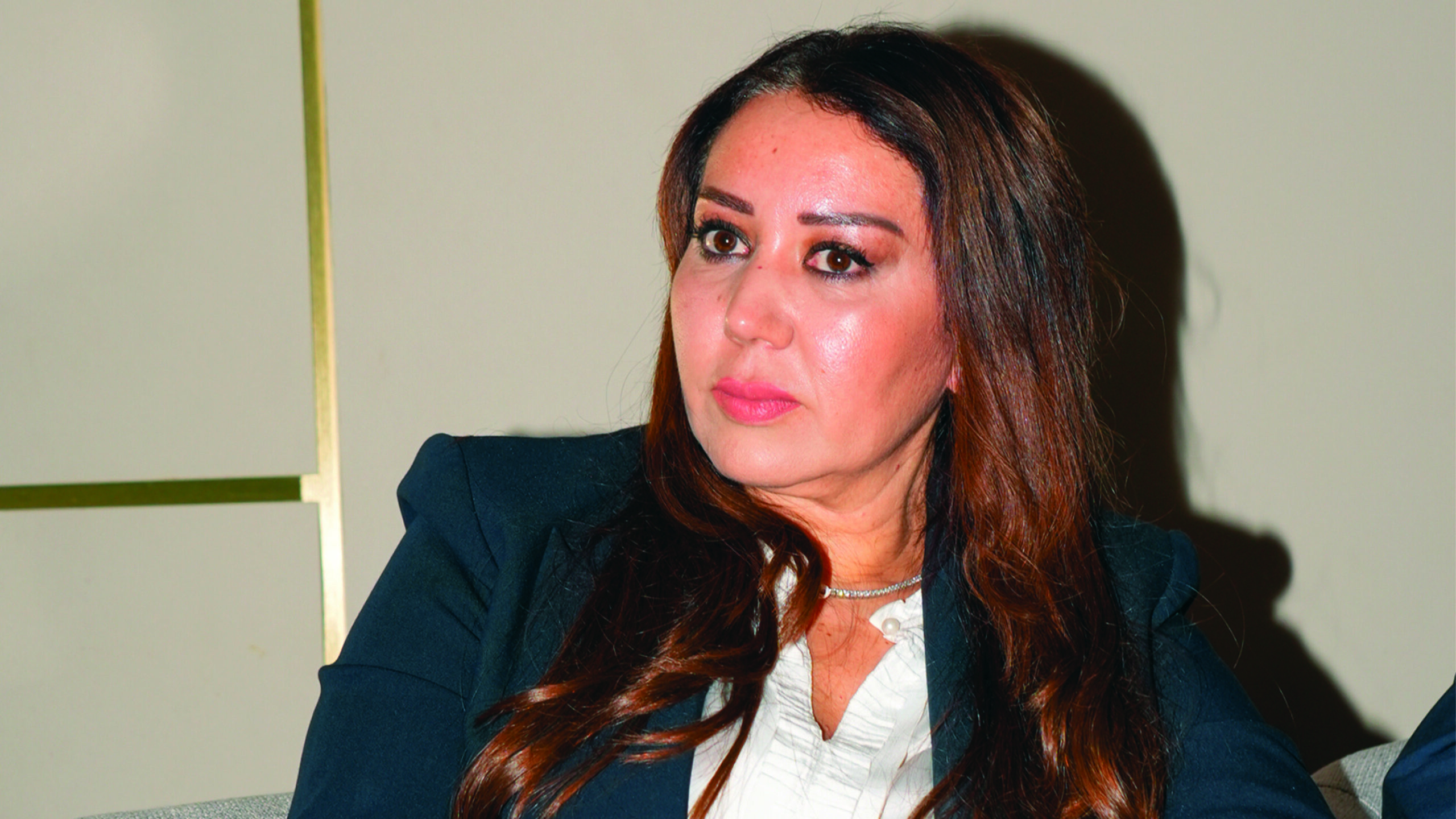
Nabila Rmili: “Our ambition is to reconcile Casablancans with their city”
Over the past four years, the City Council has undertaken several major projects to elevate Casablanca to the status of an economic metropolis with its own signature and visual identity. A discussion with Nabila Rmili.

Green spaces, urban mobility, social cohesion, culture… the face of Casablanca is being redesigned, and not just within the city walls. Since 2021, the year the Municipal Action Plan was adopted, the city has become an open-air construction site.
A set of actions were decided and three priority areas defined to make Casablanca a sustainable, smart and clean city. “Hence ‘Casa Nqiya’ which is not just a slogan, but a conviction.”
From there, several projects have been implemented and construction sites have accelerated, especially as the next sporting event, AFCON 2025, approaches.
Mobility reinvented
Significant efforts have been made to reconfigure mobility in the city, thanks to synergy and a common vision between the Regional Council, the City Council and the Wali of Casablanca.
Several agreements have been signed with stakeholders to give the city a distinct urban identity. Indeed, none of the access routes, whether Dar Bouazza, Triq Jdida, Taddart, Mekka or Lissafa, perceptibly indicated entry into the economic metropolis.
To date, the city presents a new face thanks to the developments undertaken on all its main access roads. The Dar Bouazza entrance is completed, while its parallel axes HH 26, HH 24, as well as routes 3009 and 3002, are under construction, with work carried out continuously to respond as quickly as possible to the significant flow of passengers. Furthermore, the access road located at the Azbane factory is also finalized and now open to traffic.
The City Council has also given paramount importance to parking. “This is the first time that three high-capacity parking lots have been completed in just two years.” The latest, called Hypercentre and adjacent to the Hyatt Regency hotel, has a capacity of 700 spaces.
It should be noted that the construction of these underground parking lots was accompanied by an architectural approach allowing for the development, on the upper part, of harmonious pedestrian esplanades open to all citizens.
Another aspect of paramount importance mobilized the efforts, and also the funding, of all stakeholders: transport. Casablanca is currently connected through 100 km of tramway, 26 km of BHNS (Bus Rapid Transit) and 700 E6 buses that meet international standards for reducing carbon footprint.
“This is a significant advance, as 92% of carbon emissions have been reduced.” Thus, 750,000 passengers are transported per day, taking into account the intermodality between transport modes. “To encourage urban transport, the city has chosen to cover the mobility deficit to the amount of 300 million dirhams.”
Sustainability, an urban priority
Casablanca has been committed to a vision of sustainability for over four years. Just look at the former 40-hectare Médiouna landfill, which has been completely transformed into green spaces and a leisure park welcoming 3,000 to 4,000 visitors per day. “And if there are green spaces in Casablanca, it is thanks to the availability of water, following the establishment of several wastewater treatment plants. This is a first.”
Indeed, water previously discharged into the sea is now captured to irrigate several green spaces in the metropolis. The Médiouna wastewater treatment plant, for example, allows for the irrigation of Mohammed VI Boulevard, the urban highway, the Sbata district and the Aïn Chock district and the wastewater reuse is also taking place at Lhank.
This plant will water all of Anfa, including the Golf, Roosevelt and Kennedy Boulevards… This is in addition to the capture of Aïn Diab waters, with the installation of a plant that will irrigate all green spaces from Morocco Mall to the Hassan II Mosque. Finally, the water to be used for the Aïn Sbaâ zoo will come from the wastewater treated in that area.
Other green spaces have been created here and there, such as the one in Sbata with an area of 6 hectares erected in place of the Sidi Othman cemetery. “The goal of the City Council is to create a park in each district. This ambition comes not only to reconcile Casablancans with their city, but also to meet WHO standards for the availability of green spaces.”
Social cohesion strengthened
Casablanca is on the verge of a major urban transformation, the most important of which is the Royal Avenue, which has experienced over four decades of delays and postponements, mainly due to funding. “Thanks to the will of the State, the Ministry of the Interior and the CDG (Caisse de Dépôt et de Gestion), this project will see the light of day.”
It will be a fully pedestrian space, covering 50 hectares, which will start from the Hassan II Mosque to the Royal Avenue, whose households, around 8,000, will be relocated to the Nassim neighborhood on a total floor area (SHON) of 400,000 m2.
The Tech Valley project in Sidi Othman is no exception. It was designed to allow for greater social cohesion and territorial equity, particularly in terms of employment. 20,000 jobs will be created in addition to another 20,000 at the African Unity site. In Sbata, for example, 17 hectares of land have already been acquired to erect economic activity zones.
Furthermore, the Council is investing a significant budget in culture and the preservation of the city’s memory. The best example is the Cathedral or the Villa Carl Ficke, which has reopened its doors under a new identity: the Museum of the Memory of Casablanca.
Towards 5.2 billion dirhams in revenue in 2025
Facing the many challenges awaiting Casablanca, the Council’s major stake is to ensure the necessary resources to manage citizens’ daily lives. Revenues thus increased from 3.5 billion dirhams in 2021 to 5 billion dirhams, with an objective of reaching 5.2 billion dirhams in 2025, “this, thanks to good governance, a clear strategy, a defined action plan and our two partners, the DGI (Tax Administration) and the TGR (Treasury), which together collect 70% of the city’s taxes.”
It should be known that the city’s fixed costs are around 4.7 billion dirhams, of which cleaning services account for 30% and personnel nearly 22%. Add to that the debts accumulated over years from World Bank loans of about 400 million dirhams and the contracts (CDDs) that the city enters into with the 16 districts it manages, amounting to 380 million dirhams.