Business
Ilham Harket: “Sustainable Finance Helps Build the World of Tomorrow”
At BMCI, this evolution is reflected in the growing integration of ESG criteria into risk management, financing and business support.

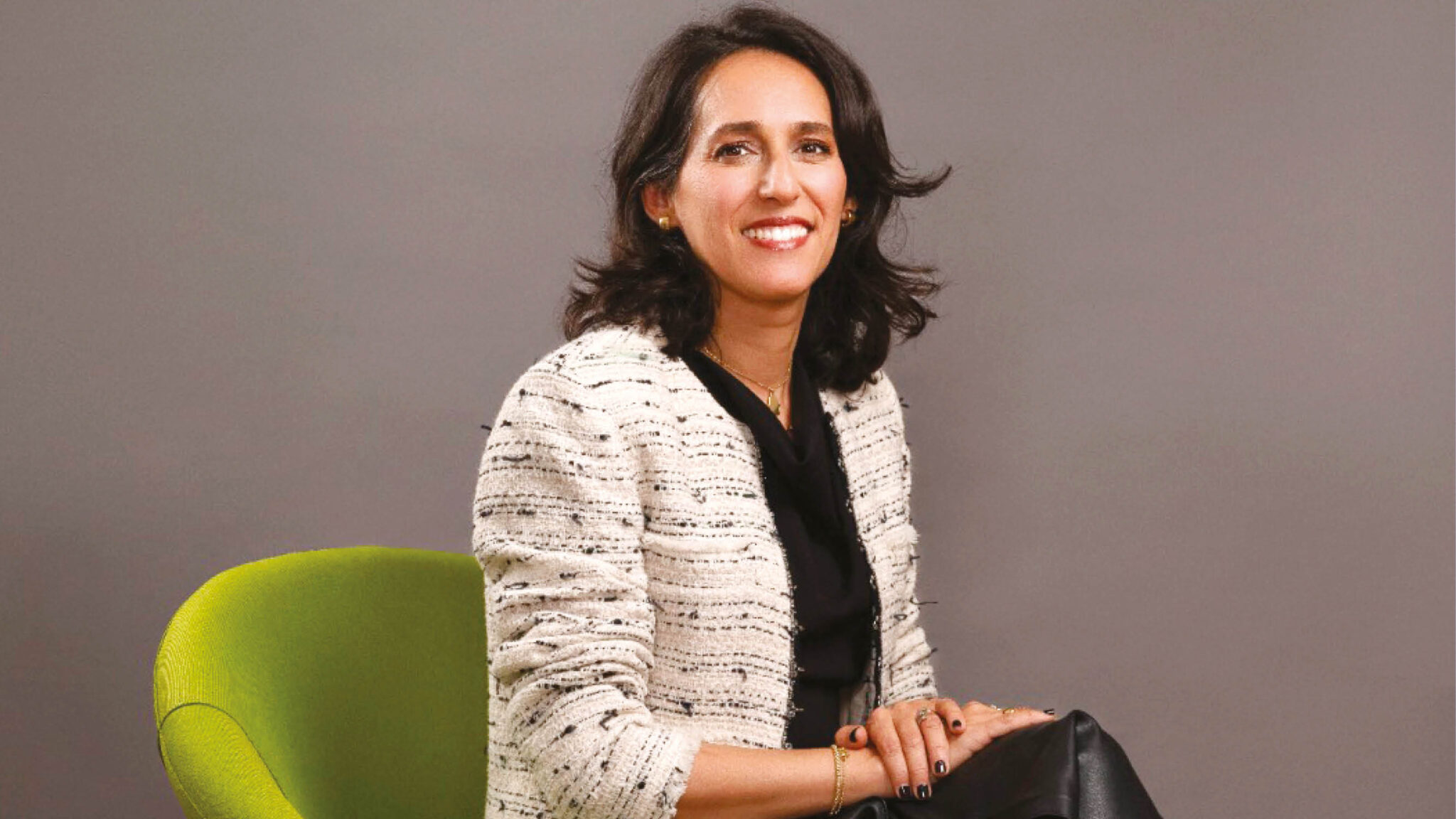
In a context marked by challenges related to water, energy, decarbonisation, climate change and economic inclusion, BMCI’s Director of Engagement advocates a vision of sustainable finance that goes beyond mere compliance.
BMCI now speaks of CSR as a genuine driver of transformation. How has this policy evolved in recent years?
Sustainability has become more than ever a strategic issue, affecting both our business model, our risk management, our ability to support our clients and, more broadly, our contribution to our country’s growth.
At BMCI, we are convinced of our role in supporting national development by integrating sustainability as a genuine driver of transformation and growth.
This transformation is driven by changes in the regulatory framework. ESG requirements are being significantly strengthened and are converging towards established international standards. For a bank, sustainability must be integrated into processes, policies, governance frameworks, risk management and business management.
This additional requirement also represents an opportunity: to strengthen the quality of our analysis and better anticipate economic transformations in the interests of our clients.
Since the creation of the Engagement Department in 2020, how has BMCI evolved its CSR approach, and what role does this department play today in coordinating and implementing its social, environmental and civic commitments?
From an Engagement Department established at BMCI in 2020, we have evolved into a Directorate of Engagement which, over the years, has built up a genuine body of ESG expertise that is deployed at several levels.
This expertise first enables us to integrate ESG risks, both in general and in certain sectors in particular, into our decisions.
It also enables us to identify opportunities: new financing needs, new technological solutions and new sectors supporting the transformation of our economy. Above all, it allows us to engage in a different dialogue with our clients. Our role is not simply to ask them where they stand in terms of ESG.
It is to understand their ambitions, their priority challenges and how the bank can contribute to their transformation journey. This is the fundamental difference between a compliance-based approach and a support-oriented approach.
More generally, the real question we ask ourselves as a bank is: what role do we want to play in transforming our economy? In Morocco, the challenges, ambitions and commitments are considerable.
Water, energy, decarbonisation, adaptation to climate change, economic inclusion and female entrepreneurship are part of our companies’ daily realities. Faced with these challenges, a bank’s role is not only to finance, but also to guide, support, connect, help solutions emerge and contribute to reducing risks for businesses.
For us, sustainable finance does not merely finance the world of tomorrow; it contributes to building it today. We firmly believe that sustainable growth will not be less ambitious growth. It will be growth conceived differently, with greater resilience, impact and long-term value creation.
Sustainable financing is playing an increasingly important role in your strategy. What types of projects or companies are you currently seeking to support as a priority?
Moroccan companies operate in an environment where expectations are multiplying: expectations from consumers, investors, clients placing orders, regulators, as well as international financial partners.
For some companies, the energy transition has become an economic necessity. For others, the priority will be water, the circular economy, mobility, value chain resilience or improving their social performance. We believe that there is no single transition pathway.
There are pathways specific to each sector, each company and sometimes each region. In this context, we aspire to be a transformation partner capable of mobilising financing, expertise, partnerships and tailored solutions.
We support any company wishing to commit to sustainable growth. The available levers are diverse and varied, as they depend on its business activity, ambitions and ecosystem.
These levers may be environmental, social or related to governance. Whether a company has a “green” project, seeks to generate a positive impact or wishes to seize opportunities offered by carbon mechanisms, our institution has an ESG offering tailored to clients’ different needs.
Our catalogue of ESG offerings covers both preferential financing solutions, such as the Sustainable Linked Loan, impact financing through an ESG Rating Linked Loan, and ISLF+ (Inclusive and Sustainability Linked Financing); subsidised solutions, such as GEFF (Green Economy Financing Facility) financing granted under our partnership with the EBRD (European Bank for Reconstruction and Development); and public-sector solutions, such as Green Invest, a financing mechanism developed in partnership with Tamwilcom.
Our ambition is to support our clients in moving from intention to action. Through these offerings, we turn our convictions into concrete, accessible solutions that our clients can directly mobilise.
Sustainable finance thus becomes more tangible.
What is currently the main challenge facing your CSR policy: financing more sustainable projects, transforming your own practices or changing the behaviour of your clients and employees?
Our main challenge lies in bringing together all these issues. Financing sustainable projects enables clients to access these incentive mechanisms and optimise their costs through the rational consumption of resources and energy.
It also helps enhance our employees’ skills so they can act as financial partners, supporting our clients in achieving a just transition and sustainable growth. This approach must be adopted by setting an example through our own practices and management, in order to achieve development with a positive impact.
This is reflected across all internal areas, whether environmentally, through the reduction of our carbon emissions; in governance, through the adoption of ethical practices; socially, through responsible human resources management; and, finally, at the societal level, through philanthropic initiatives.
The ESG responsibility approach is a holistic approach that drives the entire ecosystem adopting it towards sustainable growth.