Business
Honey and Gall: The “Natural” Aphrodisiac That Hides Viagra
Sold mostly online as a “natural” elixir with aphrodisiac qualities, this honey, dressed in evocative names, actually contains medicinal substances similar to those found in Viagra.

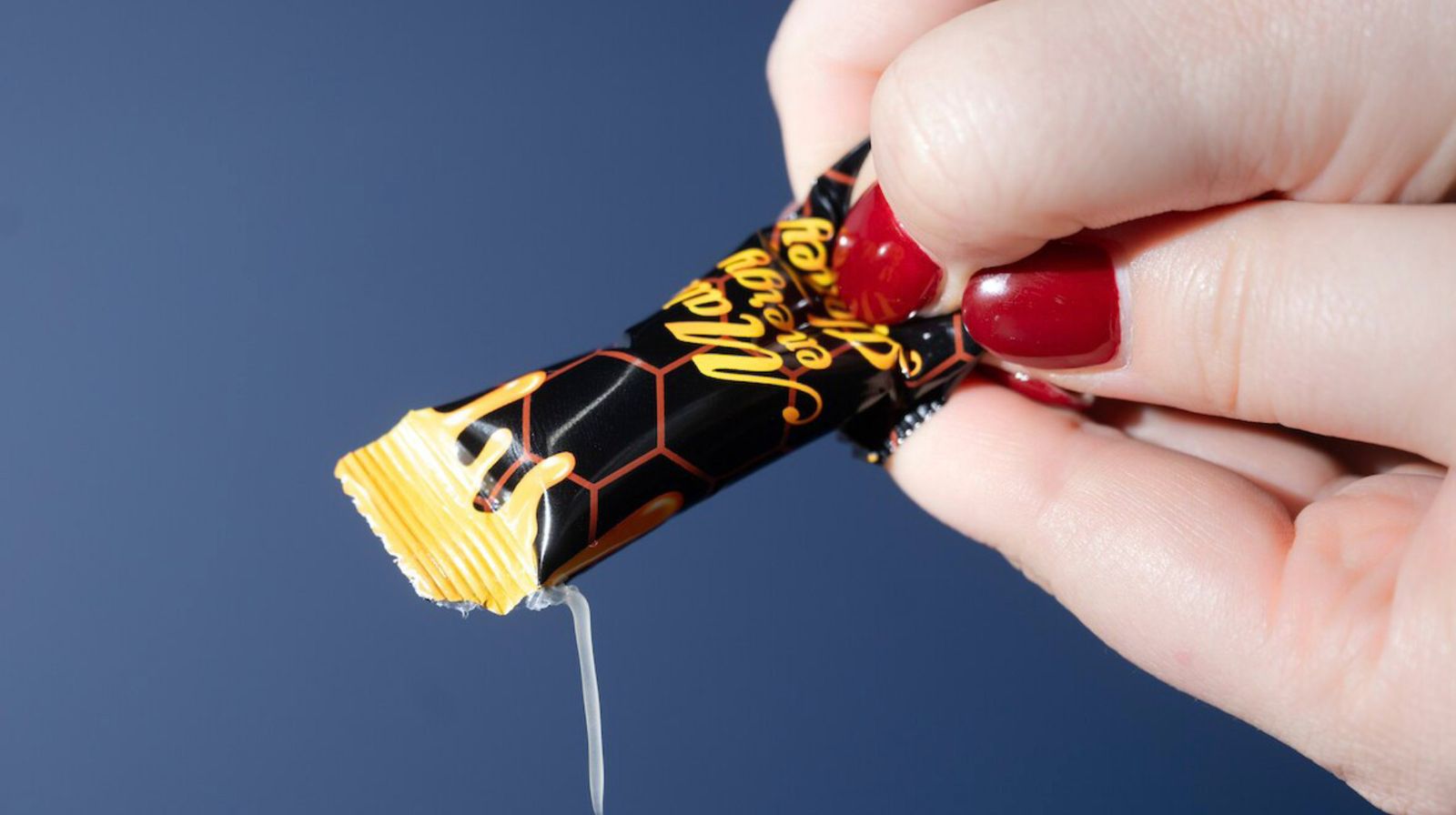
This is not your usual jar of honey. Far from the golden nectar of the beehive, this product, with its flashy promises—“boosted libido,” “infallible erections,” even “bulging muscles”—has flooded Moroccan markets and online platforms.
Marketed as a “dietary supplement” with natural ingredients, this “aphrodisiac honey” actually hides a much more worrisome composition: active medicinal substances like sildenafil or tadalafil, the active ingredients in Viagra and Cialis, which are only available by prescription.
This deception prompted the Union of Professional Beekeepers to take a stand, calling for the immediate withdrawal of these dangerous products.
A Sweet Trap for Your Health
“For the psychological and social factors that push some people to turn to so-called ‘miracle’ products rather than consult a doctor, several elements come into play,” explains psychologist Selma Sebti. “First, it should be stressed that sexual disorders remain a taboo subject in our society.
They are directly linked to virility, self-image, and self-confidence. For many, admitting to suffering from such disorders means questioning this image, touching their very identity.
Simply admitting it to oneself is already a real challenge; talking about it to another person, whether a close friend or a health professional, is perceived as an even more difficult confession. The fear of being judged, the shame, or the worry that the subject might be ridiculed or trivialized make the process particularly delicate.”
According to the psychologist, this discomfort explains why “when someone is confronted with advertising extolling the virtues of a supposedly miraculous product, presented as a quick and discreet solution to their problem, it can be very tempting.
This type of product spares them from verbalizing their suffering, from exposing themselves emotionally. In that sense, it’s a form of escape. Moreover, if these products are perceived as natural, that further increases their appeal. Many believe a natural remedy is better than medical treatment. Given two options, they tend to choose the one that seems less invasive or stigmatizing.”
The marketing for these products skillfully exploits these psychological weaknesses. “The advertisements usually play on fundamental anxieties: fear of failure, insecurity in relationships, lack of self-confidence, or threats to self-image,” Sebti continues.
“In return, these products are presented as miraculous solutions for regaining sexual power, seductiveness, and, more broadly, a sense of assurance. It flatters the ego and offers a seductive promise: to become ‘performant’ again without having to face the discomfort of doubt or self-questioning.”
These campaigns also rely on validating the “natural.” “By presenting these products as ancient, tried-and-true, harmless remedies, they manage to instill a sense of trust,” adds the psychologist. “This promise of a simple, quick, and supposedly safe solution pushes consumers to turn away from traditional medical pathways.”
Yet, as she points out, “it is regrettable that this logic suggests that sexual disorders are superficial, when they may have much more complex origins,” whether physiological (hormonal imbalances, chronic illnesses) or emotional (stress, anxiety, trauma).
Fake Honey, Real Threat
For several years now, these “virility honeys” have flooded the Moroccan market, often illegally imported from Asia (Malaysia, Thailand, Turkey) or, more recently, produced locally in Morocco without complying with labeling regulations.
“These mixtures have no connection with products from the hive,” asserts the union, which had already raised the alarm back in 2017. Despite these warnings, orange, yellow, and black sticks, packaged in doses of 15 to 30 grams, continue to attract buyers. Sold for 10 to 25 dirhams each in herbalist shops, market stalls, or online (Jumia, Marjanemall, Hoojan…), they feature enticing names: Black Horse, Etu Max, or other names evoking strength and virility.
On the packaging, the promises are attractive: a cocktail of “pure honey,” royal jelly, and radixeurycoma longifolia, a Malaysian plant reputed to have stimulating effects. But lab analyses tell a different story.
The tests have detected undeclared medicinal substances, including sildenafil, a powerful vasodilator used to treat erectile dysfunction. “These products are disguised medicines, with no medical oversight or monitoring,” protested a pharmacologist we contacted.
Behind the festive marketing, the danger is real. Doctors warn of severe side effects from these substances, which are contraindicated for people with heart conditions. Reports include convulsions, cerebral edema, acute kidney failure.
“These honeys can kill,” summarizes a Moroccan cardiologist, who points to the lack of information on the packaging. Besides their opaque composition, these products suffer from minimalist labeling. A vague “patent number” or business registration, with no address or contact, is enough for them to appear legitimate.
Morocco, with its rich beekeeping tradition and authentic natural products like euphorbia honey or herbal concoctions, finds itself inundated with these dubious products. “The systematic use of these products masks the real problem,” warns Sebti.
“It prevents people from asking the right questions, from understanding the root of their distress, and, above all, from demystifying what they are going through. When you understand the cause of a disorder, you give yourself the means to address it, treat it, and stop perceiving it as a taboo.”
How do these products evade controls? The answer comes down to two words: online commerce. E-commerce platforms have become hubs for these aphrodisiac “shots.” Although authorities remain vigilant, health officials are struggling to stem the tide. Herbalist shops continue to sell these sticks discreetly, taking advantage of the demand for “natural” remedies.
“We need stricter controls and greater consumer awareness,” insists the Union of Professional Beekeepers, advocating for strict traceability of beekeeping products. Meanwhile, it’s best to beware of honey that’s too sweet to be honest. As the saying goes, not everything that glitters is gold, and not everything that’s sweet is harmless.