Influences
Health: Government Accelerates Structural Reforms
After the generalization of social protection and the reorganization of healthcare provision, the Executive is tackling two strategic levers: the governance of the medical profession and drug policy. The adoption of the reform of the National Order of Physicians and the review of the decree on drug pricing reflect the desire to continue modernizing the sector.

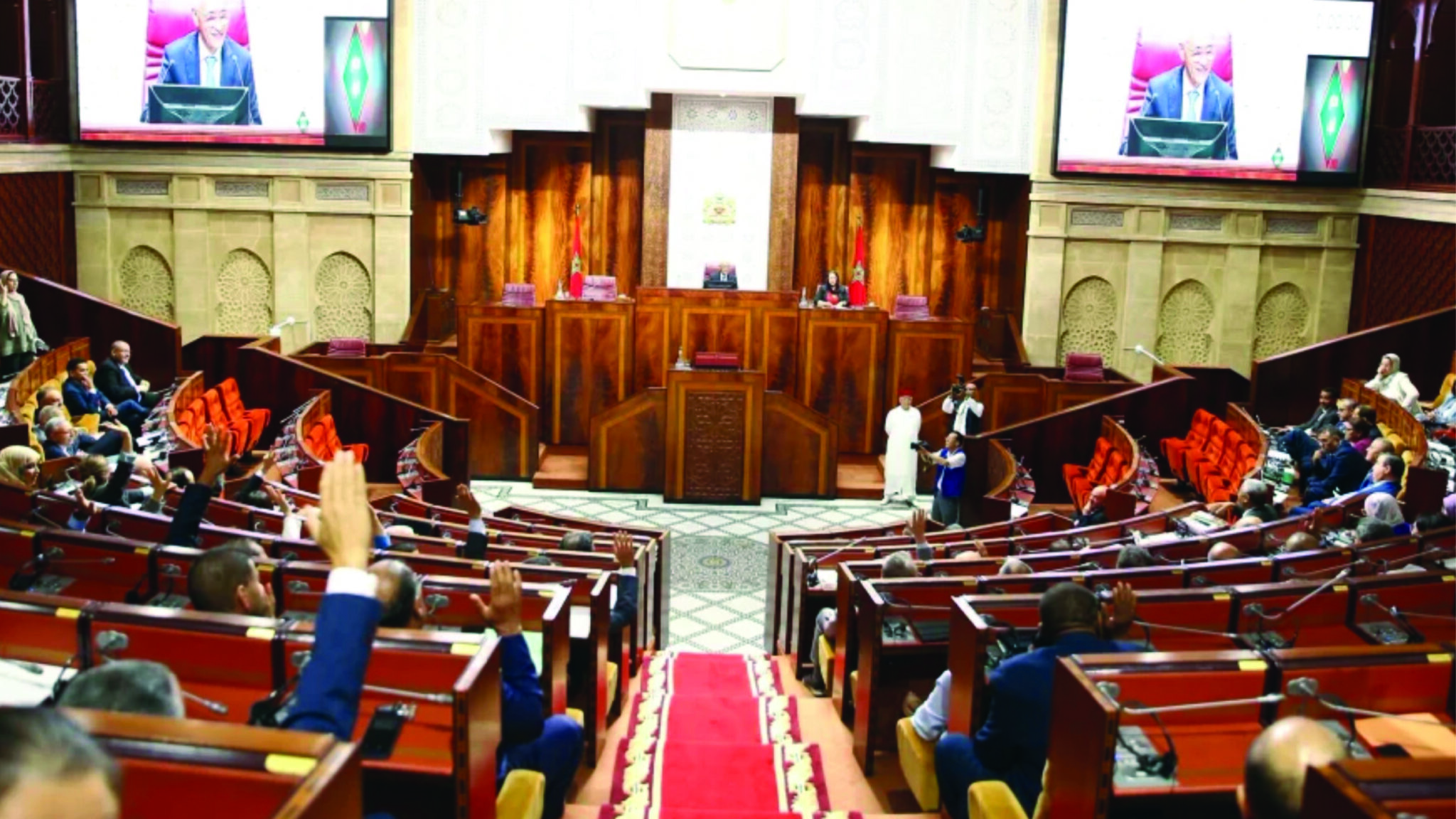
A few days were enough to illustrate the brisk pace of reforms underway in the health sector. On Monday, the House of Representatives adopted the reform of the law governing the National Order of Physicians.
On Thursday, the Government Council was to — and likely did — examine the draft decree revising the methods for setting drug prices.
Two distinct but complementary texts that fall within the same dynamic: adapting the health system to the requirements of the generalization of social protection and to the growing expectations of citizens.
Beyond their legal scope, these reforms testify to a profound evolution in health governance. They come in a context marked by the creation of Territorial Health Groups (Groupements sanitaires territoriaux, GST), the rise of new health agencies, and ongoing investments aimed at strengthening hospital infrastructure and human resources.
With the reform of Law 08.12 relating to the National Order of Physicians, the public authorities intend to modernize an institution expected to play a larger role in steering the health system. The objective is also to adapt the legal framework of the medical profession to the creation of Territorial Health Groups, to consolidate regionalization, and to improve the quality of professional practice.
The new text broadens the composition of the National Council to ensure more balanced representation of the various categories of physicians. It further includes practitioners from the public and private sectors, teacher-researchers, military doctors, as well as Moroccan doctors practicing abroad.
Female representation is also strengthened, in line with the evolution of the profession. Thus, among the main new provisions, note the broadened representativeness, since the number of members will increase from 27 to 40. The text also reserves six seats for women physicians. In addition, the new law reorganizes regional councils in accordance with the country’s new regional division by providing a minimum of eight members per council.
But the reform is not limited to a governance overhaul. The Order also sees its prerogatives evolve. Its role is consolidated, since its consultation becomes mandatory regarding draft laws and proposals related to medical practice, while its missions in ethics, continuing education, and support for professional developments are strengthened.
Modernizing a system that has become ill-suited
This reform also aims to free the institution from the deadlock it has experienced for several years, by opening the way to organizing new elections within a timeframe set by law. Recall that the last Order elections date back to 2022.
Another highly anticipated reform is the revision of the decree relating to the setting of drug prices, which will amend Decree No. 2.13.852. This text, on the agenda of the Government Council on Thursday, July 9, is being closely followed by all actors in the drug chain: manufacturers, importers, pharmacists, distributors and patient associations.
The stated objective is to modernize a system that has become ill-suited to the developments of the pharmaceutical market, while seeking a balance between several imperatives: preserving citizens’ access to treatments, ensuring the availability of medicines, encouraging industrial investment, and maintaining the attractiveness of the Moroccan market.
The future decree should thus review price-determination mechanisms and introduce greater flexibility in certain market segments. Better regulatory visibility is also expected, likely to favor the introduction of new treatments and to support the development of local production.
The reform mechanism is built around three major levers: international benchmarking for originator drugs (princeps), the maximum reference price for generics, and, finally, the structure for calculating the public sale price.
Regarding the first point, the price of an originator drug, imported or locally manufactured, is aligned with an international comparison. Thus, Morocco, as a reference country, compares its prices to a panel of six countries including France, Spain, Portugal, Belgium, Saudi Arabia and Turkey. According to this alignment rule, the Moroccan ex-factory price excluding tax must match the lowest price observed in the benchmark.
Moreover, the novelty of the draft decree is the introduction of a maximum reference price to regulate biosimilars and generics. Thus, the new scheme provides for an automatic drop in the price of the generic as soon as it enters the market. A discount that is indexed to the price of the original molecule.
Note that the reduction rate is calculated by price brackets. Thus, for prices below 300 dirhams, a minimal reduction will be applied, and for higher brackets progressive percentage decreases set by the decree’s schedule will be applied.
Finally, the future text sets the structure of the public sale price. After reduction by the Ministry of Health of the PFHT (manufacturer price excluding tax), it will result from the addition of the PFHT, the wholesaler’s margin, and the pharmacist’s margin.
Through this price framework, the public authorities seek to balance access to care and the financial viability of pharmacies.
These two reforms confirm, it should be noted, that the health file has entered a more operational phase.
A turning point that will certainly be closely scrutinized by professionals and patients alike, awaiting concrete results on the ground.
Drug pricing: A long-term reform…
Since 2013, the reform of drug price-setting has followed a path marked by successive adjustments and lengthy consultations.
After an initial phase that consisted of making a diagnosis, several rounds of negotiations were opened between the Ministry of Health and representatives of pharmacists, allowing each side to defend its priorities.
Authorities sought to control public spending and establish greater transparency, while pharmacists advocated for accompanying measures.
These should allow for fairer remuneration, preservation of the economic balance of pharmacies, and better consideration of supply constraints. The two parties agreed on a version that was later reviewed and improved.
The exchanges were sometimes tense, but they helped advance the file. Today, the reform remains a sensitive undertaking at the crossroads of regulatory imperatives, the viability of the pharmacy network, and the security of access to medicines.