Business
Brahim Benjelloun Touimi: “The Banking Sector Has Been Able to Prove Innovative”
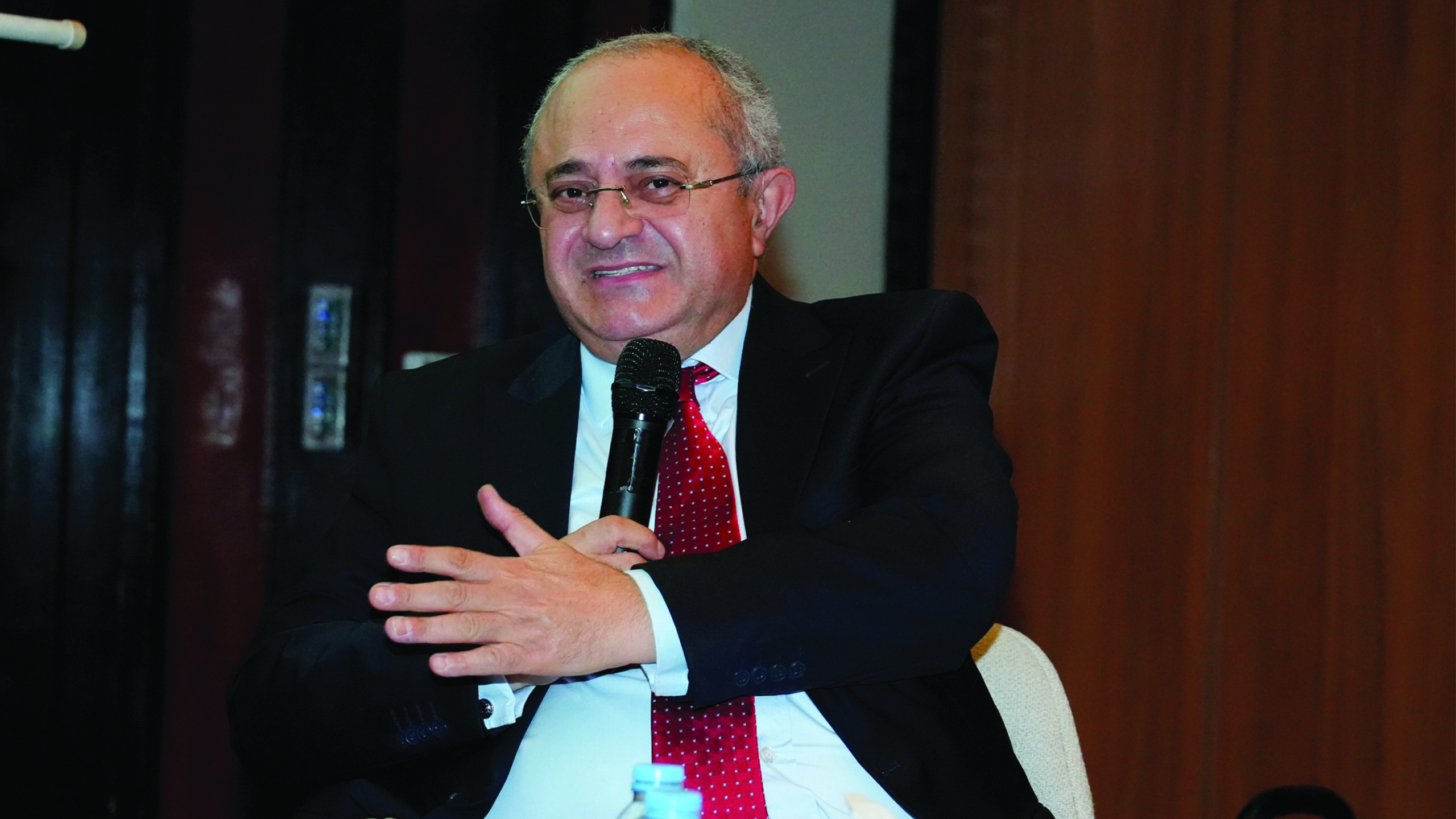
For the Chairman of the Board of Directors of the Casablanca Stock Exchange and Deputy Managing Director (CEO delegate) of Bank of Africa, the investment effort is moving in the right direction, as it combines the efforts of both the public and private sectors.

Convincing results for banks
“Beyond the levels of outstanding credit, the banking sector as a whole is delivering convincing results, also driven by its support for all these public investments. Precisely because banks have made their strategy of financing the national economy part of national priorities.
Even more so, the banking sector has been able to innovate. Among the types of support it provides are, of course, traditional loans and syndicated loans.
Sometimes, guarantees provided for the financing granted to public enterprises have made it possible to deconsolidate banks’ exposures and obtain additional borrowing capacity. Financing has also taken the form of more sophisticated operations such as debt funds, or other innovative financing such as OPCIs, which have monetized State assets.
There are also these highly structured tools, PPPs, which associate the State—backed by its credible signature—with the private sector. When one thinks of the 1,000 to 1,500 billion dirhams of investments planned by 2030, it is dizzying.
At the same time, this strengthens confidence in the future among operators and financiers, which is reflected in the figures for induced private investment and FDI.”
Further developing the financial market
“In the capital market, and specifically within the stock market, much remains to be done. That is true—and we are proud of it: IPOs have multiplied in recent years.
Very interesting progress has been recorded in terms of volumes traded on the exchange, and in the virtually unprecedented broadening of the base of retail (individual) investors. All of this is moving in the right direction.
The financial market has indeed been set in motion, with all the components of its ecosystem, with the support of our regulators to accompany public investment and contribute to its trickle-down effects and to the private investment dynamic.
However, we will have to reach the cruising speed prescribed by the New Development Model, which will make the Casablanca Stock Exchange even more representative of all sectors of the Moroccan economy.
The instruments announced by the minister, such as the futures market that starts at the beginning of April—together with its corollary, the clearing house—will enable corporate managers and financial institutions to better manage their risks and, through hedging strategies, to ‘lock in’ uncertainty.
This financial sophistication is not there just to tick a box in a market-modernization action plan. These instruments are being introduced for the benefit of operators so they can better manage the risks initially linked to their equity portfolios, through the MASI 20 futures contract.
Tomorrow, it will be for their interest-rate risks, their foreign-exchange risks, and perhaps even those linked to volatility in commodity prices. I strongly believe in this synergy and this intelligent relationship—quite rare in countries like ours—between the private sector and the public sector.”
Mohammed VI Fund: A subtle structure
“The benefits of this Fund are potentially very great, and expectations of it can only be high. The arrangement it has given rise to is truly subtle, bringing together several stakeholders.
What seems interesting in the design of the FM6I is that it combines several complementary financing tools: from direct lending to equity participation, including subordinated loans, support/training.
We also note with interest the fact that it called on private asset-management companies to manage the thematic funds created by the FM6I.
The magic is precisely to bring together, around the same ambition, several public and private actors. The work of education and promotion must continue. It is essential.”
Spillover effect and impacts
“Worldwide, it is estimated that every dollar invested should generate between 1.6 and 1.7 dollars through a spillover effect. I was impressed by the ambitions stated by the Mohammed VI Investment Fund, which believes it can achieve a multiple of 4 and up to 5.7.
We must also keep in mind how much investment is needed to generate one point of economic growth. In this respect, there is the famous concept of the Incremental Capital Output Ratio (ICOR), which in Morocco stands at a rather high level of 7 or 8, which is unfavorable, whereas for a country like Turkey it is 4.
The ultimate question would be whether public investment—which, through spillover (crowding-in) effects, generates private investment—translates into job-creation intensity.
Together, we will have to work so that public investment spending and the private investment it induces create more jobs than they do at present. If we Moroccans have succeeded in economic transformation or industrial transformation, we must also succeed in inclusion.”
Non-financial support
“All the ingredients for success are there. One only has to review all the incentives put in place by the State precisely to encourage innovation. I think that we, financiers, will have—somewhat in the way of private equity—to be, in terms of mindset, even more partners in growth, even if we are only extending traditional credit.
Many efforts are already being made in this regard. I was saying how banks have embraced national strategies and how they contribute to them.
For this immense pool of potential value creation that SMEs represent—95% of the productive fabric—we should be able, by leveraging existing schemes, to support them more, both through finance and through advisory. So, the non-financial dimension is just as important.
As for innovation, it is an environment of stability and predictability that fosters it—and that is the case. It is a favorable business climate; it is sectors and clusters that must continue to develop.
In Morocco, the ingredients are there. There are mindsets to be encouraged further in favor of risk-taking, of supporting growth and not simply through ‘dry’ financing. There is this cultural shift to bring about—and sometimes this cultural revolution to carry out.”