Kingdom
Abdou Lahlou, the architect of airports
For over twenty-five years, he has been envisioning architectures where technical rigor meets human sensitivity, serving comfort, flow, and light.

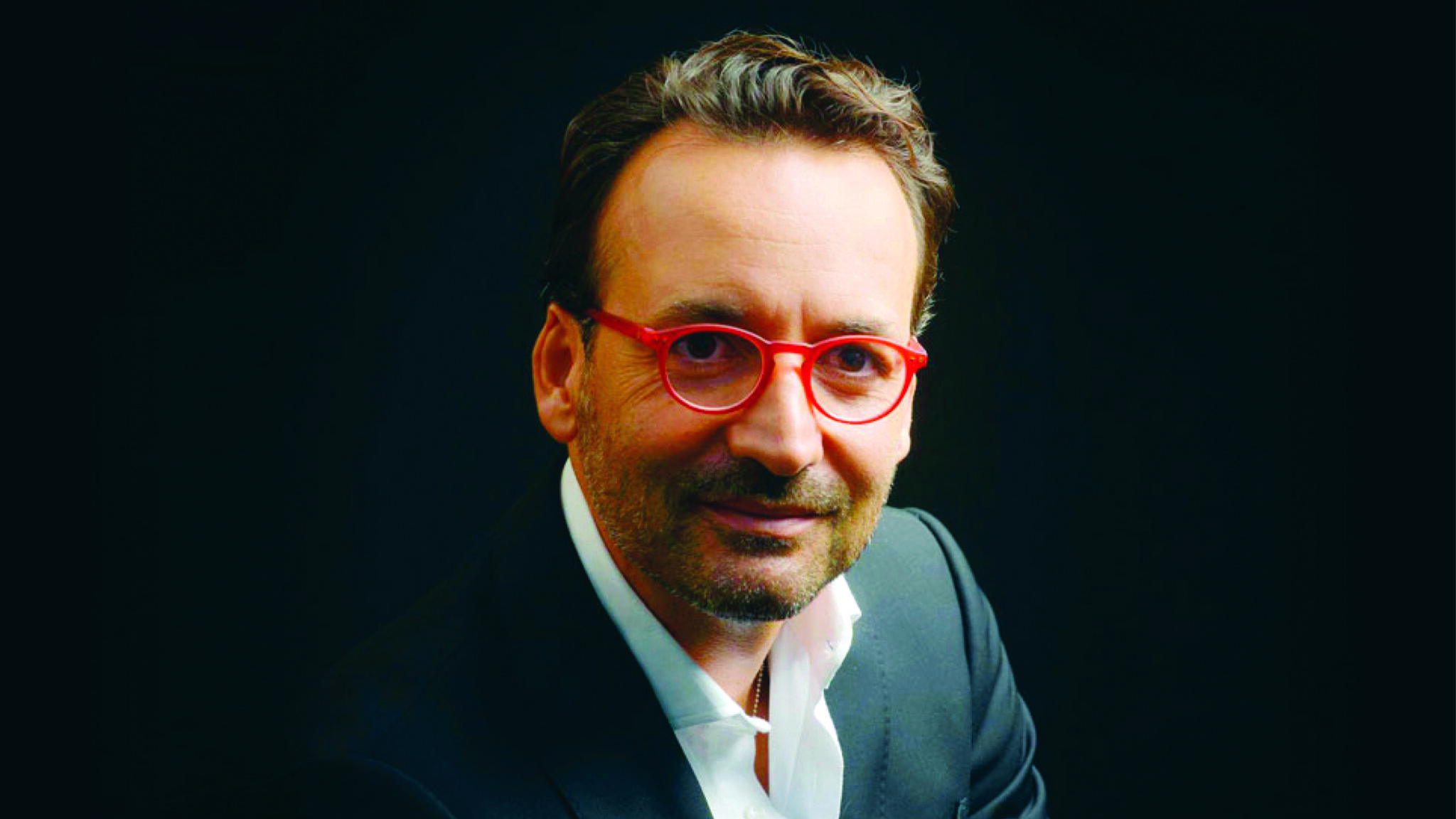
Graduated from the Toulouse School of Architecture, Abdou Lahlou began his career in Paris within the Paul Chemetov firm before founding his own agency in Casablanca in 1999.
Leading a team of about thirty collaborators, he develops an open and demanding approach based on the diversity of profiles and disciplines. His agency has established itself as a national and African reference in the design of airports, hospital, university, sports, and institutional facilities.
Awarded several international distinctions, including the Skytrax World Airport Awards and the Gold Trophy of the Africa Investments Forum & Awards, Abdou Lahlou embodies a generation of Moroccan architects focused on innovation, sustainability, and excellence.
In recent years, airport terminals seem to have become his specialty. Although he specifies that this sector represents only “30 to 35% of his work”, his name constantly appears in the awarding of the latest architectural conception contracts granted by the National Airports Office (ONDA), within the framework of their “Airports 2030” strategy.
His latest project includes the extension of Agadir Al Massira Airport (2.2 billion dirhams). It involves the redevelopment and extension of the passenger terminal to reach a total area of approximately 75,000 m², including 23,800 m² for renovating the existing terminal and about 51,200 m² for the extension.
Infrastructure works such as road construction, exterior development, expansion of access roads, and vehicle parking are also planned. This will increase the airport’s annual capacity from 3 to 7 million passengers.
A year earlier, in November 2023, Lahlou won the contract for the extension of the Marrakech Menara Airport terminals (2.2 billion dirhams), a platform he also designed.
There, the project concerns reconfiguring and enlarging the passenger terminal to approximately 142,000 m². Exterior works on traffic lanes, green spaces, city-side and runway-side esplanades, and fountains are planned. The goal is to increase the airport capacity from 9 to 16 million passengers annually.
Sports Facilities and CMC
The Benslimane airport and the new terminals of Rabat-Salé and Fès-Saiss also feature among his masterpieces. His secret to succeeding in this strategic niche? “More than 25 years of experience in these programs, based on rigor, innovation, and results. Understanding flows, anticipating constraints, and creating fluid and identity-rich spaces”, he reveals.
Highly active in the aviation world, Lahlou is equally efficient in public facilities, which mainly form the core of his work. Notably the ONDA headquarters, the Inwi Data Center, and the Ain Sebaâ Zoo.
He also excels in designing professional training establishments. The Cities of Trades and Skills (CMC) of Casablanca-Settat, Souss-Massa, and Tanger-Tétouan-Al Hoceima were born from his imagination. Alongside Fouad Agharmine, he also designed the future Errachidia University Hospital Center (936 million dirhams).
Large Sporting Venues
Lahlou is also successful in the sports sphere. One of his major trophies is the 16,190 m² multi-sports hall in Rabat, with a budget exceeding 246 million dirhams. It will house a 1,738 m² ice hockey rink, making it the largest of its kind in Africa.
His portfolio also includes the future Grand Stadium of Dakhla (268 million dirhams) and the renovation of the Mohammed V Complex in Casablanca (250 million dirhams). “We completely redid the stadium, especially the locker rooms, stands, and tribunes, to give it new life and make it operational for the 2025 Africa Cup of Nations matches”, he proudly states.
His agency’s approach is to ensure each project has its own signature and identity according to the city. “We want each project to be truly adapted to its location and environment. That is why we try to be creative in designing these facilities”, he supports.
Lahlou, who integrates humans and Moroccan culture into his works, is also committed to the durability of his buildings. “When building public facilities that are quite expensive, they must last over time. Hence the choice of resistant and effective materials. Ecology is also very important because a wise orientation allows the building to consume less energy”, he explains.
Ultimately, Lahlou’s ambition is to “create spaces full of emotion, where technical rigor and human sensitivity meet, serving comfort, light, and those who inhabit them”.