Influences
Studios and rehearsal rooms: The headache before recording
Faced with an almost non-existent musical infrastructure, Moroccan bands run up against a sad reality, marked by a desert of recording studios and, more seriously, by a glaring lack of rehearsal rooms. Across the Kingdom, there are said to be only about twenty professional spaces worthy of the name.

While the “cultural and creative industries” position themselves as the Kingdom’s future oil, a drummer drags his snare drum up a stairwell, a guitarist negotiates with the upstairs neighbor who threatens to call the police at 9 p.m., and a rapper records his voice in a closet turned into a booth with blankets and mattress foam. Welcome to the sound backstage of Morocco 2026.
Where improvisation meets ambition and where the attractive cultural showcase still too often hides bare walls. Sakadoya cut to the chase.
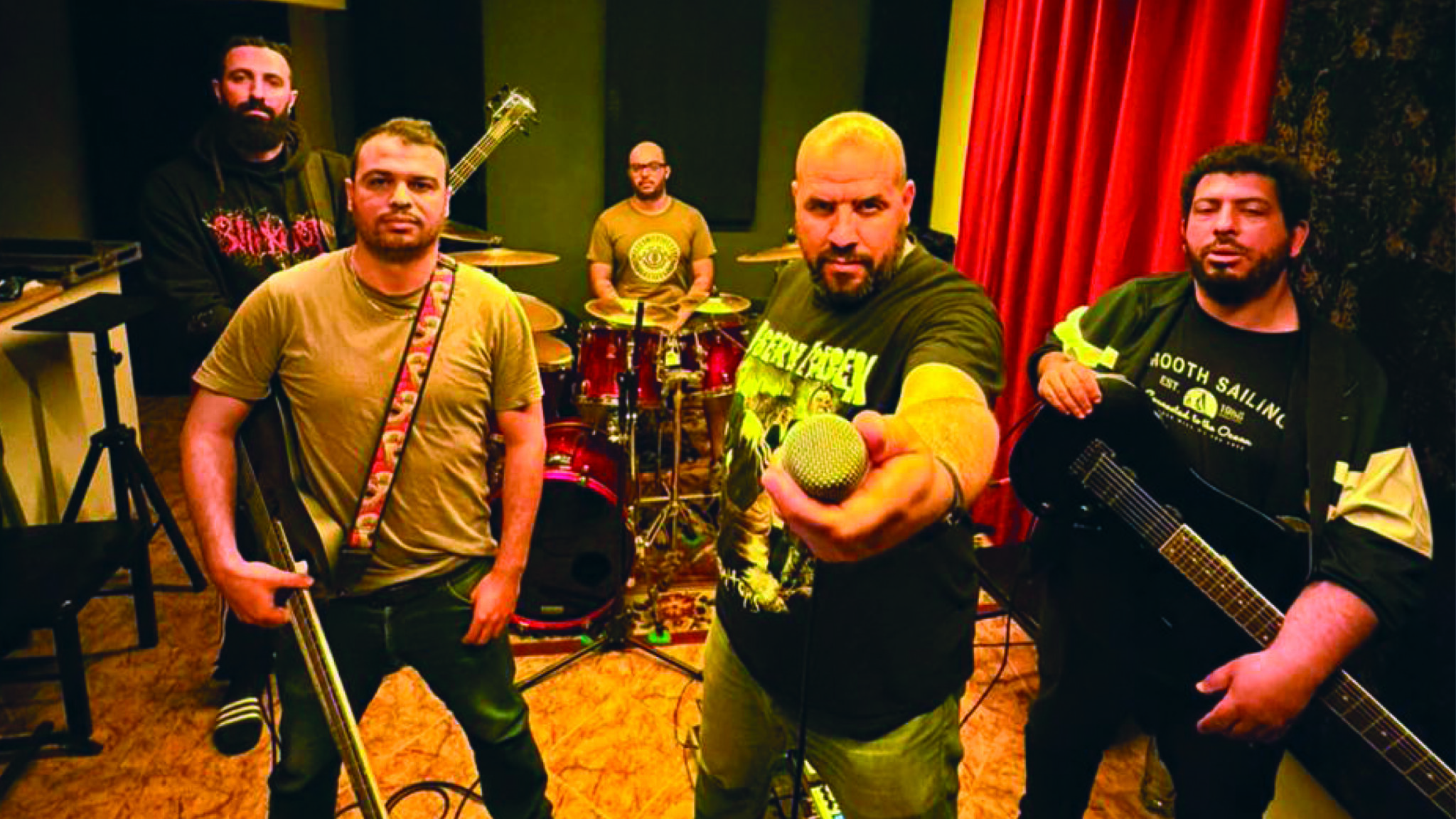
Their leader, contacted a few days ago, says bluntly that the band does not have this rehearsal-room problem. “We created our own studio and rehearsal room in Settat. Even though it’s far, other bands come too”. A radical, makeshift solution built with whatever was on hand, made of rock wool, perseverance and probably debts. A textbook case where, for lack of sufficient offerings, artists build their own. A few kilometres from Casablanca. A powerful symbol of a scene moving forward, but in scattered order.
The sound marathon
In Rabat, Studio Hiba (Hiba Foundation) remains the absolute reference. With its 1,500 m², treated acoustics and an incredible backline (Sonor drums, Marshall, Fender, Ampeg amps, high-end microphones), the rehearsal room rents for 200 dirhams an hour. For a serious band that rehearses three times a week, you quickly talk about 8,000 to 12,000 DH per month. Professional, inspiring… but out of reach for the vast majority of emerging formations.
Fortunately, other more accessible places exist in the capital. The French Institute of Rabat (IFM studio, Al Yanboua Street) offers the grail: 70 DH an hour, with discounted packages (10 hours for 620 DH). In high demand, you must book weeks in advance, but it’s probably the most democratic place in the country. Right next door, Souk Music (Annaba Avenue) offers similar rates. There is also Studio Mori +, more oriented toward professionals and billed on estimate.
In Casablanca, the offering is denser but just as uneven. Plein Les Oreilles, run by Ali Faraoui, remains a historic institution that has hosted legends like Mahmoud Guinea. Coda Casablanca Music Center combines training and rehearsal, while L’Uzine in Aïn Sebaâ, an associative space, hosts many bands at very low rates.
Boultek, a center for contemporary music, also serves as a refuge for artists. LiveEvent Studio and ADL Studio (200 m², control room and live room) target a more professional clientele.
Soufiane Amouchal, frontman of the Casablanca thrash metal band Oldschool, rehearses at L’Uzine: “We go there three times a month, for sessions of almost six hours non-stop. The cost is very affordable: we pay an annual subscription of only 300 dirhams per person. For the recording of our first album, however, we had to invest about 25,000 dirhams in a real studio. The main difficulties for rehearsals are mostly internal: member availability. As for equipment, we don’t use L’Uzine’s gear; we bring all our stuff (professional drum kit, amp heads and cabinets) to maintain professional sound quality”.
The price of scarcity
In the ochre city, the landscape is clearly divided in two. On one side, high-end residential studios designed for international artists: Agafay Studio (a 15th-century riad in the medina), AM Studio Recording, Galactix Studio, Yoostood or the villas of LiveEvent Studio. Beautiful settings, pro equipment, writing retreats. The dream. For those who can pay.
On the other side, the reality for local bands is much harsher, as Saad, leader and bassist of the punk band Teltach, explains: “Before a concert, we rehearse at Boultek in Casablanca. Otherwise, we hardly rehearse. In Marrakech, there are virtually no affordable rehearsal rooms. The minimum rate is about 500 dirhams an hour, which is simply out of reach for us. The real problem is the total lack of consistency. We only rehearse when we have a live date approaching. Prices are too high, and there is no decent public or subsidized room to speak of. When you try to book, it’s a struggle: they make you go in circles for a single session. In the end, you waste a lot of time and money just finding a place to work. That’s why Teltach decided not to play live for now. In the meantime, the band focuses on digital”.
In Agadir, Essaouira (Studio Migdol), Fes, Tangier or Oujda, professional offerings remain limited. Many musicians therefore continue to rehearse in garages, on terraces, in an uncle’s living room or in associative premises whose walls sweat echo.
The home studio has exploded, but it does not replace collective sweat nor the acoustic power of a drum kit in a treated room.
The paradox is striking. On one hand, large showcase projects; on the other, an infrastructural base that remains fragile. The artists interviewed paint the same picture: high prices, limited availability, a cruel lack of municipal or associative rooms in popular neighborhoods and small towns.
Meanwhile, the Moroccan scene advances by way of brilliant improvisation. Sakadoya set up their place in Settat. Others squat garages or save for months for three days at Hiba.
The music doesn’t stop. It sweats, it rigs, it sometimes rages. And it often comes out stronger than elsewhere precisely because it had to fight to exist under difficult conditions.
But one cannot help wondering whether this ultra-dynamic creative youth risks running out of steam over the long haul, faced with this glaring lack of sonic foundations that would allow it to truly grow?
Where an “cultural ecosystem” is celebrated as being in full effervescence, perhaps it is time to ask the concrete question: “And to rehearse, where exactly do they go?” Today, the answer still too often boils down to a single word: improvisation.