Influences
Young People and Women: Two Mechanisms, One Failure
Unlike the regional women’s lists, which guarantee both female representation and political diversity, the incentives introduced for young people have failed to deliver results. The rejuvenation of the political elite still depends on the willingness of political parties.

We all remember that first day of the electoral campaign, when, following the last government council meeting, Aziz Akhannouch headed directly to the Rabat-Océan constituency to support the RNI candidate. A gesture with a double symbolism.
This constituency has long been known as the “constituency of death.” Outgoing ministers and former ministers, as well as other leading candidates, competed for the four seats in what is considered a PJD stronghold, since it houses the party’s headquarters and, until recently, that of its ideological parent organization, the MUR.
But the fact that the RNI officially launched its campaign in this constituency carries another message. Candidate Taha El Joumani is young, barely in his twenties.
He is one of several other candidates under the age of 35 fielded by the party at the top of local lists, as well as dozens of young people presented for these elections.
Presenting and supporting a young candidate with all its weight in a “constituency of death” is a strong signal of the place the party gives to young people, and above all to the renewal of the political elite and generational change within its decision-making and executive bodies.
The RNI is certainly not the only party to have given young people a chance. Of the 7,288 candidates who ran, just over 23% are young people, representing a total of 1,679 candidates. But it is among the few parties to have put young people at the top of its lists.
And that is where the difference lies. For the RNI, presenting young people is not a political token, but a choice aimed at renewing the elite and ensuring youth representation within institutions.
It is also a response to the state’s initiative to strengthen the presence of young people in positions of power and decision-making. The 2026 legislative elections did, in fact, see the introduction of a new mechanism to encourage young people under the age of 35, particularly those who do not identify with the current political offering.
The financial incentive covers up to 75% of electoral campaign expenses. But by the deadline for submitting candidacies, the relevant authorities had received no applications.
The irony is that the two electoral lists (out of 1,850 lists submitted) led by “people with no political affiliation” were submitted by “veterans.”
In Sidi Ifni, a well-known political switcher (PAM, USFP, etc.) ran for the two available seats. The other independent, a former member of the PUD, a party born out of a split from the Istiqlal Party, ran in Casablanca. The ambition expressed here and there, and even supported by part of civil society, ultimately failed to translate into action on the ground.
It is therefore the political parties, which benefit from this youth incentive mechanism, that have also, with a few exceptions, failed to play their part. The condition is, in fact, to be able to field a list composed entirely of young people under the age of 35, alternating between the two sexes.
In any case, political parties, provided they exercise sound judgment and demonstrate sufficient good faith, are the only ones capable of driving this change.
Without this, no mechanism, however effective and attractive, can succeed. A look at the electoral lists is enough to recall this reality. Barely one in five voters is young.
Only 19% of registered voters are under the age of 35. Yet this is the main condition for being able to participate in political life, whether as a voter or a candidate.
For the time being, young people are choosing to remain outside political life. Otherwise, entering the electoral arena requires considerable involvement, determination and a strong dose of entrepreneurial spirit.
Today, the absence of independent youth lists in last Wednesday’s election is proof that—despite their supposed weight and the extent of their activism on social media—the requirement to obtain 2% of the votes of people registered on the electoral rolls in their constituency has become an insurmountable barrier.
This is the threshold required to qualify for state financial support, after, of course, completing the necessary formalities for submitting a candidate list, including the requirement to collect 200 signatures.
It is also necessary to open a dedicated bank account, have the accounts certified by a chartered accountant, and, above all, have sufficient cash flow to “pre-finance” a campaign costing several hundred thousand dirhams, in the hope of being reimbursed once the 2% vote threshold has been exceeded.
Women, guarantors of pluralism
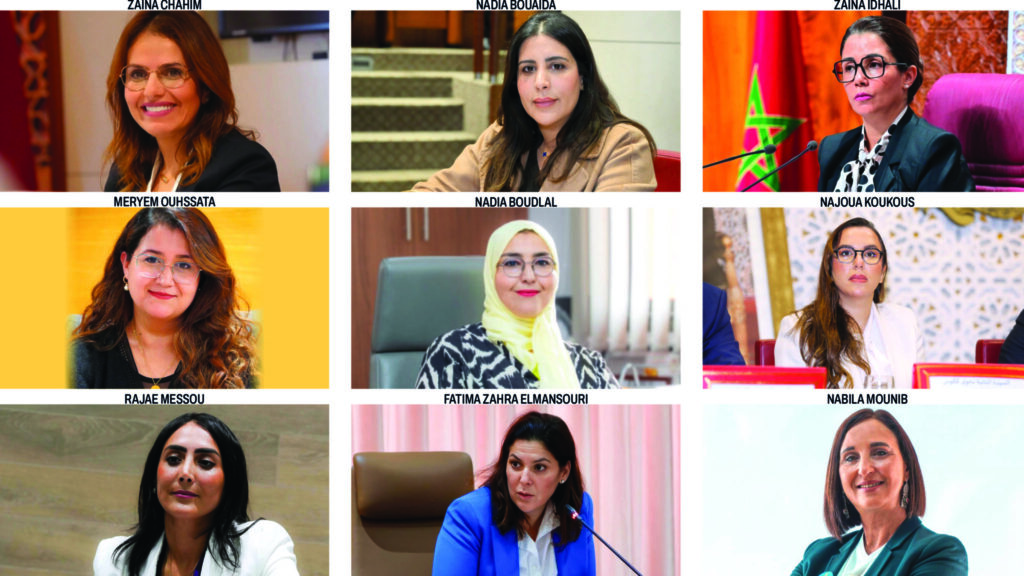
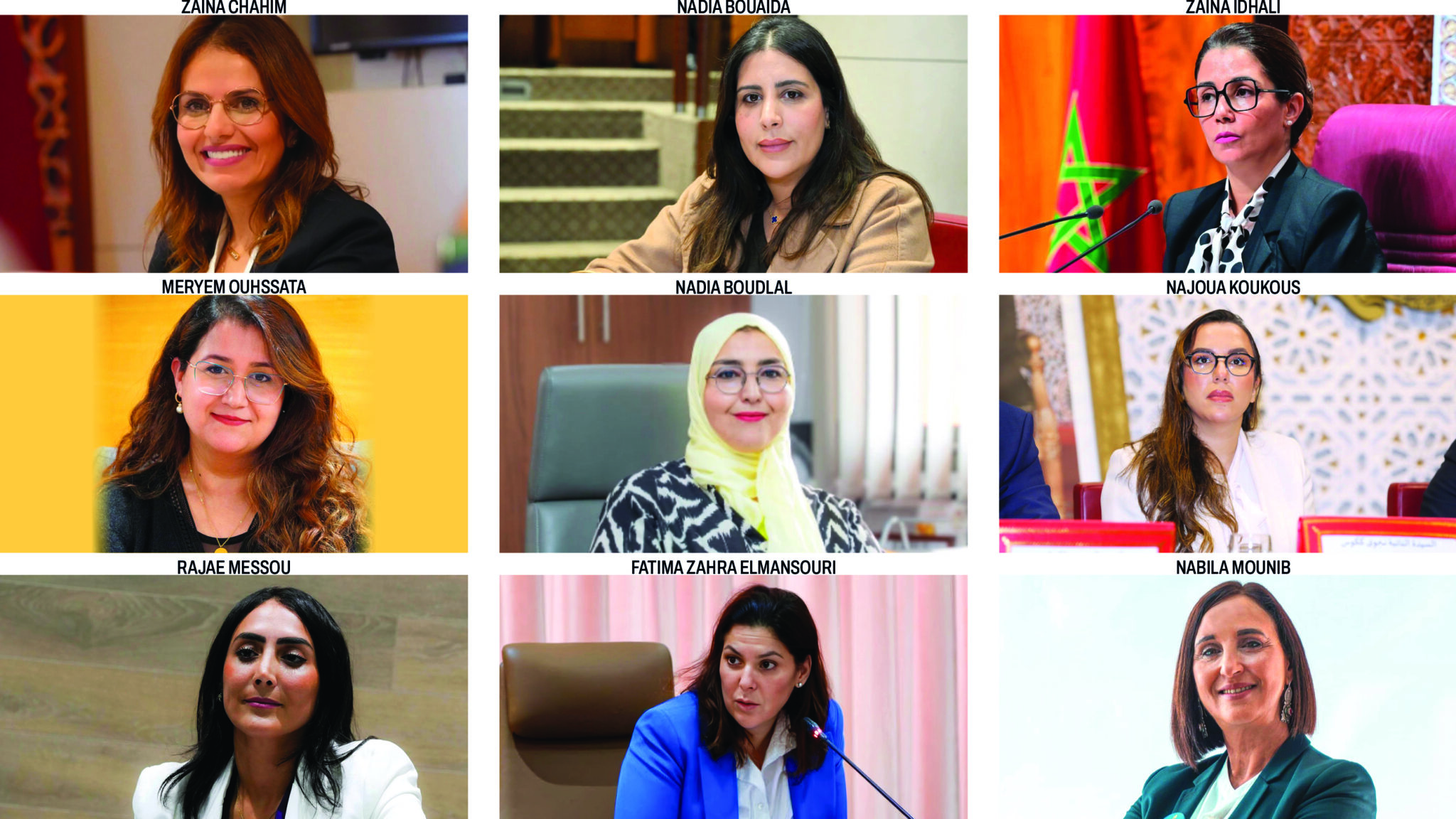
While the new mechanism has not, or not yet, fully contributed to rejuvenating the parliamentary population, support for women’s representation in the legislative institution is, for its part, bearing fruit.
And doubly so. Since the 2021 elections, with the introduction of regional lists to replace the women’s and youth lists (90 seats), women have also, and incidentally, become guarantors of political pluralism in our country. An amendment to Organic Law 04.2 has reinforced this trend.
Previously, only the first two positions on the list were reserved for women. Today, the entire list is made up of women.
This mechanism ensures that at least 22.8% of seats go to women, in addition, of course, to the seats won on local lists (6 seats in 2021). It should be recalled here that the candidates heading 121 local lists are women. This is still little.
Nevertheless, this mechanism above all enables small parties to be represented within the legislative institution. Indeed, it was thanks to the regional lists that the PJD was able to save face in 2021.
Of its 13 seats, 9 were won through these lists. Small and even medium-sized political parties must now, if they are to continue to exist, field competitive women at the regional level.
Female recruitment is no longer merely a parity constraint or a condition for accessing additional financial support; it is becoming a condition for party survival.
All the more so because, for the candidates themselves, the mandate secured through this mechanism gives them a degree of visibility and experience in parliamentary work, enabling them to run later—as has happened in several cases—on local lists.
Ultimately, to illustrate the importance of this mechanism, if the 2016 electoral rules had been applied in 2021, the House of Representatives would have been dominated by only three major parties (RNI, PAM, Istiqlal), which would have captured more than 300 seats, and would have included only 10 parties.
The regional women’s lists have therefore become the safety net of Moroccan multiparty politics. Since 2021, they have become both an instrument for increasing women’s representation and, as a secondary effect, a mechanism for diversification within the legislative institution.