Influences
Jazzablanca 2026: Cory Wong, Modern Funk without Fault
With his ultra-precise guitar playing and innate sense of groove, Cory Wong has renewed the codes of contemporary funk. At Jazzablanca, the hype man delivered a performance that was as virtuosic as it was joyful.

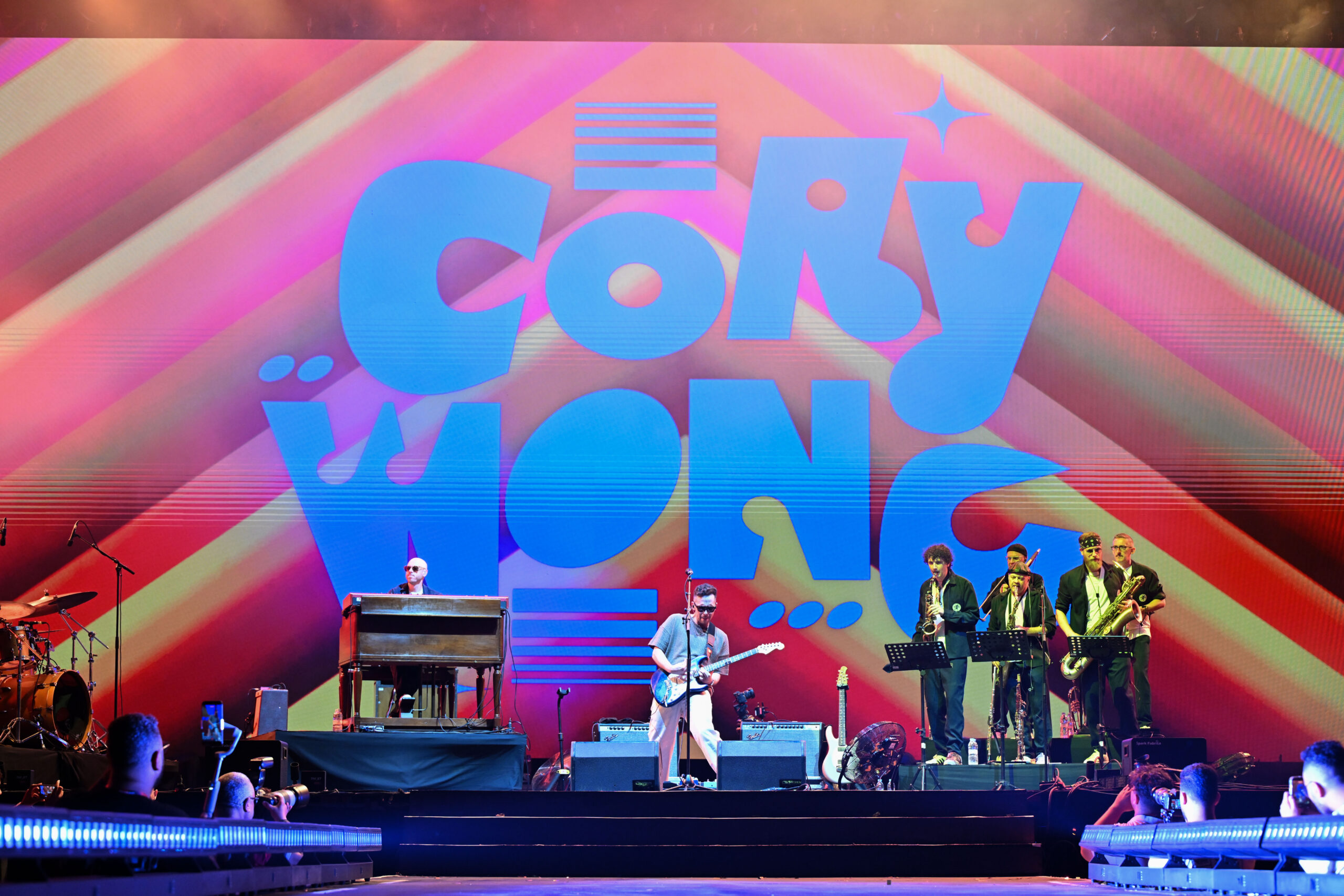
We live in a strange era where virtuosity has become a demonstration sport. Social networks overflow with guitarists able to play fifty notes in a second but unable to make a single one beat in our chest. By confusing speed with emotion, we ended up believing technique alone could create grace.
Then Cory Wong steps onto the Casa Anfa stage on July 3 and reminds us of a nearly forgotten truth: a well-placed groove is always worth more than a solo that desperately seeks to impress. That is his paradox. One of the most formidable guitarists of his generation plays as if he stubbornly refuses to remind us he is a virtuoso.
Because Wong is not a guitar hero, but an architect of rhythm. Where many others dream of occupying all the space, he chooses the interstices. His guitar playing resembles Swiss watchmaking that grew up in a Minneapolis club, nourished as much by Prince as by the great days of jazz-funk. Each chord is an electric impulse. Each attack is a spring that propels the track without ever crushing it. We are faced with music that prefers to make shoulders move rather than flatter egos.
This obsession with the collective says a lot about the man. Revealed with Vulfpeck, Cory Wong never cultivated the myth of the solitary genius. Even when he signs his own albums, he acts more like a conductor than a star. His podcast and collaborations with Jon Batiste, Dave Koz, or even the Jonas Brothers express the same conviction: music is a permanent conversation. His ego exists, of course, but it shows itself through the precision of arrangement rather than an excess of decibels.
On stage, this philosophy takes on an almost physical dimension. The pieces follow one another like a succession of small explosions perfectly synchronized. From the first measures, the bass lines bounce with joyful insolence, the brass bursts forth like flashes of light, and the keyboards provide an almost cinematic warmth. The drums stubbornly refuse any unnecessary display. As for Wong’s guitar, far from seeking to dominate, it circulates, relaunches, answers, and stimulates. That night, it was rare to see a musician so happy to serve the music rather than use it.
This generosity could, however, become his weakness. By mastering everything, Wong sometimes flirts with an almost intimidating perfection. Some sequences give the impression that every breath has been calculated, that every smile belongs as much to the show as to the moment. Chaos—the unpredictable matter that sometimes transforms a great concert into an unforgettable experience—often remains at the door. Everything is bright. Nothing truly overflows.
But perhaps that is precisely his singularity. In an era fascinated by the spectacular, Cory Wong continues to defend an almost artisanal idea of music: one where groove is an end in itself, where virtuosity is never a destination but a simple tool.
That night at Jazzablanca, he never sought to conquer the audience. He made them dance. And in a world where so many virtuosos want to be admired, he prefers the infinitely harder ambition of being felt. Perhaps that is today true virtuosity.cory