Kingdom
Youssef Kerkour: “It Took Six Months of Horseback Riding and Losing 30 Kilos for a Scene in Napoleon”
This Moroccan actor based in England is making a splash in the HBO series A Knight of the Seven Kingdoms. He takes us behind the scenes of his career and shares some of his most surprising anecdotes.

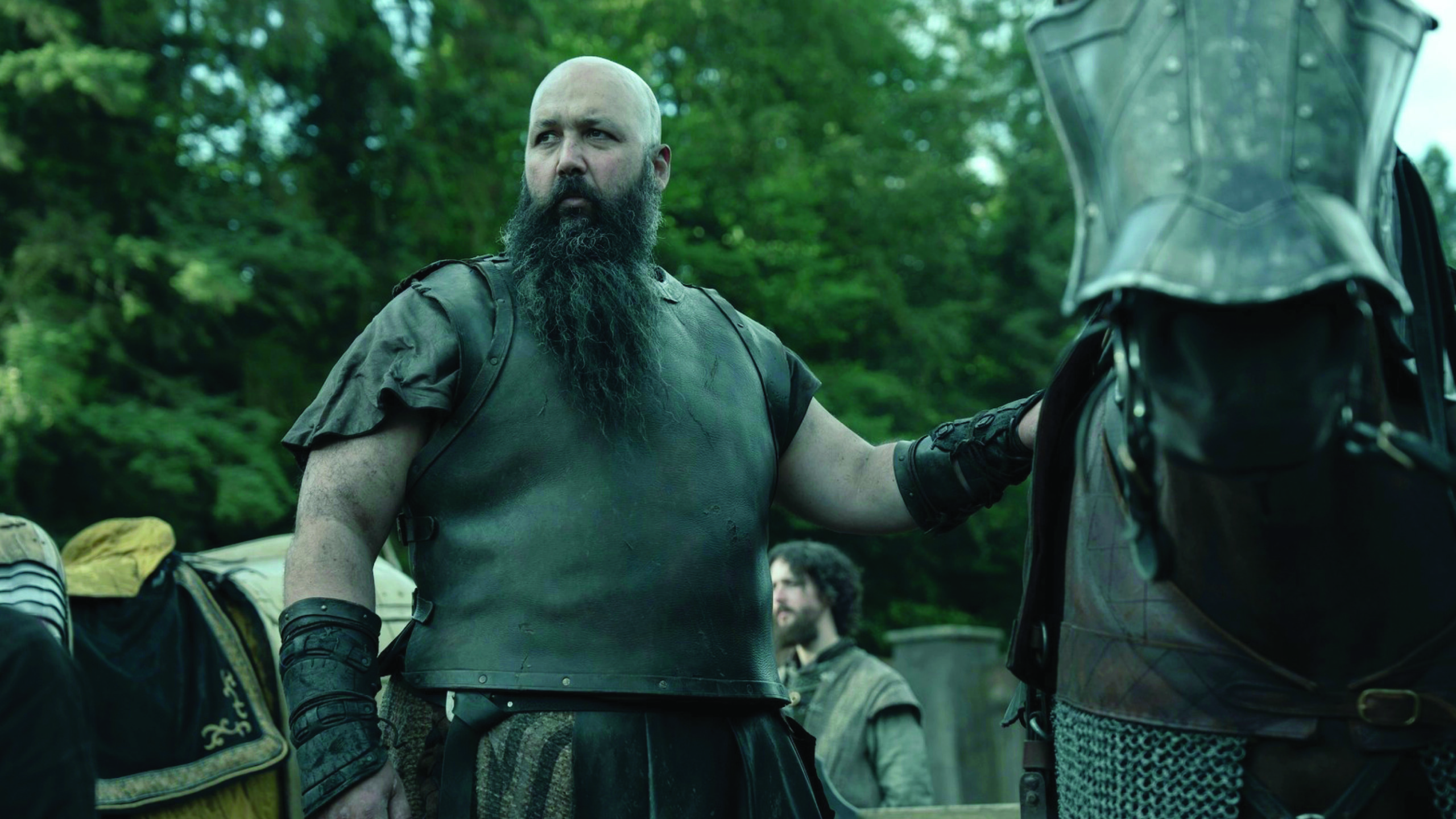
The forty‑something Youssef Kerkour has built his career between theatre, British cinema, and international productions. Trained in New York and London, he has developed solid stage experience and has shared the stage with Al Pacino, Lady Gaga, and Joaquin Phoenix. Today, he tells us about a few moments that changed the course of his journey.
From Rabat to Hollywood, there’s a whole world in between. Tell us about a precise moment when you felt everything was about to change in your career…
I think it was during Covid. I was sitting in my living room, nominated for the BAFTAs, wearing a tuxedo… but only on the upper half of my body. Underneath, I was in pajamas. It was the first – and the only – BAFTA ceremony held on Zoom. There was something absurd about that image.
Normally, being nominated means staying at the Savoy, having a dedicated team, an official photo shoot, the whole ceremony. That year, everything happened from my living room. Even the official portrait was taken with my phone. I received the recognition, but not the pomp. Tuxedo on top. Pajamas below. And yet, that was the moment when I understood that my life had changed. Perhaps for the better.
Your role in “Home” deeply moved viewers. What memory from the shoot always comes back to you?
In the first season of “Home,” there’s a scene where my character has to eat sandwiches with almost animal‑like hunger. I ate 37 that morning. Thirty‑seven! What few people know is that they were marmalade sandwiches (an unintentional nod to Paddington, the famous little Peruvian refugee bear who loves marmalade). I found the symbolism quite powerful.
But the most moving scene remains the visa interview at the end of the season. I could feel the full weight of what refugees and immigrants experience in the United Kingdom. I felt entrusted with a real responsibility: to represent that experience with dignity.
Is there a funny or touching anecdote that nobody saw on screen?
During my very first shot on a series, twenty seconds after the take began… the entire set caught fire behind me. The tents went up in flames one after another. The fire was quickly brought under control, but some of our reactions were kept in the final edit.
You move between several languages and cultures. Have you ever experienced a funny or unusual misunderstanding on set because of your accent or cultural references?
It has happened that I prayed in very unexpected circumstances: during Ramadan, in the middle of night shoots, at dawn, in costume, sometimes covered in mud or fake blood, on the edge of a forest… Seeing a man in medieval armor or in a military uniform performing his salat in a corner of the set can seem strange. But for me, it’s simply about staying aligned. I pray before every scene. It helps me let go.
So it’s a ritual…
Yes. I pray. Always. While it helps me refocus and let go, it has also taught me to always look for balance. Never to caricature, never to betray either my faith or the culture I represent. I always try to find a “middle ground” between respect and storytelling (…). After a powerful role like in “Home,” some actors feel they get “typecast.”
Steely Pate in “A Knight of the Seven Kingdoms.” Is there a scene where you improvised something the team kept?
What I remember most is the very first take. Twenty seconds after it started, the set caught fire behind me with Peter, who played Sir Duncan. That wasn’t planned, obviously. But the intensity of the moment was such that some of the reactions were kept.
A moment on set where the scale of the set or the crew amazed you?
Walking through sets identical to those seen on screen is an unreal experience. But what people talk about less is how difficult filming in Belfast is. The weather is unpredictable, and the mud is so thick that your feet literally come out of your boots. The battle scenes feel visceral because they truly were. Nothing was comfortable. Everything was authentic.
Between Shakespeare on stage and Ridley Scott behind the camera… which scene or line gave you the purest thrill? And why?
Filming opposite Al Pacino in “House of Gucci.” For an actor, that’s a form of accomplishment. Finding yourself face‑to‑face with someone you consider a monument… it requires great control. I wanted to rise to the occasion, not be overwhelmed by the prestige, to remain professional. I’m proud that I held my ground.
Do you have a memory of a director or colleague being surprised when they saw you play something completely different?
Before “Home,” I almost exclusively played terrorists or characters who died. This series was the first time the general public saw me portray a kind man. Someone who kills no one. It may sound anecdotal, but in our industry it’s a major turning point. It took me twenty years to reach that point. Alhamdulillah.
How does that influence your choice of projects?
Yes, today I can refuse certain roles. Terrorism is omnipresent in the news, and therefore in fiction. It is often the entry point for Arab actors. Now I can be more demanding about how Arabs and Muslims are represented. I read scripts carefully. If there is an outwardly negative representation of our culture, I refuse the project.
Most memorable moment on “Napoleon”?
For “Napoleon,” I trained in horseback riding for six months and lost 30 kilos for a winter retreat scene. On the day Ridley Scott was supposed to see me ride a horse, they dressed me in an enormous cape that made me tip backward. And for the scene where I had lost all that weight, they wrapped me in a huge bearskin that completely hid my body. It was… ironic.
Diversity on screen directly concerns you. Have you ever experienced a moment on set that made you realize your presence changed something for the story or for the audience?
On “Home,” one scene initially seemed disrespectful toward Islam to me. I suggested an alternative. Instead of awkwardly imitating a prayer, I sang in Arabic. For a Western viewer, it could resemble a prayer. For a Muslim viewer, it was obvious that I was singing. A respectful balance.
Did that moment influence the way you choose your roles?
It strongly influences my choices. I select my roles with great attention to how they portray Arabs. Sometimes you have no choice and discover too late that a character supposedly meant to be North African is portrayed in an unflattering way.
In those cases, there isn’t much you can do anymore. But an outwardly negative representation of Arabs is something I try to avoid as much as possible. Today, I have the luxury of being able to read an entire project before committing. If there is an element that reflects our culture negatively, I refuse. If they don’t send me the script, I even refuse the audition.
What lessons from your career could guide someone who wants to cross the same borders?
It took me twenty years to get where I am. It’s simply a lot of work. For a long time, the industry didn’t give me the opportunities I knew I could seize. The people who knew me personally knew I was capable of more. It took patience.
Morocco does not lack talent. What holds us back is language. Mastering English and its pronunciation is fundamental. Even with an accent. Without it, it’s impossible to access the British or American markets. You need to be able to hold a conversation, understand cultural sensitivities and codes. The world is moving toward English.
Morocco too (…). The industry is, at best, superficial and temporary. As Peter O’Toole said: “Statues of ice.” Remembering that true stability lies elsewhere seems essential today. And above all: stay grounded. Do not confuse recognition with real value. True wealth lies elsewhere.