Kingdom
Renewable Energy: The Southern Provinces, Spearhead of the National Strategy
The Moroccan Sahara has become a prime land for investment in renewable energy. Solar, wind, green hydrogen… large-scale projects abound, and this is only the beginning.

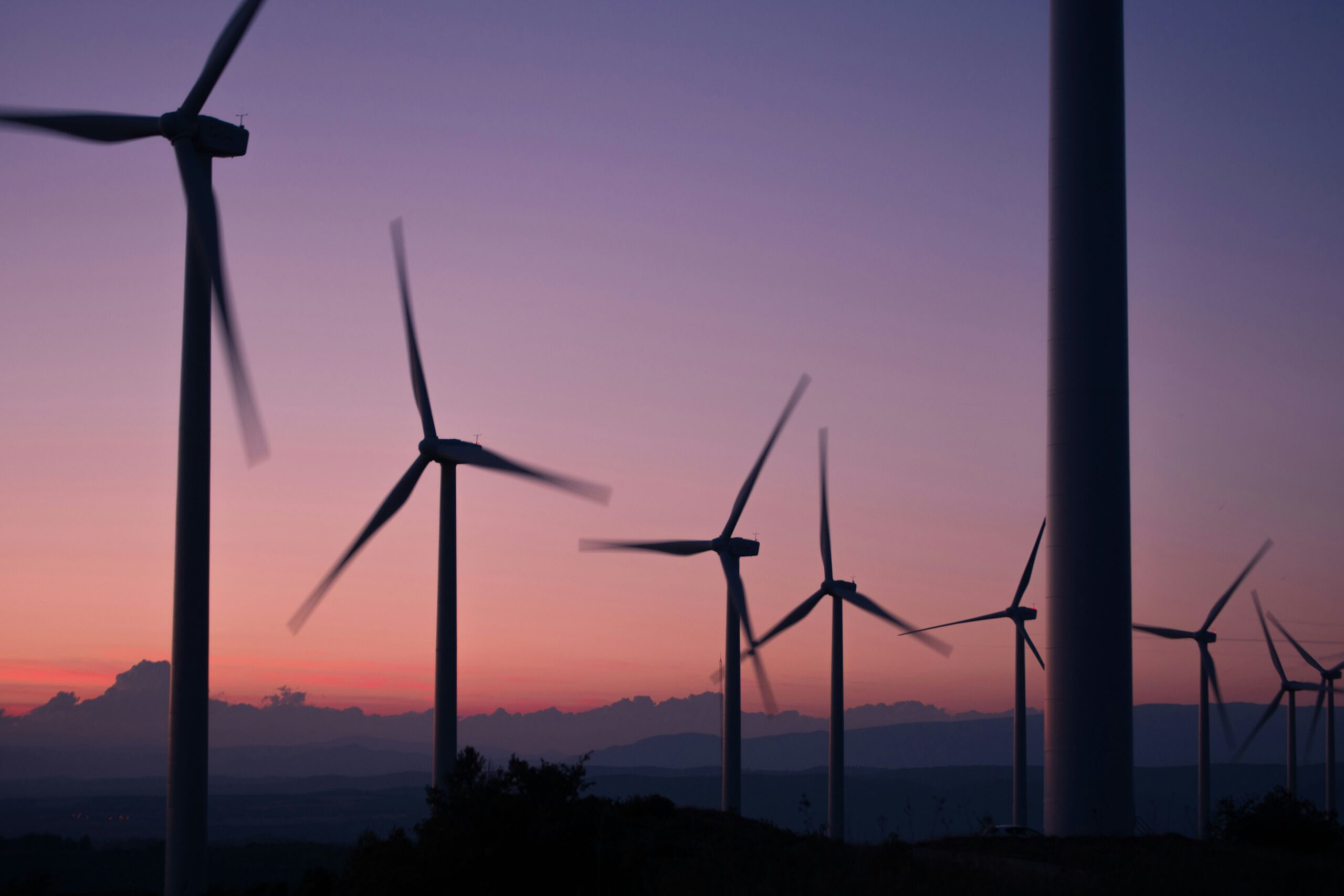
Morocco’s southern provinces play a strategic role in the national energy policy, greatly contributing to the goal of achieving 52% renewable energy in its power mix by 2030.
These regions are becoming a major hub for green energy production, mobilizing considerable investments in wind and solar power, and attracting major international developers and investors in the sector.
Whether in Dakhla, Laâyoune, Tarfaya, Boujdour, or Guelmim, projects are proliferating, wind farms are now part of the landscape, and solar power plants are springing up.
Indeed, the southern provinces of the Kingdom have benefited from major green energy projects already commissioned, with a total capacity exceeding 1.3 gigawatts (GW) by the end of 2024, representing an investment of nearly 22 billion dirhams.
In other words, the Southern Provinces now account for about 25% of the installed renewable energy capacity across the entire national territory, which reached 5.3 GW by the end of 2024.
A share set to grow even further: by 2027, Morocco plans to double its electricity production from green energy to reach nearly 2.7 GW in the southern provinces.
To achieve this, an additional 21 billion dirhams will be invested there in new wind and solar capacities totaling 1.4 GW.
Wind and solar projects are proliferating
Among the projects already operational is the Tarfaya wind farm, operated by Nareva, and in service since 2014, meeting the needs of nearly 1.5 million households. With 131 wind turbines and a capacity of 300 MW, it is one of the largest wind farms in Africa.
There is also the Aftissat wind farm, near Boujdour, developed by the company Énergie éolienne du Maroc (EEM), a subsidiary of Nareva. With a capacity of approximately 200 MW, the project was commissioned in its first phase in 2018 (and 2023 for the second).
Also noteworthy is the Akhfenir wind farm, with a capacity of 200 MW, commissioned as early as 2013 for its first phase. The energy produced is sold to industrial customers connected to the national power grid.
We will also mention the Dakhla wind farm, which began injecting electricity into the grid in March 2025, notably to power the seawater desalination plant in Dakhla. In Laâyoune, a 50 MW wind farm is already operational.
An extension (an additional 100 MW) is under development through a partnership between Emirati AMEA Power and Ynna Group, with commissioning expected around 2027. In 2023, the Boujdour wind farm, with a capacity of 300 MW, was commissioned as part of an integrated 850 MW wind program.
On the solar side, the Laâyoune power plant (80 MW) and the Boujdour power plant (20 MW) are already in service, as part of the NOOR PV I program led by Masen. Other photovoltaic parks are planned in Dakhla and Guelmim.
All these projects have significantly improved the security of the region’s electrical energy supply and contributed to meeting the growing demand from the population and economic actors.
And it’s not over, several large-scale projects have been announced. One of the most promising is that led by the consortium comprising Taqa and Nareva for the development of 1,200 MW of new wind capacity in the southern provinces.
First step in green hydrogen
Green hydrogen projects are also numerous, with the Moroccan Sahara positioning itself as a major production hub for this energy of the future.
Six national and international investment groups have been selected as part of the Morocco Offer to develop seven green hydrogen projects, covering the three regions of the Kingdom’s southern provinces, namely Guelmim-Oued Noun, Laâyoune-Sakia El Hamra and Dakhla-Oued Eddahab.
This is set to generate approximately 20 gigawatts of renewable energy, including approximately 10 gigawatts of electrolyzers, and produce approximately 8 million tons of green hydrogen derivatives, including green ammonia, synthetic fuel, and green steel.
Near Guelmim, the Chbika project is attracting attention. Led by TotalEnergies, this project involves building 1 GW of solar and onshore wind capacity that will power the production of green hydrogen through the electrolysis of desalinated seawater and its transformation into 200,000 tons per year of green ammonia for the European market, with the ambition of making it a world-scale green hydrogen production center.
Densifying the transmission network
One of the main challenges now is evacuating all this renewable production to the national grid.
To date, the southern region is connected to the national power grid via a 400-kilovolt (kV) transmission line that currently carries about 1,400 MW. This line already ensures the evacuation of energy produced by the various wind farms as well as the solar parks.
This line is now saturated, hence the launch of an extension project, initiated by ONEE, currently underway. The new extension will allow for injecting additional capacity into the national grid, pending the commissioning of the future HVDC electric highway, scheduled before 2030.
This 1,400 km high-voltage power line, connecting the South and the Center of the country, will be handled by the consortium formed by Taqa Morocco, the Mohammed VI Fund for Investment and Nareva.
A Land Blessed by Nature
The massive investments in the middle of the desert are explained, among other things, by the remarkable assets available to Morocco’s three Saharan regions, which the public authorities have known how to capitalize on.
First, an exceptional natural potential, characterized by record sunshine and powerful winds, which gives these regions a decisive competitive advantage to become centers of clean, profitable, and stable energy production.
In terms of sunshine, the Southern Provinces receive more than 3,000 hours of sun per year, with solar irradiation among the highest in the world (over 2,000 kWh/m²/year), ideal for developing solar power plants.
As for wind, nature has also been very generous: on the Atlantic coast, from Tarfaya to Dakhla via Laâyoune, the winds are constant and powerful (9 to 11 m/s).
These conditions, coupled with the availability of land over a wide area, enable the development of large-scale projects, making the Moroccan Sahara a hub for green and decarbonized energy.