Kingdom
Jalila Morsli: “The Emergence of Handicrafts Chambers 2.0 Is Essential for the Development of the Sector”
For the president of the Chamber of Handicrafts of the Casablanca–Settat region, the modernization of professional institutions will enable the sector to make a qualitative leap: enhancing the value of artisans, increasing exports, and ensuring the transmission of know‑how…

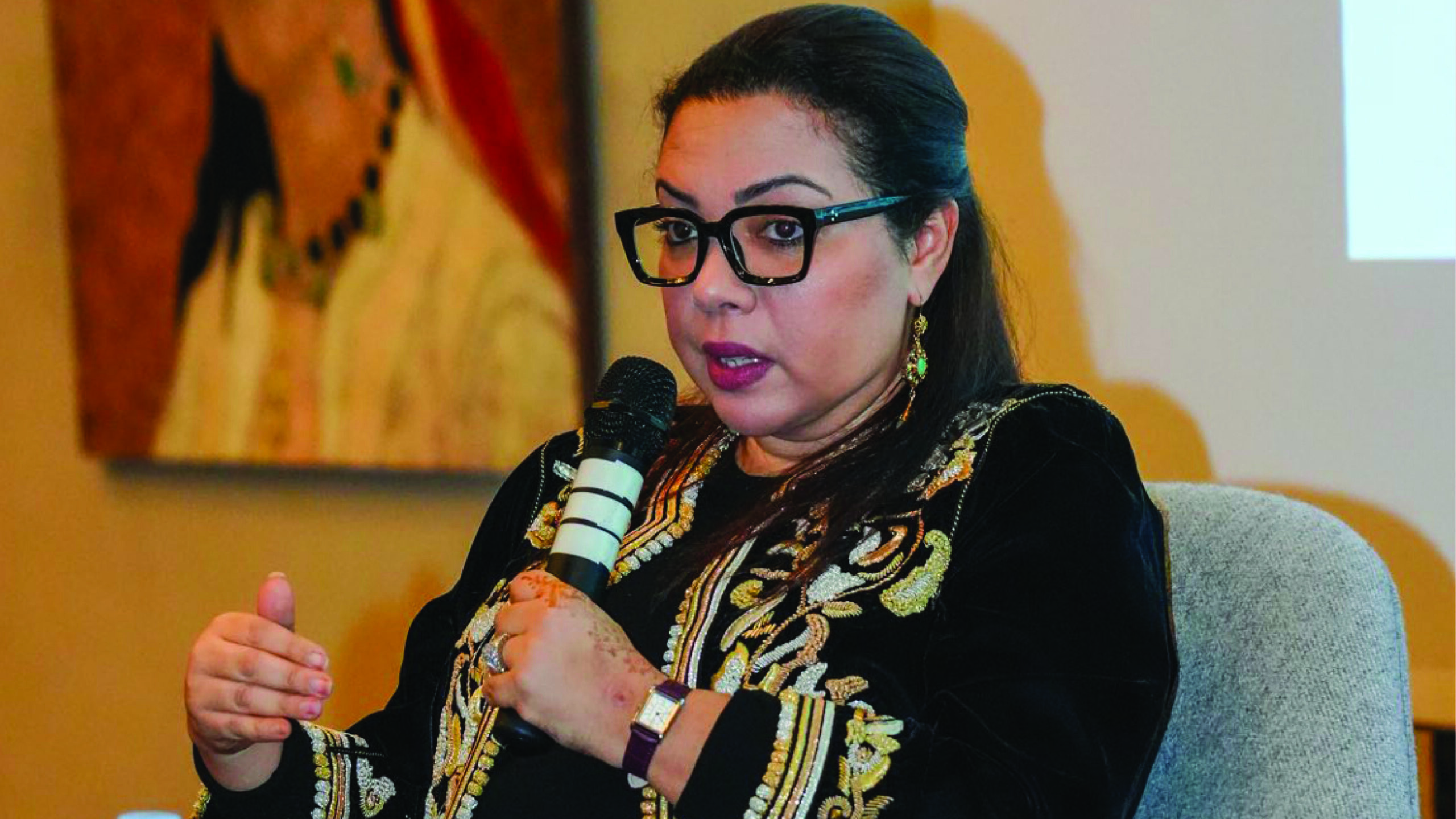
Major Progress Achieved for the Sector Thanks to Law 50‑17
“Over the past few years, and particularly after the Covid crisis, the handicrafts sector has undergone significant transformations that have helped address the effects of the 2020 crisis. We carried out a process of reflection and questioned the condition of the artisan.
Artisans have the right to a clearly defined status. Thus, Law 50‑17, adopted in June 2020, regulates and restructures the handicrafts sector by defining, on the one hand, the status of the artisan and artisanal activities—particularly those related to production, artistic crafts, and services—and, on the other hand, by creating the National Handicrafts Register, which has given artisans an identity through the assignment of a personal identifier to every artisan, maâlem, and grand maâlem.
This register has also made it possible to identify the major professions within the handicrafts sector. And here I would like to mention a figure that may surprise many, as there are 173 handicraft professions identified, ranging from production and creation to services.
We are therefore speaking of a vast ecosystem comprising several categories of professions. For example, the making of a caftan requires the involvement of 10 to 15 different crafts. The same applies to the manufacture of a horse saddle, which involves around 17 professions.
This is why we speak of a rich sector that the State, through legislation, seeks to enhance. Law 50‑17, whose implementation is currently underway, has established the National Handicrafts Register, which lists artisans, cooperatives, and craft enterprises in order to ensure transparency.
The same law has also introduced the professional card containing a unique identification number for each artisan. It also created the National Council of Handicrafts. The objective is to restructure the sector, facilitate access to medical coverage, and modernize production tools.
Today, thanks to the professional card, artisans can benefit from several advantages and privileges, notably social protection in exchange for a contribution of 150 dirhams, as well as numerous banking products following the signing of several agreements between the Ministry of Handicrafts and banking institutions.
The law also provides for the establishment of professional bodies. Historically, each profession was overseen by a Lamine. Today, in order to organize professions in a modern way, a representative of the profession will be elected to replace the Lamine, which will make it possible to have a clearly identified interlocutor.
The sector has great prospects for development ahead of it. The challenge of this restructuring is to move from a social sector to an economic production sector.”
Handicrafts Chambers 2.0, the Cornerstone of Restructuring
“Law No. 50‑17 has profoundly modified the prerogatives of the Chambers of Handicrafts. This is important in order to move from structures operating according to archaic methods to modern chambers with broader missions. Until now, it must be recalled, aside from a few limited actions such as organizing trade fairs, they did not have real prerogatives.
The draft law, currently at the General Secretariat of the Government (SGG), and whose development was the result of a participatory approach involving all stakeholders in the sector, addresses existing issues, particularly those related to governance and the organization of the chambers, their status, and their missions.
Our objective is to modernize the chambers because there is now a clear sectoral vision that must be implemented in order to move forward. It should be remembered that the actions carried out over these two years had not been achieved during the previous fifteen years. Today, we need executives and young talents in order to successfully implement projects. We also need to adopt a win‑win approach.
We must move toward version 2.0 in order to evolve from an archaic structure to a more modern one. The reform of the Chambers of Handicrafts is essential alongside the restructuring of the handicrafts sector, since these structures play an important role, particularly in representing artisans and participating in sector reform.”
The Casablanca‑Settat Region, the Sector’s Leading Exporter
“The Casablanca‑Settat region ranks first with the largest number of artisans, the largest share of production, and the largest share of the sector’s overall exports. All handicraft professions can be found there, along with a strong presence of service activities.
However, the region is characterized by the dominance of jewelry and leather clothing sectors. Being also a major consumption hub has led to strong demand for handicraft products, which are increasingly becoming part of everyday life for families in Casablanca.
The region’s strong potential will enable producers, encouraged by government measures, to increase production and exports while also benefiting from the port platform of Casablanca.
Moreover, the Investment Charter and export promotion measures will allow products exported outside formal channels to follow the normal export process. It can be said that artisans are encouraged to adhere to these mechanisms, which will positively impact export turnover from Casablanca.
It must be acknowledged that the sector will experience a qualitative leap in the coming years. A modern managerial approach is required in order to boost its contribution to GDP, which could rise from 7% to 12 or even 15%, thanks to the mechanisms implemented by the ministry.”
From the Individual Artisan to the Craft Enterprise
“Digitalization began with the professional card introduced by Law 50‑17. Designed as part of a partnership with Barid Média, this electronic card is a smart card equipped with several advantages that facilitate its use.
It is distributed by the Chambers of Handicrafts, where artisans register. This digitalization has made it possible to register, in record time, 660,000 artisans, including 100,000 in Casablanca‑Settat. The benefits offered by this card to professionals will encourage the two million artisans who still potentially need to register in the National Handicrafts Register.
It should be emphasized that these advantages, particularly banking services made possible through the signing of 13 agreements with banking institutions, will have two major impacts: they will allow artisans to develop their businesses and encourage artisans who, due to lack of resources and the crisis, turned to other sectors to return to the craft sector. It is also expected that the children of artisans will return to their fathers’ professions and carry on the legacy.
Digitalization, encouragement of investment, and promotion of exports will make it possible to reconcile economic development with the handicrafts sector. And still with the objective of increasing motivation among professionals, efforts must be made toward creating incubators that will support the upgrading of craft enterprises, enabling the transition from the individual artisan to the craft enterprise.”
Where Are the Women?
“There is an alarming observation to be made: there are no women in the Chambers of Handicrafts, even though a large number of professions in the sector are carried out by women.
Within the Chamber of Handicrafts of the Casablanca‑Settat region, there are only three women among 68 members—and I am currently the only female chamber president in Morocco. The absence of women in the sector’s representative bodies is abnormal when we know that a large number of women, maâlmates, work and produce from home and play a major role in passing down know‑how to younger generations.
It should be emphasized that the crafts transmitted by women do not disappear. Women must be encouraged to register on electoral lists and to vote, because their absence weakens advocacy efforts.”