Kingdom
In Geneva, Disarmament Diplomacy Put to the Test by Global Rivalries
As the major powers clash over nuclear and military issues, the Moroccan presidency is seeking to revive a weakened multilateralism and to restore the conditions for a compromise that has become more necessary than ever.

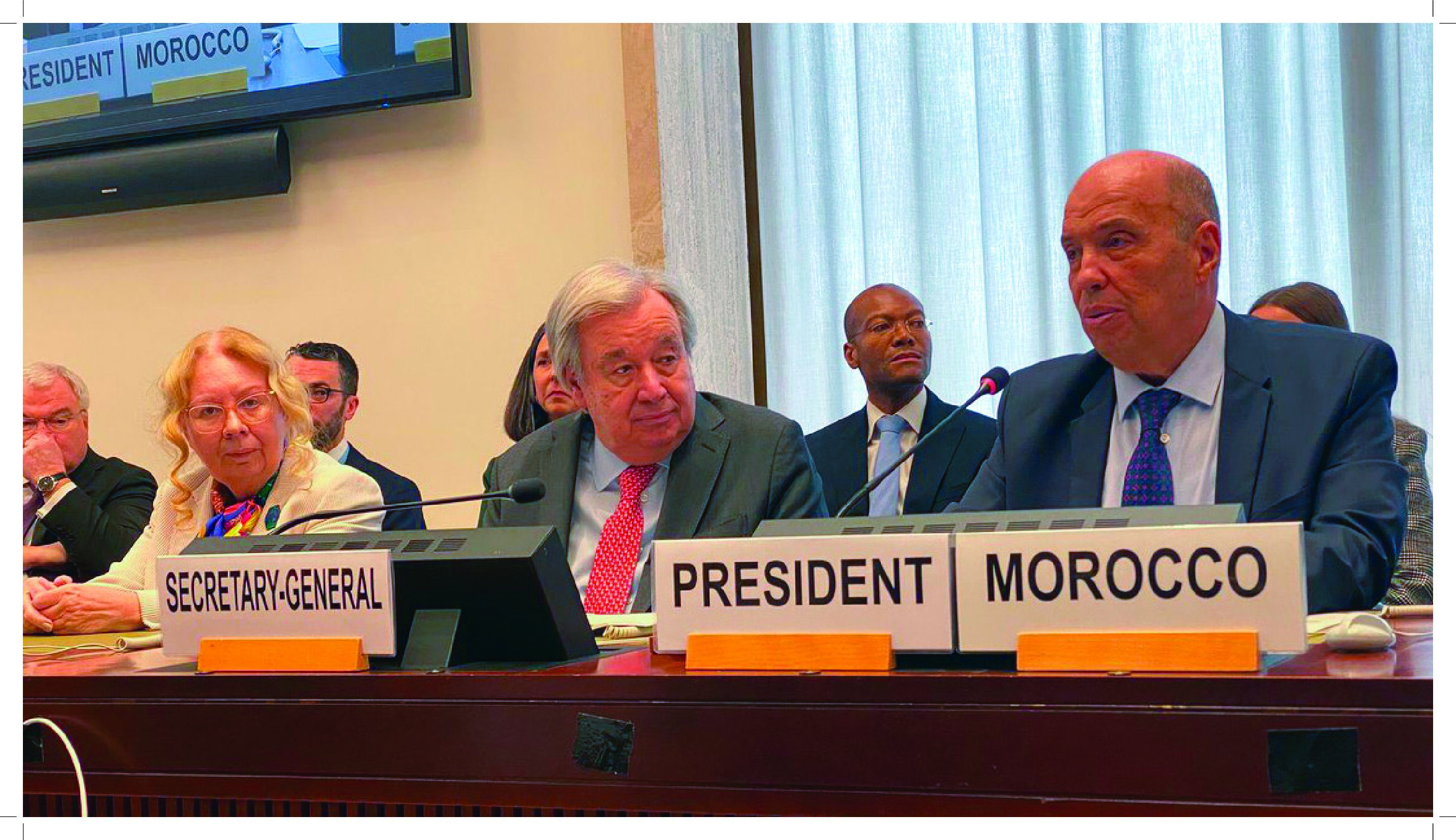
In an international context marked by the return of strategic rivalries and the erosion of multilateralism, the United Nations Conference on Disarmament is holding its high-level segment this week at the Palais des Nations in Geneva.
Bringing together the world’s leading military and diplomatic powers, this annual meeting appears more than ever as a barometer of global tensions, but also of fragile hopes for international cooperation.
As the only multilateral negotiating forum devoted to disarmament, the Conference on Disarmament has historically been behind major international treaties, notably on nuclear non-proliferation and the ban on chemical weapons.
Yet for several years its work has struggled to produce concrete progress, paralyzed by differences among the major powers.
Morocco in the presidency at a critical moment
The 2026 edition has a particular significance: Morocco is holding the body’s rotating presidency until 13 March, with the stated ambition of reviving multilateral dialogue. Rabat is placing its mandate under the banner of consultation and rebuilding international trust, in a severely degraded diplomatic environment.
Nasser Bourita, Minister of Foreign Affairs, African Cooperation and Moroccan Expatriates, stressed at the opening of the Conference that these developments weigh heavily on the multilateral disarmament system and complicate the search for compromises, while making strengthened dialogue and effective cooperation more necessary than ever.
He called in particular on Member States for “renewed commitment to disarmament,” considering that escalating military tensions and strategic mistrust directly threaten global stability.
This presidency comes as the Conference—organized in successive sessions throughout the year—hosts, from 23 to 27 February, its high-level debate bringing together foreign ministers and the permanent representatives of Member States.
Discussions are dominated by concerns related to nuclear security and strategic competition among major powers. Several delegations stressed the need to preserve “strategic stability” in the face of the risk of a new arms race.
The mutual accusations among the United States, China, and Russia over the development of nuclear arsenals illustrated the depth of current rifts. Moscow in particular warned of a possible “domino effect” if nuclear testing were to resume, while Washington and Beijing clashed over military transparency and the modernization of strategic capabilities.
The war in Ukraine also continues to weigh on exchanges. During a session in Geneva, several delegations left the room during the Russian ambassador’s remarks, illustrating the political polarization that now runs through multilateral forums.
This episode symbolizes the growing difficulties international diplomacy faces in maintaining neutral spaces for dialogue, even as the Conference on Disarmament was designed as a place for negotiation beyond conflicts.
The UN’s call to restore disarmament
In the face of these deadlocks, António Guterres, Secretary-General of the United Nations, recalled that disarmament remains an essential tool for preventing wars, emphasizing that the world is going through “a period of major upheavals” requiring strengthened cooperation.
Several countries, including Norway, South Africa, and Kyrgyzstan—participating for the first time—argued for modernizing the disarmament agenda to include new military technologies and emerging threats.
Created as the main global negotiating mechanism on disarmament, the Conference now finds itself facing a paradox: as security risks increase, the political consensus required for any decision becomes harder to achieve.
The Moroccan presidency is thus trying to inject new momentum into a diplomatic forum often criticized for its immobility. But in Geneva, diplomats and observers agree on one conclusion: the Conference’s success now depends less on procedures than on the political will of the major powers to return to the logic of compromise.
In a world marked by geopolitical fragmentation, the Conference on Disarmament thus appears as a mirror of international power relations and perhaps as one of the last spaces where a global strategic dialogue remains possible.
Morocco, a growing actor in international peace
An increasingly visible diplomatic actor on the multilateral stage, Morocco has gradually established itself as a credible partner within international mechanisms devoted to conflict prevention and peacebuilding.
Its involvement within the Peace Council illustrates this rise in diplomatic influence, marked by an approach based on political dialogue, regional stability, and in particular African cooperation.
The Kingdom has argued for African solutions to African crises, emphasizing mediation, economic development, and the fight against the structural causes of instability—especially violent extremism and institutional fragility. Rabat promotes an integrated vision of peace, linking security, development, and social inclusion.
This orientation is part of the diplomatic strategy driven by King Mohammed VI, which favors proactive diplomacy in Africa, combining security cooperation, economic investment, and religious initiatives aimed at promoting a moderate Islam.
In the Middle East, Morocco has in particular made commitments in support of the American plan for the reconstruction and stabilization of Gaza: financial contribution, security deployments, health support, and action against hate speech.
As a result, the Kingdom is displaying structured and operational involvement. Beyond political positions, Morocco also contributes concretely to stabilization efforts through its regular participation in United Nations peacekeeping operations.
This involvement strengthens its image as a moderate actor, committed to building a collective architecture of peace and security, both at the African and international levels.