Kingdom
Expo: Nude and Raw, the Female Body No Longer Hides
Three artists, three eras, the same unease: the female body. On the sidelines of the 1.54 Marrakech art fair, the Matisse Art Gallery aligns Derain, Drissi, and Iqbi around the nude. Not to celebrate a tradition, but to expose what it still conceals: domination, tension, and aesthetic false appearances.

You can always say “crossed perspectives.” It’s convenient. It avoids saying confrontation. At the Matisse Art Gallery, on the sidelines of the 1.54 Marrakech art fair, it is not perspectives that cross, but visions that clash – sometimes violently – around the same point of friction: the female body.
André Derain opens the ball. The master, the father, the sure line. Here, the nude is well-behaved, restrained, almost docile. The drawing is reassuring. The female body is a form to be resolved, not a question to be asked. Everything is in its place, nothing overflows. Woman is still a calm, mastered, neutralized territory. A vision from another time, perhaps. From a time when people still believed beauty was enough to explain everything.
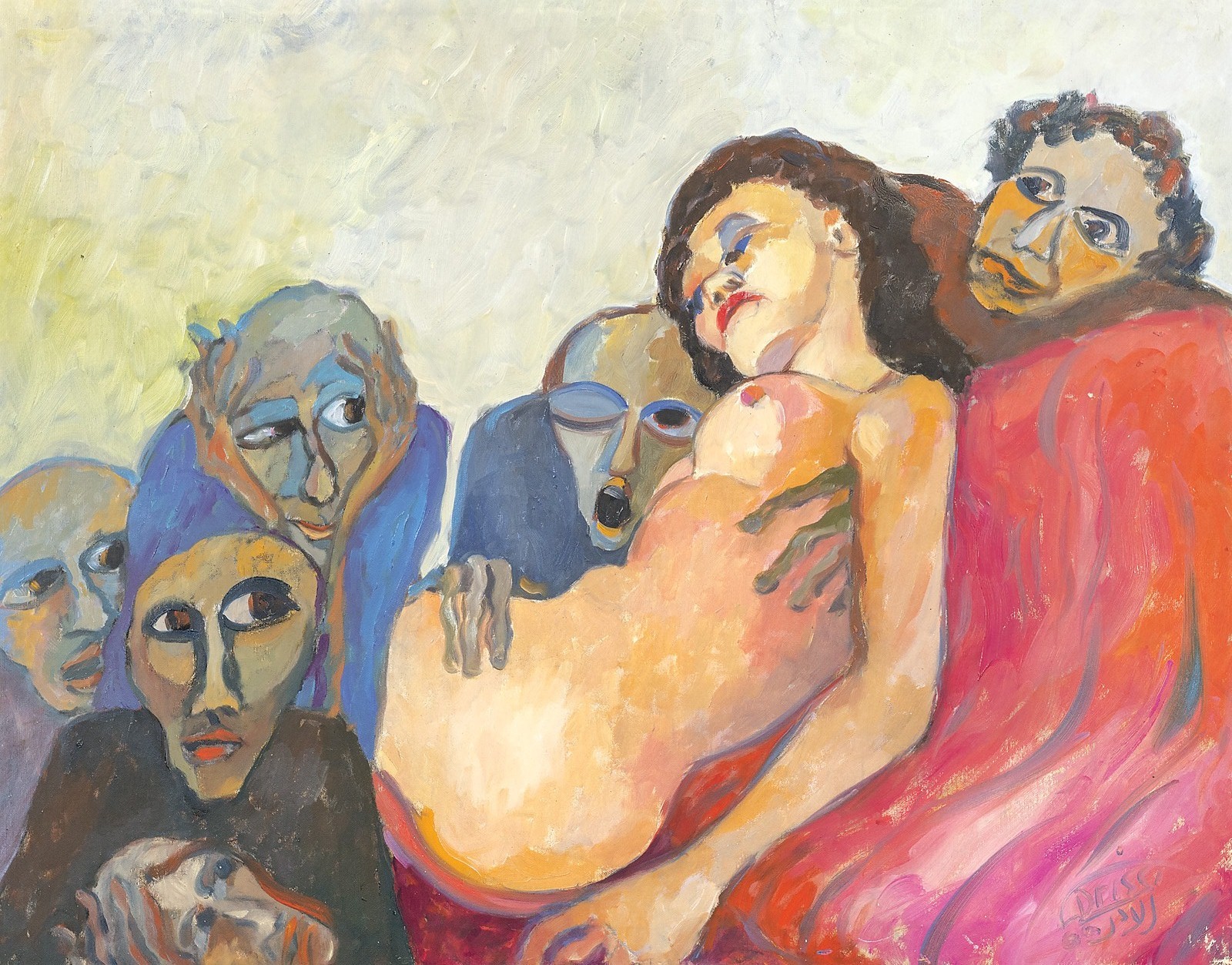
Then Mohamed Drissi arrives like a necessary dissonance. The body twists, deforms, exaggerates. It becomes unease. In his work, the female nude is never comfortable. It is shot through with anxiety, loaded with social tensions, weighted with taboos. It is no longer a body to look at, but a body to read. And what one reads there is anything but soothing: a troubled humanity, often bitter, sometimes ironic, always off-balance.
With Abderrahim Iqbi, politeness definitively shatters. The bodies are naked as one is in insurrection. No more ideal, no more promise. Almost ghostly, ironic, cruel figures, who sabotage norms and mock archetypes. Here, nudity neither seeks to seduce nor to explain. It attacks. It contests. It refuses to play the game.
One then understands that this exhibition is not telling the story of “the female nude through the ages.” It tells something else, far more disturbing: our persistent inability to look at women’s bodies as anything other than an object of projection – aesthetic, moral, or political.
Derain soothes. Drissi fractures. Iqbi dynamites. And the viewer, for their part, is stuck between these three postures, summoned to choose a side.
The gallery speaks of artistic freedom. Very well. But the true freedom here is not in the diversity of styles. It is in that precise moment when the exhibition ceases to be comfortable. Where the female nude no longer reassures, no longer illustrates, no longer decorates. Where it becomes a silent accusation.
Because deep down, this exhibition says one simple, and profoundly uncomfortable, thing: women’s bodies have never been a neutral artistic theme. Those who still believe so are still looking without seeing.
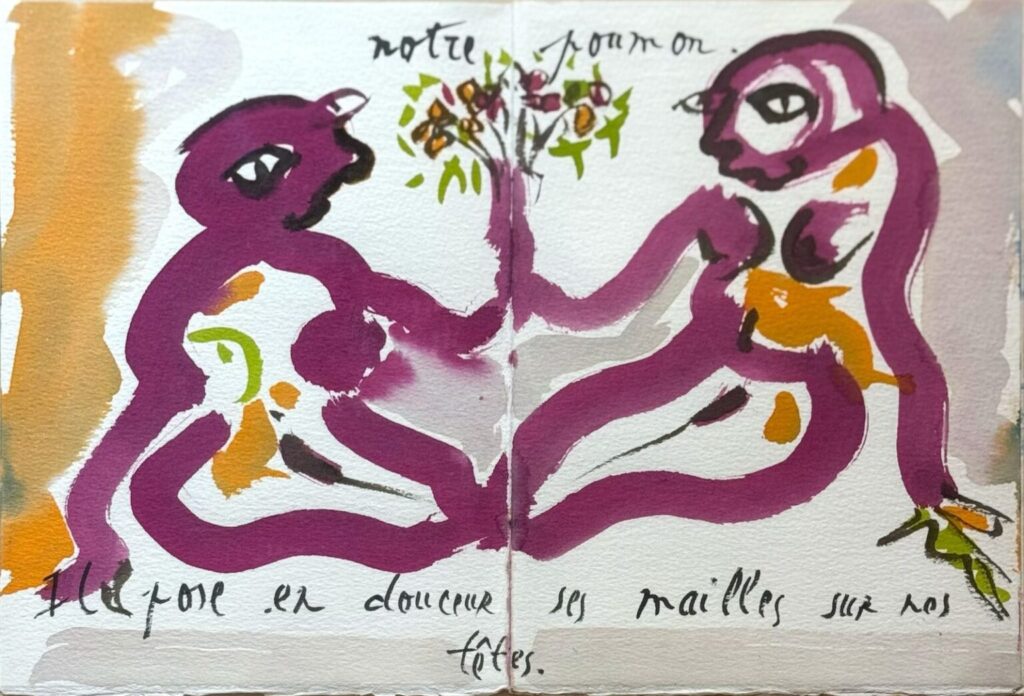
Nature, Mohamed Drissi, watercolor 2001, illustration of a poetic phrase by Michel Bohbot, writer, art expert, and friend of Drissi: “Our lung. It gently lays its mesh upon our heads.”