Influences
CultureL’Boulevard: “A stage for the forgotten of other festivals”
Twenty-five years after its improvised beginnings, L’Boulevard (from September 18 to 21) remains an essential platform for urban and alternative music in Morocco.

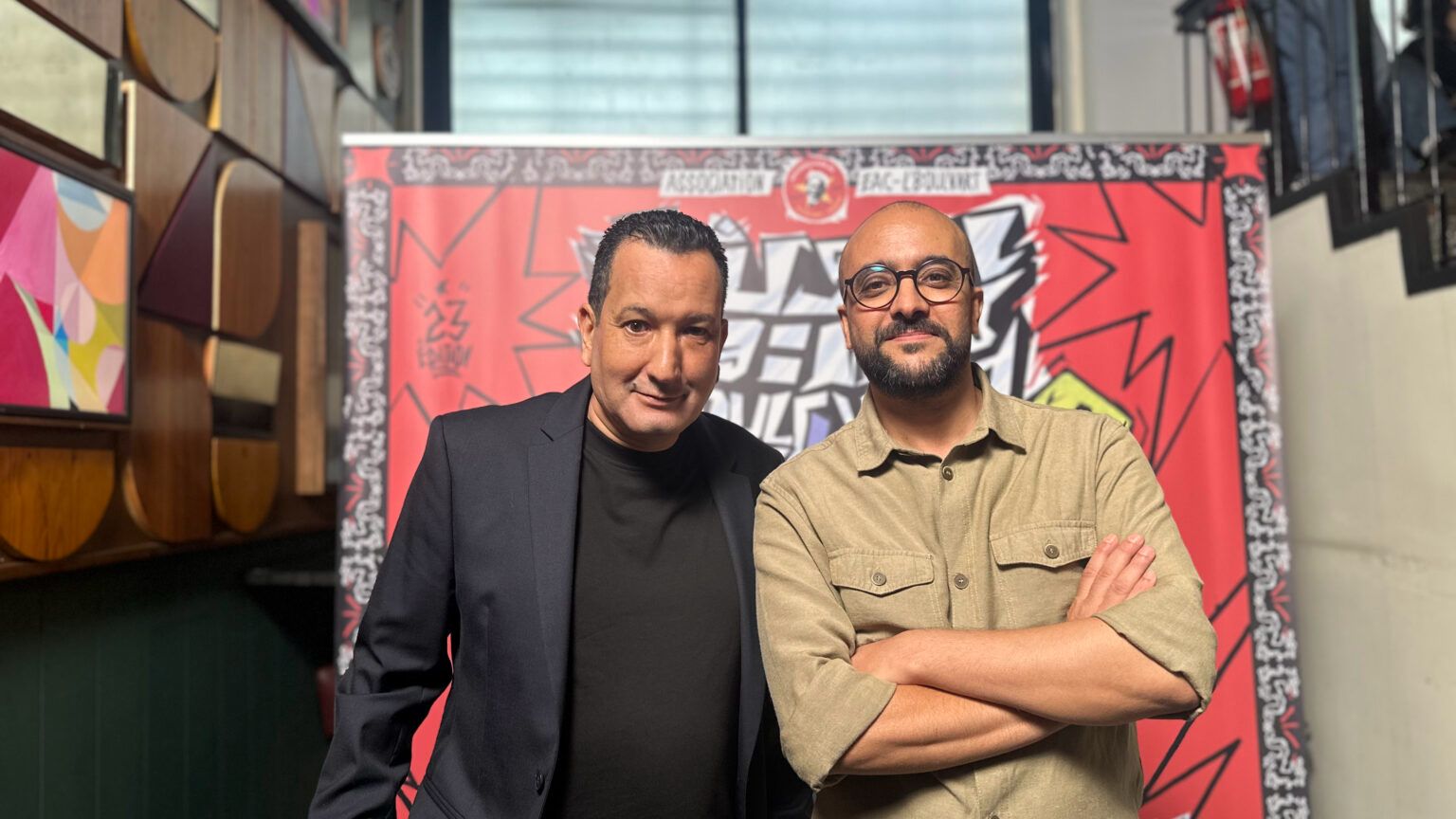
Born in the late 90s in a country where hip-hop circulated on cassettes and metal whispered in the shadows, the L’Boulevard adventure transformed a simple springboard for young musicians into an unmissable event for urban cultures. From cramped rooms to blazing stadiums, Merhari Mohamed (Momo) and Hicham Bahou, the festival’s driving forces, passionately and humbly recount the genesis of a project that united the margins, revealed talents like Hoba Hoba Spirit, and gave a voice to a youth hungry for freedom. A look back at a quarter century of passion, struggles, and raw vibrations.
Flashback: late 90s, hip-hop traveling on cassettes, a few heavy metal or progressive rock bands counted on one hand… In 1999, you showed up to bring all these worlds together.
What was the ambition behind this gamble?
Momo: In ’99, talking about ambition is a big word. We were in a big mix, without calculation. The programming? A kaleidoscope: oud, rap, metal, all side by side without dogma. The real trigger was 2000. We extended to three days, named the adventure L’Boulevard, structured three styles. That’s when everything took shape to become what we still carry today, with the same flame.
Hicham Bahou: The 90s was a raw, fused scene. ’99 was the legacy of 90s metal, concerts thrown together by bands in unlikely venues, with a sound that spit more than it sang. Momo, at the F.O.L., was already laying the groundwork. L’Boulevard is the crystallization of this energy: musicians doing everything themselves in makeshift places. We started thinking beyond the stage, building a space where music could thrive. Twenty-five years later, we’re still here, fueled by that original madness and the luck of having a stage that pushed us further.
Back then, what fears did you have in mind?
Hicham Bahou: Before this, we lived in the moment, without perspective. No dream of a big festival, nothing like that. We just saw urgency: bands had to play, finish their rehearsals. But where? No places, no resources. So, we organized regular concerts, often in poor conditions. Little by little, everything came together. We were lucky to fumble our way forward, learning on the job. We took our time, and that saved us. We discovered the professions, built step by step without rushing.
Momo: The fears? They came later when the machine took off. In 2002, take metal day: 1,000 people inside, 3,000 outside pushing like a tide. The FOL’s windows shattered two years in a row! A guy even lost a tooth in the chaos. The police? Hidden away. That’s when we said: enough, small venues are over. We moved outdoors, to the COC, then two stadiums, the RUC and the COC. We tried to separate the springboard and the festival, but it didn’t work. So we put the clocks back: L’Boulevard and the springboard, together, like in the beginning…
Growing? We didn’t even think about it. Our only mantra was: “Let’s hope we can do this again next year!” No visibility, no sponsors, nothing. Today, I can say “next year, we’ll be here” with some confidence. Back then? We wandered blindly, and that was already huge.
Hip-hop is booming, fusion too, but rock and metal stay marginalized…
Momo: Metal is a niche, a cry into the void heard only by insiders. Compared to rap, it’s almost confidential. But that’s also L’Boulevard: giving a stage to those unheard elsewhere.
Back then, sponsors? Nonexistent. We were off the radar. Support for culture? No one measured its stakes. Sponsors, we didn’t even know what they were for. And metal? No one wanted it except the audience. But honestly, that audience was never huge, especially compared to the rap juggernaut. Metal suffers from a scary image: metalheads, their looks bother people, even the police are uneasy.
Hicham Bahou: Rap speaks the people’s language, darija, the voice of the streets. It’s normal it touches a large audience, that it unites. It’s popular music at its best. Metal is another thing, a smaller, more niche audience. But at L’Boulevard, the essence was that: programming the groups we sidelined, the most marginalized, offering them a platform. We never sought to follow trends but to create a space where all voices, even the roughest, could resonate.
Back then, media was a desert. You talked about the local scene, metal, rap, they looked at you like you came from another planet. “What’s that?” We had to row hard, prove ourselves year after year. At first, sponsors didn’t come, that’s normal. But after echoes and whispers, by the third year, we began to feel a stir, an interest. The press of the time played a key role: “La Vie Éco,”, Le Journal, “Maroc Hebdo” with Tonton… They supported L’Boulevard, publicized it, and little by little, sponsors started to believe.
The electro day disappeared. Voluntarily or by force of things?
Momo: We tried: one electro day, one year. The experience was there, but the next year, pff… no DJs. They all performed. End of story.
Hicham Bahou: That was in 2001! We put that together with an association dedicated to promoting electronic music. A great adventure, really. We always programmed DJs in afternoons, without necessarily making it a competition or a big focus. But an entire day? Too complicated. The electro scene has its own spaces, platforms, festivals, here and elsewhere, for local and international artists. That’s good news, no? Rap, metal need L’Boulevard to exist. Electro found its places, its audiences, its times. We haven’t abandoned the idea, but we refocused on what we do best: giving a stage to the margins, where other festivals don’t always go.
Hoba Hoba Spirit, among others, passed through here before becoming essential. Do you see yourselves as talent spotters, or is it without calculation?
Momo: Spotters? No, we don’t look, don’t calculate. We never said it was thanks to us. We just offered a bit of light, a corner of a stage for groups like Hoba Hoba Spirit. Visibility, point. When L’Boulevard grew, journalists and the curious started to appear. But we expected nothing from anyone. Some groups even chipped in, organizing, playing, creating a real chain of solidarity. The L’Boulevard community is that: a pool where artists come, play, and sometimes reveal themselves, inspiring others to start.
Hicham Bahou: We brought trainers from France, they passed the torch to Moroccans, and after a few years, they were no longer needed: a new generation took over.
Momo: If asked what I’m proud of, it’s that. The artists’ talent? It was there before us. We just opened a door.
At your beginnings, it was the “Springboard for young musicians.” Then “L’Boulevard des jeunes musiciens de Casablanca.” Then just “L’Boulevard.” A name that imposes itself…
Hicham Bahou: Originally, we called ourselves “Springboard for young musicians” because that was the momentum: giving a stage to youth who had nothing. Over time, L’Boulevard became a wider, livelier space. It was no longer just young people but a mosaic of profiles, sounds, and generations. “L’Boulevard” is simpler, stronger, like a label… Some still say “L’Boulevard des jeunes musiciens,” others don’t, but it doesn’t matter: the name lives, carries a story, diversity, and energy beyond labels.
Can we have an idea of this year’s budget range?
Hicham Bahou: We float between 2,000 dirhams and 7 million dirhams, but be careful, that covers much more than the festival itself. We talk about activities, workshops, the Springboard, the whole ecosystem. We are a medium-sized festival, far from the cash-loaded giants. But we make do, optimize every dirham. In recent years, the regularity of our partnerships has given us serenity. Working with loyal sponsors changes the game: we can focus on the essentials, keep the scene alive, without chasing every penny.