Kingdom
COP30: Morocco Reaffirms Its Ambition for a 53% Reduction in Greenhouse Gas Emissions
Leïla Benali reminded Brazil that Morocco had submitted its third NDC well before the conference, raising its climate ambition to a 53% reduction in greenhouse gas emissions by 2035, 22% of which is unconditional.

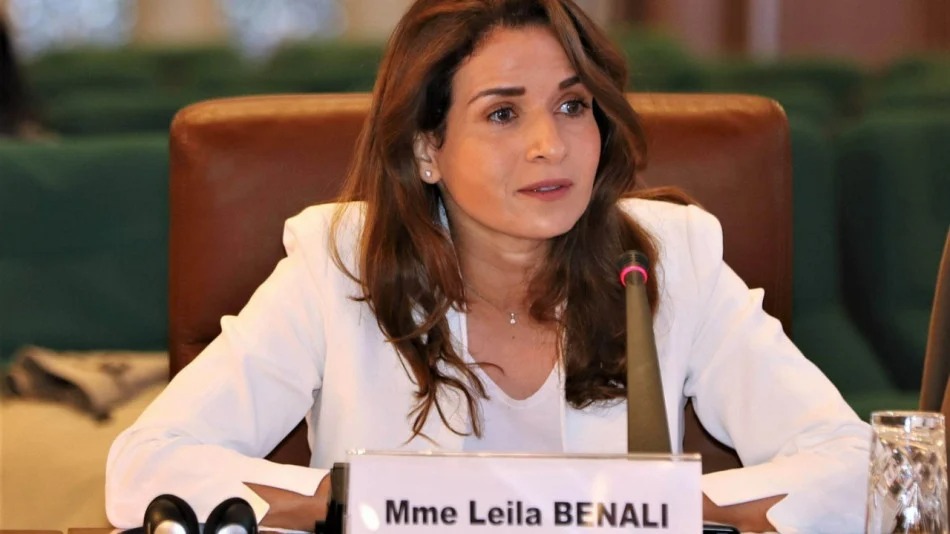
On Friday in Belém, in the heart of the Brazilian Amazon, the Minister of Energy Transition and Sustainable Development, Leïla Benali, called for a new pact of trust to revitalize the multilateral momentum around climate action, while presenting Morocco’s new methodology in its third Nationally Determined Contribution (NDC 3.0).
Speaking during a high-level session titled “Ten Years of the Paris Agreement: Nationally Determined Contributions and Climate Finance,” held as part of the Climate Leaders Summit in the lead-up to COP30, Ms. Benali recalled that Morocco had submitted its NDC 3.0 well before the conference, raising its climate ambition to a 53% reduction in greenhouse gas emissions by 2035, 22% of which is unconditional.
“This new NDC is certainly more ambitious, but, more importantly, it brings two innovative methodological contributions to the NDC process: it demonstrates that economic efficiency, financial profitability, and the environmental and social benefits of climate action are neither exclusive nor contradictory,” she emphasized.
Detailing these two innovations, the Minister explained that the first consists of using mitigation cost indicators (in dollars per ton of reduced CO2e) by sector, taking into account actual returns on investment. Politically, this tool is a powerful lever to accelerate collective ambition, particularly in the most emitting sectors such as energy, metals, or maritime transport.
The second innovation, she stated, lies in the direct linking of financial flows to territorial adaptation projects, building on mitigation efforts, particularly in the country’s energy, mining, and industrial transitions. If Morocco’s NDC framework were amplified by other countries, it could constitute a valuable contribution to the second Global Stocktake in 2028 and guide collective action in the face of the climate emergency, she noted.
The Minister also stressed that COP30 must demonstrate that true multilateralism is not built on endless negotiations, but “sometimes on shared responsibility, often on solidarity, and always on the preservation of international peace and security.”
For the Climate COP to remain relevant, according to Ms. Benali, Morocco identifies two essential priorities in the package of results needed to restore trust: increasing climate finance through an operational roadmap from Baku to Belém, and implementing innovative NDCs that link climate action to concrete and measurable projects on the ground, saving lives, eradicating poverty and hunger, protecting the most vulnerable, and bridging implementation gaps.
“This is the only way to operationalize the global goal on adaptation, because at this stage, implementation and trust are our only real tests,” she insisted, lamenting that “the majority of the promised $100 billion has taken the form of non-concessional loans, worsening debt crises and undermining trust.”
Reaffirming the Kingdom’s commitment to strengthen its resilience, Ms. Benali invited countries to demonstrate the same sense of justice and determination and to draw inspiration from Moroccan innovations.
“Only tangible and ambitious actions will restore trust in multilateralism and preserve the possibility of achieving internationally agreed climate goals… because, in my region of the world, the 1.5°C threshold is no longer a mere alert: it has already been exceeded for years,” she concluded.