Business
Automotive sector: Signs of a market reshaping
Data from the first quarter confirm the upward trend in the new-car market seen over the past year. A strong year marked by growth and record figures is taking shape. Analysis.

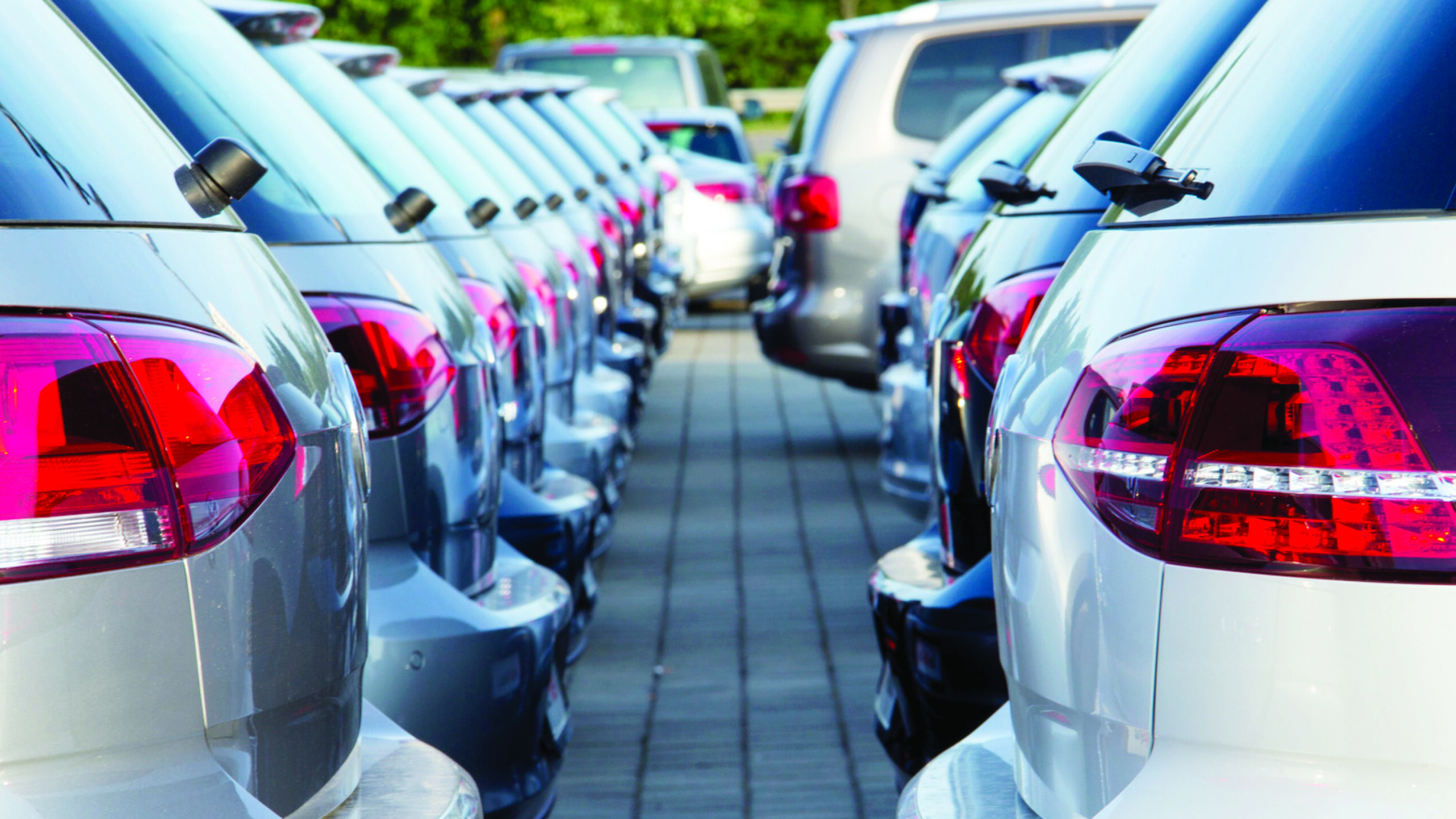
After an exceptional year in 2025, marked by a record 235,372 vehicles sold in Morocco, the new‑vehicle market is generating even greater interest in 2026—a year that is exceptional in many respects.
Often viewed by some as a barometer of the national economy, the new‑vehicle market raises several fundamental questions, among them: will last year’s record be approached, matched, or even surpassed in 2026?
For now, beyond the difficulty of providing a definitive answer, this question is all the more legitimate given that 2026 has been marked by a steep rise in petroleum product prices since March, due in particular to the prolongation of geopolitical tensions and the conflict in the Middle East.
This state of belligerence creates fertile ground for a generalised increase in prices (inflation). In Morocco, an inflationary context driven by soaring petroleum products (fuel prices) can represent an obstacle to the momentum of new‑vehicle sales (passenger vehicles and light commercial vehicles), which are sensitive to the macroeconomic environment.
And yet, the figures published by the Association of Vehicle Importers in Morocco (AIVAM) show no sign of slowdown—quite the opposite.
March 2026: A strong performance
The month of March this year is characterised by an acceleration in the new‑vehicle market, as clearly demonstrated by the 21,337 units sold (passenger vehicles and light commercial vehicles). This represents a substantial year‑on‑year increase of 22.5%.
Even more striking, while passenger vehicles (PCs) continue to dominate the market in terms of volume—with 18,929 units sold in March 2026 compared with 15,616 a year earlier—light commercial vehicles (LCVs) recorded the most notable growth, at 33.7% during the third month of the current year (compared with growth of 21.2% for passenger vehicles).
In March 2026 alone, this utility segment, favoured by professionals, registered 2,408 new registrations, compared with 1,801 units sold in March 2025.
In short, the surge in sales in the utility segment can be linked to the dynamism of several commercial sectors, including industry, logistics, and agriculture. Moreover, according to the High Commission for Planning (HCP), economic growth is estimated to have reached 5% in the first quarter of 2026 on an annual basis, compared with 4.1% in the fourth quarter of 2025.
Another instructive explanation from the forecasting body helps shed light on the buoyancy of the new‑vehicle market: despite the escalation in energy prices in March, economic growth momentum appears to have been preserved.
This was achieved through an acceleration in agricultural activities and the resilience of tertiary sectors, against a backdrop of continued growth in domestic demand—developments that are clearly favourable to the new‑vehicle market.
A dynamic quarter
The performance recorded by the automotive market in the first quarter of 2026 follows the same upward trajectory as in 2025—a year in which the sector surpassed, for the first time, the symbolic threshold of 200,000 new vehicles sold before the end of the year, thereby breaking the historic 2018 record of 177,359 units sold.
Specifically, cumulative sales over the first three months of 2026 reached 58,901 units (compared with 48,172 units sold in the first quarter of 2025), representing a significant year‑on‑year increase of 22.2%. In reality, this encouraging quarterly result must be viewed within a favourable context for the nationwide surge in new‑vehicle sales.
Strong and resilient demand from buyers (Moroccan households and professionals), an abundant and diversified supply across internal combustion, electric, and hybrid segments, as well as attractive commercial offers from importers, all weighed heavily in favour of sales growth.
Along the same lines, it is worth noting that several distributors have stepped up efforts to accelerate the renewal of their ranges in the “clean” vehicle segment, where Chinese brands have stood out in Morocco in recent years. Last year alone, more than 18,000 Chinese vehicles were sold in Morocco, representing growth of 214% compared with 2024.
Indeed, for many specialists in the national automotive market, 2025 was unquestionably the year of the Chinese car’s breakthrough, as these vehicles continue to gain in quality and reliability year after year. Of the 22 brands from the People’s Republic of China operating in the Kingdom the previous year, 12 entered the Moroccan market in 2025.
Towards a reshaping of the market?
A closer analysis of AIVAM’s quarterly figures shows that the French duo Dacia–Renault continues to reign supreme in the new‑vehicle market, with respective cumulative sales of 11,814 and 9,642 passenger vehicles.
In other words, Dacia and Renault remain the two most popular brands among Moroccan buyers, who are highly attentive to vehicle price, fuel consumption, reliability, and the availability of spare parts.
South Korean manufacturer Hyundai (with 3,637 units sold in the first quarter of 2026) is not far behind, completing the top three most sought‑after brands in the Kingdom, based on units sold during the first three months of 2026.
That said, according to some specialists in the national automotive market, AIVAM’s data point to a reshaping of the automotive landscape. While traditional brands—particularly European and South Korean—continue to maintain a dominant position, they are now compelled to contend with the spectacular rise of Chinese manufacturers and the arrival of new entrants, reflecting the growing attractiveness of the Moroccan market.
By way of illustration, in March 2026 alone, several brands from China recorded remarkable (triple‑digit) growth rates, notably BYD with 309 units sold (+494.23%), Chery with 221 vehicles sold (+662.07%), and Changan with 218 units sold (+150.57%).
Given the growth trajectory of Chinese brands, which are undoubtedly contributing to the diversification of the national offering, it must be acknowledged that they are well positioned to capture substantial market share from traditional manufacturers in the future.