Kingdom
Automotive Components: Chinese Giants’ New Playground in Morocco
Chinese companies are no longer limiting themselves to electric vehicles. They are now investing in the entire vehicle mechanics: electronics, piping systems, metal parts… The ambition: to make the Kingdom a strategic hub primarily to supply the European market.

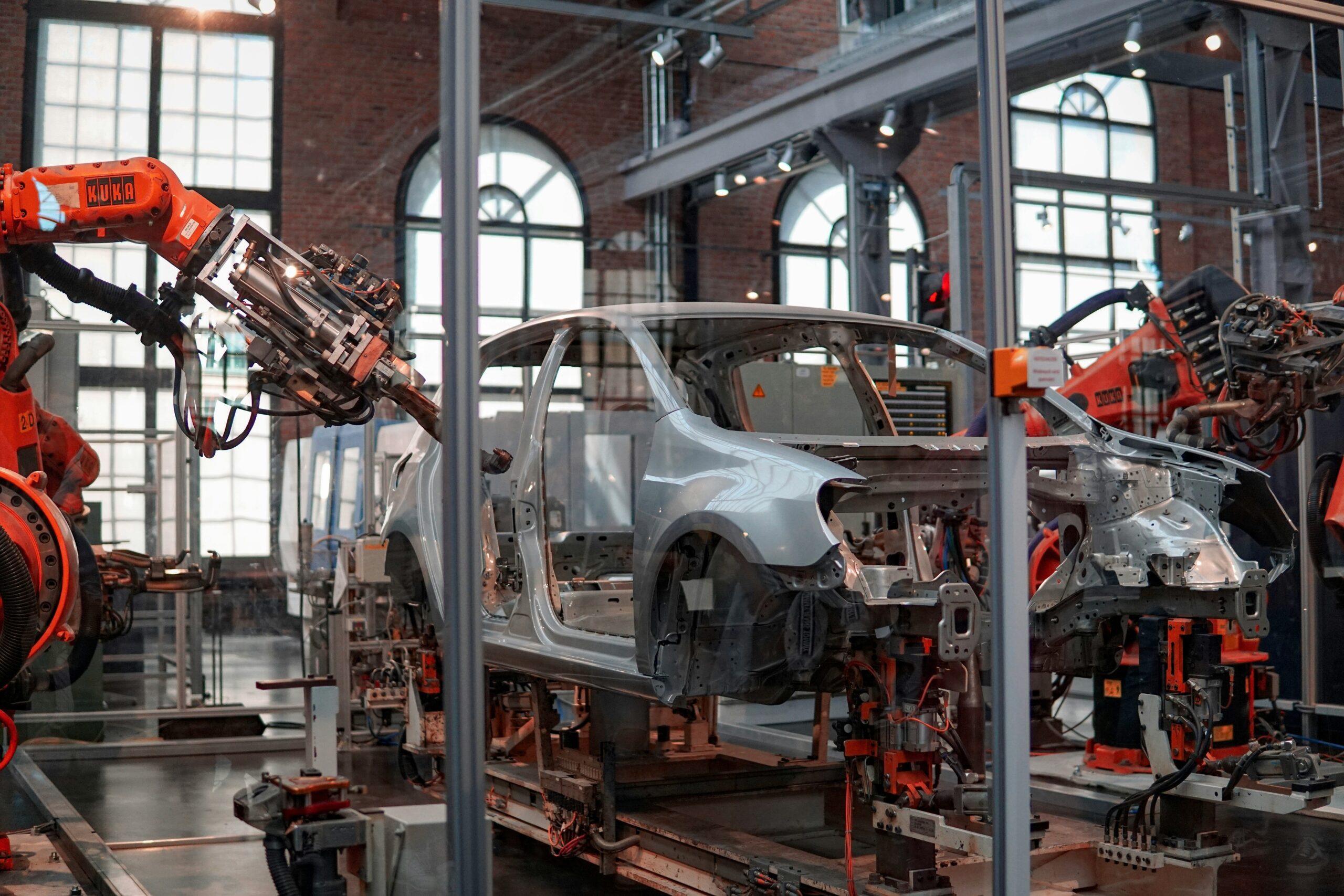
In Morocco, the center of gravity of Chinese investment is shifting. Long concentrated on the electric vehicle battery sector, Middle Kingdom manufacturers are now broadening their scope to the entire automotive components ecosystem.
An accelerated diversification of investments since the beginning of the year.
The latest project, unveiled in September by Tenglong Auto Parts, specializing in the manufacture and distribution of automotive components, was to officially announce the start of construction on its Moroccan factory, announced in June 2024.
This site, with an investment of nearly 63 million dirhams (MDH), will be dedicated to the production of aluminum tubes for automotive air conditioning and the assembly of air conditioning and connection pipes for thermal exchange systems.
Its production is expected to start by the end of 2026. The Shanghai-listed company primarily targets Stellantis and Renault Group, which manage the two largest industrial hubs in the Kingdom in Kénitra and Tangier.
Seven months earlier, it was the subsidiary of China North Industries Corporation (Norinco), Lingyun Industrial, specializing in metal and plastic parts for automobiles and piping systems, that announced its future establishment in the Kingdom to serve European and North African markets. The result: two spare parts plants.
The first company, with a share capital of approximately 80 MDH, will be dedicated to the manufacturing of automotive pipes.
The second, the result of a joint venture with the Chinese manufacturer of aluminum products, Haomei New Materials, will mainly produce battery casings and high-strength parts through profiling.
Design and manufacturing of high-tech parts
Lingyun will hold a 51% stake versus 49% for its partner in this joint venture budgeted at 140 MDH. Once operational, the two plants will cooperate with Lingyun’s European units to develop the market and deliver products.
The Chinese group also indicates that it plans to invest in strengthening the production capacity of aluminum profiles from raw materials. In this spare parts ecosystem, we also find Huawei Technologies and Wan’an Technology, the telecommunications giant, also active in the design and manufacture of high-tech parts, particularly in suspension and braking.
While its partner is a major player in the field of chassis control systems. The two giants have joined forces to form a joint venture specializing in the production and sale of spare parts. A project of over 300 MDH, with 65% of shares held by Huawei (over 195 MDH) versus 35% for Wan’an (over 105 MDH).
Let’s leave this niche to focus on a high value-added segment: automotive electronics. A sphere where Chinese equipment manufacturers are investing heavily.
Connectors and Electric Motors
This is the case for Heilongjiang Tianyouwei, specializing in automotive electronic components, smart cockpit solutions, and embedded electronics. In late August last year, the company announced the establishment of a factory in the Kingdom, with an investment of nearly 683 MDH.
The first building block of this project: the creation of its local subsidiary named Tianyouwei Electronics Morocco, endowed with an initial capital of 126 MDH. Objective: to manage this project, which aims to strengthen the manufacturer’s position in local automotive value chains and meet the growing demand in the European market.
The electrical connector industry, these essential components that create reliable and secure connections between different parts of a vehicle’s wiring, is also attracting Chinese manufacturers. In January 2025, the high-tech group Kaizhong Precision Technology invested over 5 million dollars (over 50 MDH) to create its subsidiary Kaizhong Morocco.
The group’s first African presence, already established in Japan and Germany, and whose main clients include Mercedes-Benz and Toyota.
Still in this same segment, we can also mention the electric motor manufacturer, Zhongshan Broad-Ocean Motor, which established itself in Morocco in December 2024 by creating two subsidiaries in Tangier Automotive City. Shedrive Industrial Morocco, responsible for the design, manufacturing, and assembly of electric and hybrid motors, as well as other industrial equipment and parts for automobiles.
And SHedrive Trading Morocco, which will focus on the production and assembly of automotive equipment for electric and hybrid vehicles.
Strengthening the Local Supply Chain
These massive investments will enable Morocco to strengthen its position as an emerging hub for automotive electronics and cockpit technologies. A niche with strong growth, especially in this context of the rise of connected and electrified vehicles.
Another component attracting Chinese equipment manufacturers: automotive safety systems. And Wuhu Bethel Safety Systems would not say otherwise. The Chinese group officially announced last July the creation of Wuhu Bethel Morocco Automotive Safety Systems, which will oversee the establishment of its factory dedicated to the production of automotive components. Investment amount: 75 million dollars, or over 700 MDH.
In the catalog of manufacturers from Beijing or other Chinese provinces, one will also find automotive carpet offerings. In early August last year, one of the specialists in this field, Shandong Kuntai New Material Technology, established its local branch Kuntai Hongjing Co Ltd with an investment exceeding 137 MDH.
A structure that will oversee the construction of industrial units dedicated to vehicle floor mats and carpets. Kuntai supplies major manufacturers such as the Chinese BYD, Xiaomi Auto, Li Auto, NIO, and the Europeans Audi, Volvo, Land Rover, and BMW.
The Japanese Toyota, Mazda, Honda, and Nissan, as well as the American manufacturers Tesla and General Motors, are also part of its client portfolio.
This multiplication of investments outside the battery segment in Morocco will consolidate the local supply chain, create jobs in strategic segments, and promote the transfer of technology to Moroccan skills.
It will also stimulate the growth of the automotive industry, the Kingdom’s top export sector in 2024, with a value of 157.6 billion dirhams. That is an increase of 6.3% compared to 2023.