Business
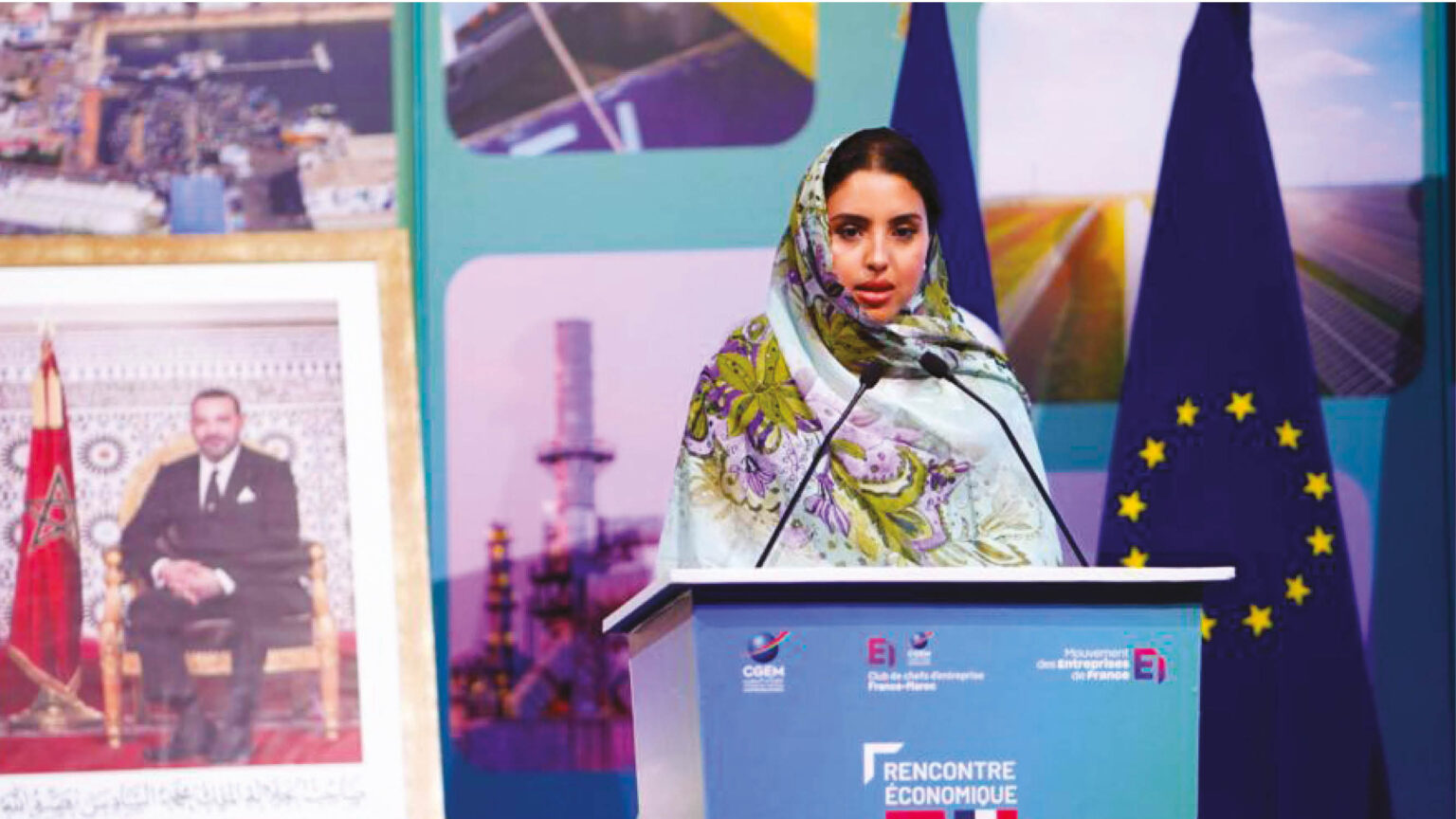
Amyra Hormotallah: “Dakhla is a true model of economic success”
In half a century, Dakhla has transformed from an isolated rural center into a strategic hub. The region is a true success story, thanks to massive investments and a thriving private sector. The details with the President of the CGEM of the Dakhla-Oued Eddahab region.

The Dakhla-Oued Eddahab region has undergone a remarkable transformation over 50 years, with its GDP multiplied by 12 and a growth rate exceeding 10% in 2023.
Fisheries, sustainable agriculture, renewable energy, tourism, and logistics are the engines of its development.
Major projects combined with the dynamism of the private sector enhance its attractiveness, though there remains a need to improve training, market access, and infrastructure.
How do you assess the economic trajectory of the Dakhla-Oued Eddahab region over the last 50 years?
The Dakhla-Oued Eddahab region has experienced a very remarkable evolution, transforming from an area of low economic activity into a veritable hub of development, recognized both nationally and internationally. Within a few decades, the regional GDP has been multiplied by more than 12.
Dakhla now ranks among the top three regions in the country in terms of growth, with a rate exceeding 10% in 2023, according to the HCP (High Commission for Planning).
This progress is explained by the launch of major projects, such as the expressway linking Dakhla to Tiznit and the Atlantic Port, with an investment exceeding 12 billion Moroccan dirhams (MMDH).
These achievements are part of the framework of the New Development Model for the Southern Provinces, launched by His Majesty King Mohammed VI, which mobilizes investments with a budget of over 77 billion Moroccan dirhams (MMDH).
Today, Dakhla represents a true model of success. It embodies an ambitious royal vision, translated into sustainable development based on modern infrastructure, particularly in the field of renewable energy, and through increased openness to the world.
How is the local private sector supporting this dynamic?
The local private sector is fully supporting the development dynamic experienced by the Dakhla region. In recent years, it has even become a true partner in major projects like those mentioned previously.
The Regional Investment Center (CRI) has recorded over 1,700 new companies created by the end of May 2025, representing a 38% increase compared to 2024.
Several sectors are involved, such as agriculture, fisheries, tourism, real estate development, and transport.
This is proof of entrepreneurial dynamism and a spirit of initiative, particularly from young people.
It is important to know that the private sector no longer merely follows public policy but actively contributes on the ground. This is thanks to the improved business climate, the digitization of services, the establishment of the InvestDakhla platform, and also the launch of several financing and training programs that support SMEs, especially those led by young people and women.
However, challenges remain. In my opinion, it will be necessary to further strengthen the capacities of SMEs to better integrate local value chains and also encourage production and exports. Overall, the private sector in Dakhla is experiencing a real turning point. From a supporting actor, it is now establishing itself more as an engine of regional development.
What are the most dynamic sectors driving growth and those with high potential?
The Dakhla region is establishing itself as an exemplary economic model, driven by a profound transformation dynamic. Its strength lies in the diversity of its productive sectors.
The first is the maritime fisheries and aquaculture sector, which constitutes the historical and strategic pillar of Dakhla’s economy. Present since the earliest phases of the region’s development, it remains one of its main engines today.
This activity generates a considerable number of jobs, both for locals and for those from other regions of the Kingdom.
It also plays a decisive role in national exports, fully aligning with Morocco’s strategy to promote a sustainable and competitive blue economy.
The second key sector is sustainable agriculture, which has seen remarkable progress in recent years, driven notably by the seawater desalination project, a project powered by renewable energy.
In areas like Bir Anzaran, these initiatives help address the challenge of water resource management while preserving the environment.
The third strategic sector is renewable energy, which is a major axis for the future of Dakhla and Morocco. The region is experiencing remarkable growth in this field, driven by the ambition to produce 100% sustainable and clean energy.
Ambitious projects are emerging in wind, solar, and green hydrogen, positioning Dakhla as a future benchmark energy hub, both for the Kingdom and for the African continent.
Tourism represents the fourth most important sector. It is experiencing spectacular growth, particularly in the segments of ecotourism and sports tourism (kitesurfing, windsurfing, sailboarding…).
Finally, the maritime transport and logistics sector represents a major opportunity for the region, with the Dakhla Atlantic Port currently under construction and the Morocco-Nigeria Gas Pipeline project, intended to strengthen the continent’s energy and economic integration.
Thanks to these initiatives, Dakhla is poised to become a true energy and commercial hub, serving the development of Morocco and its openness towards Africa.
Several major projects have been deployed or are under development in the region. What is their concrete impact on economic activity?
A solid boost has been given to regional development thanks to the major projects deployed in the region, thereby enabling the attractiveness of investments.
The Atlantic Port, for example, plays a central role in the region. It aims to position Dakhla as a major maritime platform, thus becoming a strategic center for trade and maritime transport towards the continent.
At the same time, the Tiznit-Dakhla expressway will also have a considerable impact, aiming to reduce transport costs and facilitate the movement of goods and people.
Not to forget the seawater desalination project, which is one of the most significant in the agricultural sector, enabling the promotion of sustainable agriculture and strengthening the stability of the sector.
All these combined projects will have a tangible effect on employment with the creation of thousands of direct and indirect jobs. Furthermore, they enhance the region’s attractiveness for investors from all over the world.
This then helps consolidate Dakhla’s position as a strategic gateway to the Atlantic.
What is your view on the evolution of the business climate? What, in your opinion, needs to be improved?
In the region, the business climate has significantly improved thanks to recent reforms that have modernized the regulatory framework for investment.
The development of a new industrial zone and the simplification of administrative procedures, via the CRI (Regional Investment Center), have contributed to establishing a particularly attractive environment for investors, whether local or foreign.
Moreover, the creation of over 1,700 new companies testifies to the economic vitality and growing entrepreneurial spirit in the region.
There are, however, areas that still need improvement. It is thus essential to further accelerate administrative procedures by combating bureaucracy, which remains a problem present throughout Morocco.
It is also necessary to strengthen the training and qualification of local skills so they can meet the needs of major projects, especially in the renewable energy, logistics, and processing industries sectors, such as canneries.
It will also be necessary to guarantee better access for local companies to investment partnership opportunities and to improve internal and external logistical infrastructure. This is a very important point that would allow access to African markets.
If all these reforms are carried out successfully by strengthening sustainability and transparency, Dakhla could become a model for a highly competitive and integrated business climate, in the sense that it will combine investor attractiveness with territorial equity.
What actions should be taken to further energize the local economic fabric?
It is not enough to limit oneself to technical decisions or numbers on paper. It is essential to cultivate true solidarity, based on a collective vision driven by a sincere love for our land, our region, and our Morocco.
This responsibility is shared between the State, the private sector, and civil society, and must be based on a will for innovation and a deep respect for our territory, which, in barely 50 years, has transformed from a rural center in the heart of the desert into a living city, rich in opportunities.
Investing in people remains a priority: training the youth, strengthening the empowerment of women, and opening new perspectives for SMEs, especially micro-enterprises (TPE). It is these entrepreneurs who form the heart of the local economy and the engine of this dynamic.
At the same time, it is crucial to preserve the attractiveness of Dakhla, a jewel of the Atlantic, while supporting and enhancing the major projects, which are true levers for improving living conditions and employment in the region.
Attracting investments is not enough. It is also necessary to nurture trust in every local initiative and encourage it, because every project represents a vision and a dream to be realized.