Influences
Jazzablanca: The Small Hands of a Big Festival
The audience sees a stage, lights, and performers. Behind that set, another score plays in silence. Technicians, security guards, front‑of‑house teams, press relations and logistics make up the invisible orchestra of a festival — the one that turns months of preparation into a few hours of magic.

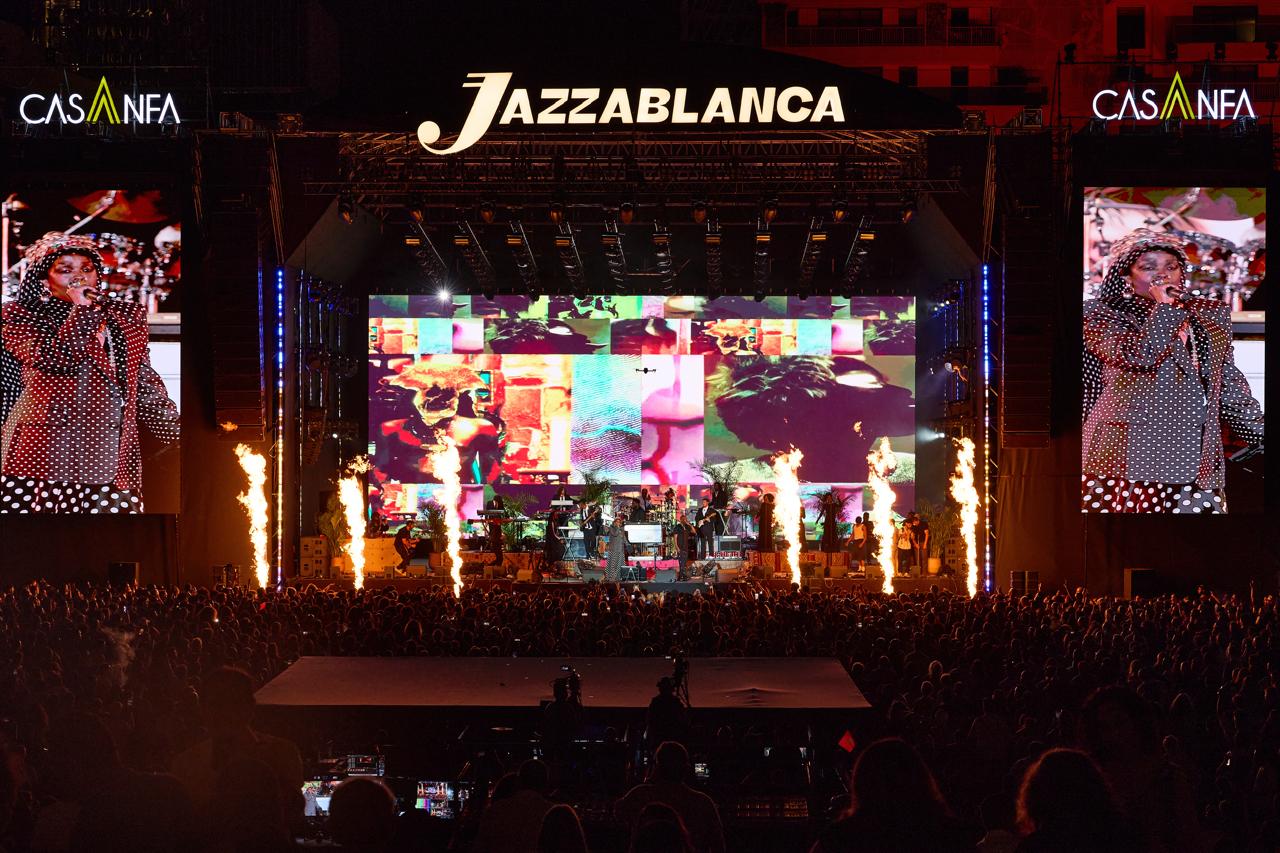
There are two Jazzablancas. The one everyone knows: the Instagram stories, the solos that give you chills, the headliners who grab the spotlights, and the clinking glasses under the park lights.
Then there is the other. The one that begins long before the gates open and ends long after the last festivalgoers have left. A parallel festival, invisible, where nobody asks for autographs and where mistakes are not tolerated.
People often talk about the magic of festivals as if it appears spontaneously, like a romantic mist descending on the stages at nightfall. It’s a pretty legend. Reality is much less glamorous, but infinitely more admirable.
Magic is a handcrafted industry. It wears safety boots, carries crackling walkie‑talkies, relies on schedules printed at the last minute, and endures far too few hours of sleep.
At Jazzablanca, while the audience marvels at a rising crescendo or an unexpected encore, dozens of people live a completely different score. They don’t play any instruments, but they know every measure of the concert before the first note is even played.
The first face the festival shows is not an artist’s. It’s a security officer’s. The paradox is cruel. The more effective their work, the less anyone notices. No one leaves a concert saying the screening was extraordinary or the crowd flow perfectly managed. Yet without them, the experience would quickly turn to chaos.
They absorb impatience, answer the same questions hundreds of times, defuse tensions before they become visible. They take on problems so music can take its place.
A few meters away, another kind of invisible creature lives with an almost obsessive fixation: sound. Sound engineers don’t try to impress.
They aim to disappear. Their greatest reward is for no one to think about them. If the audience forgets that consoles, miles of cable, and dozens of microphones exist, then the bet is won. Conversely, the slightest unwanted noise, a feedback squeal, or a temperamental mic is enough to turn hours of preparation into conversation fodder. Technical excellence is condemned to anonymity.
Failure, on the other hand, becomes public immediately. Their work is as much science as intuition. Each artist has their own demands, their relationship to volume, the ideal balance between voice and instruments. Nothing is completely reproducible.
An outdoor stage breathes; it changes with wind, humidity, and crowd density. Behind every smooth concert hides a constant negotiation with the elements.
The score of the invisibles
Then there are press relations. In the popular imagination they hand out passes and answer a few emails. In reality, they choreograph a constant diplomatic ballet.
A late artist, a photographer demanding extra access, a reporter looking for a contact, an ill‑timed interview, a last‑minute request… Every unexpected event calls for an immediate solution.
They become translators, mediators, psychologists, and sometimes even meteorologists when a cloud threatens a schedule timed to the second. They don’t just produce articles. They make stories possible.
Further on, behind barriers the public will never cross, the ticketing desk often resembles an emergency room. Problems arrive without warning.
A ticket nowhere to be found. A QR code that stubbornly refuses to appear. A name error. A dead phone. A lost wristband. Every spectator is convinced they’re experiencing an exceptional situation. For the teams, it’s everyday life.
The difference between a bad night and a beautiful experience sometimes comes down to one person able to keep calm while everyone else loses theirs.
What strikes you, watching the backstage, is not only the amount of work. It’s the precision. A festival is a gigantic machine where every cog depends on another.
The stage cannot start until the equipment is installed. Artists don’t go on until soundchecks are finished. Journalists wait for authorizations. Volunteers receive instructions. Security staff secure the access points.
Technical teams watch screens, power supplies, and stage monitors. Everything looks improvised. Nothing really is.
Jazz loves improvisation. Festivals hate chance. That is perhaps Jazzablanca’s most fascinating contradiction. To allow musicians to take every artistic risk, hundreds of people work with precision so that no logistical risk remains.
We often glorify the suspended moment when an artist surpasses their own concert. We forget that it rests on dozens of professions that never get their standing ovation. That may be our greatest collective injustice.
We gladly celebrate those in the light, far less those who make it possible. Yet a festival is never reduced to its lineup. A program attracts people. Organization keeps them coming back.
The day after a great concert, social media overflows with videos, chorused refrains, and perfectly framed snapshots. No one photographs the crew dismantling the stage at two in the morning.
No one films the technician checking a power supply before sunrise. No one posts a carousel about the kilometers logged by the logistics teams in a single day. And maybe that’s just fine.
The backstage was never meant to steal the show. It exists precisely so that the performance belongs to the artists and the public. Their victory is silent. Their success is to disappear completely.
But sometimes it’s necessary to turn the gaze back. Because behind every perfectly resonant note, behind every smooth entrance, behind every concert that starts on time, behind every published interview, behind every welcome smile, there is a crowd of anonymous people performing their own score.
They will never go on stage. And yet, without them, there simply would be no stage.