Business
Growth, Inflation, Deficit: BAM’s New Forecasts
Policy rate unchanged at 2.25%, but projections revised. Bank Al-Maghrib now forecasts growth of 4.4% and inflation of 0.7% in 2026, amid an international environment still marked by significant uncertainties.

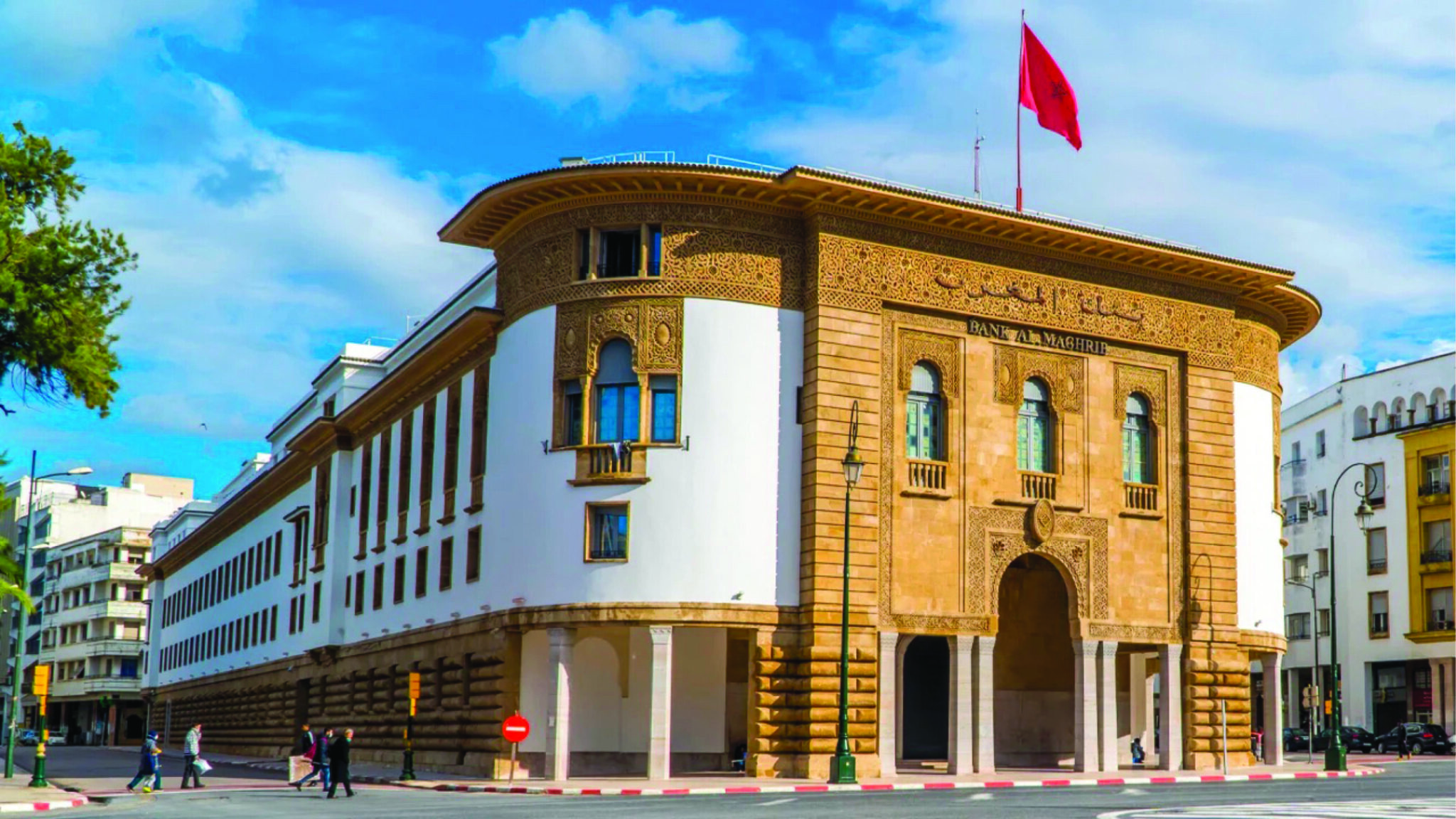
Bank Al-Maghrib is maintaining its monetary course. Meeting on Tuesday, September 22, the central bank’s Board decided to leave its policy rate unchanged at 2.25%, the level at which it has stood since March 2025.
A status quo that nevertheless comes amid an environment significantly different from that prevailing three months earlier.
Projections have, in fact, changed considerably. On the one hand, inflation prospects have eased significantly. On the other, Bank Al-Maghrib is now less optimistic about growth, particularly outside agriculture.
Added to this are a more pronounced current account deficit this year, an expected acceleration in credit and greater banking liquidity needs. The most marked change concerns prices.
Inflation, which averaged only 0.3% over the first eight months of the year, is now expected to reach 0.7% for the whole of 2026, compared with 1.5% in the June projections. For 2027 as well, forecasts have been revised downwards, from 2.1% to 1.5%.
The same movement can be seen in core inflation. It is expected to stand at -0.2% this year, compared with the 0.2% anticipated three months earlier, before rising to 2.2% in 2027, instead of the previously projected 2.9%.
This easing is notably due to the decline in certain food prices, particularly olive oil, which is mitigating the pressures of already high imported inflation. Expectations, meanwhile, remain firmly anchored.
Financial sector experts surveyed by BAM expect average inflation of 2.1% over eight quarters and 2.2% over twelve quarters.
Non-agricultural sector revised downwards
However, this situation is accompanied by a less favorable revision of economic activity. Bank Al-Maghrib now expects growth of only 4.4% in 2026, compared with 5.2% in June, and 2.9% instead of 3.1% in 2027.
This correction does not come from agriculture. Agricultural value added is still expected to increase by 16% this year, based on a cereal harvest estimated at 93 million quintals.
It is essentially the non-agricultural sector that explains the adjustment, with growth limited to 3.1% in 2026, compared with 4.2% projected three months earlier.
In this regard, BAM points in particular to a less favorable-than-expected performance in certain sectors, especially mining and manufacturing industries.
In 2027, non-agricultural activities would regain greater momentum, with growth projected at 4%. The labor market nevertheless continues to send positive signals.
In the second quarter, 406,000 jobs were created year-on-year and the unemployment rate fell to 9.5% nationally, 11.9% in urban areas and 5.4% in rural areas.
Furthermore, the international environment remains much more uncertain. BAM emphasizes the resurgence of geopolitical tensions, disruptions to supply chains and risks surrounding energy and food products. Especially as commodity prices remain particularly volatile.
The oil scenario therefore remains tense, even though it is slightly less unfavorable than in June for 2026. Brent is now expected to average $87.2 per barrel this year, compared with $92.3 projected three months earlier.
For 2027, however, the forecast has been raised to $73.5. In any event, this increase in prices continues to weigh on the country’s energy bill.
The latter is expected to jump by 28.4% this year to reach 138.1 billion dirhams, before falling back to 116 billion in 2027.
At the same time, imports of capital goods would remain high, driven by continued investment efforts. Under these conditions, BAM now anticipates a current account deficit of 4.6% of GDP in 2026, compared with 4% in its June forecasts.
The imbalance would nevertheless be temporary, as the deficit would fall back to 3% of GDP in 2027, compared with 3.8% expected three months earlier. In the medium term, the central bank is counting in particular on an improvement in exports.
Automotive sector sales are expected to reach 202.2 billion dirhams in 2027, while phosphate and derivatives sales would rise to 122.6 billion. Travel receipts, for their part, are expected to increase to 160 billion, while transfers from Moroccans residing abroad (MREs) would reach 136.3 billion.
Budget deficit, almost stable
Furthermore, foreign exchange reserves would continue to strengthen, reaching 502.8 billion dirhams at the end of 2026 and 515.3 billion at the end of 2027, equivalent to five and a half months of imports of goods and services.
On the budgetary front, adjustments remain more limited. The deficit, excluding proceeds from the sale of state holdings, is still expected to stand at 3.4% of GDP in 2026. However, the projection for 2027 has been slightly raised, from 3.3% to 3.5%.
BAM notably takes into account the additional 20 billion dirhams in appropriations opened by the government in May, the three-year budget programming, as well as the initial assumptions of the 2027 Finance Bill.
Ultimately, maintaining the policy rate at 2.25% reflects less an absence of change than a desire to wait and see.
The sharp easing of inflation is not, at this stage, sufficient to alter the direction of monetary policy, even as non-agricultural growth proves weaker than anticipated and external uncertainties remain high.
Credit: Strong acceleration expected
Bank Al-Maghrib is significantly revising upwards its credit forecasts. Loans to the non-financial sector are expected to grow by 8.1% in 2026, compared with 6.8% forecast in June, before slowing to 6.1% in 2027.
This acceleration in financing the economy would nevertheless be accompanied by increased pressure on banking liquidity. Banks’ liquidity needs are thus expected to continue widening, reaching 168.2 billion dirhams in 2027, compared with the 143 billion anticipated three months earlier.
BAM attributes this development mainly to the expected increase in currency in circulation, which is absorbing a growing share of the resources available within the banking system.