Kingdom
“Reform of the regionalisation law brings major advances”
Advanced regionalisation, territorial governance, succession at the head of the RNI… the President of the Association of the Regions of Morocco shares her reading of the current reforms and highlights the structural transformations taking place in the Guelmim–Oued Noun region, whose Regional Council she chairs.

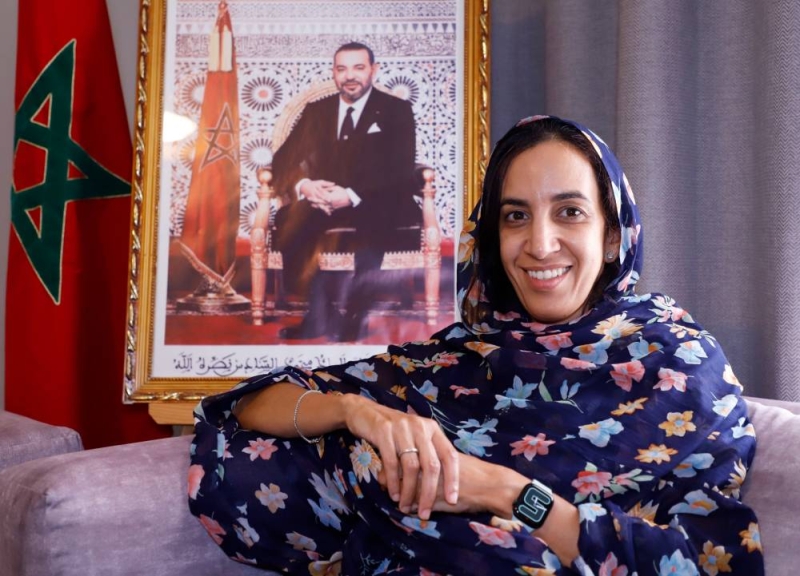
Guelmim–Oued Noun is undergoing major transformations. The President of the Regional Council looks back on the key structuring projects carried out or currently underway, particularly in road, port, hospital, and water infrastructures, which are gradually reshaping the region’s economic and social landscape.
In this interview, she also discusses the region’s strategic ambitions, particularly its positioning as a future global hub for green hydrogen and renewable energy.
The challenges of advanced regionalisation, territorial governance, and administrative deconcentration are also among the topics addressed with the President of the Association of the Regions.
What is your view on the advanced regionalisation project in Morocco and the ongoing reform?
Advanced regionalisation is considered one of the Kingdom’s most important strategic projects. It is based on a democratic logic that promotes the accountability of local elected officials and the transfer of powers to territorial entities.
This approach relies on participatory governance through regional consultative bodies that contribute to the development of local public policies.
After a decade of implementation, experience shows that regions are capable of driving structuring projects and acting with greater proximity and efficiency.
As for the ongoing reform, there is a general sense of satisfaction among regional presidents regarding its progress. It introduces essential elements stemming both from the speeches of His Majesty the King and from the recommendations of the National Conferences on Advanced Regionalisation. One important issue, for example, is financing: transfers to regions are increasing from a minimum of 10 to 12 billion dirhams.
This represents an increase of about 20% in the upcoming budget, to be voted on in October. This evolution is reassuring, as it constitutes an important lever to strengthen the investment capacities of territorial authorities.
What about governance and the transformation of AREPs into joint-stock companies?
This is indeed another important aspect of the reform. The Regional Project Implementation Agency (AREP) is an experience that has already proven effective and now needs to scale up. In the case of the Guelmim–Oued Noun region, the AREP has existed since 2019, but only became operational in 2023.
In less than three years, we have recruited and built a strong team that is increasingly efficient and skilled. This team has managed nearly 90% of the region’s major projects. However, its status as a public institution sometimes limits its flexibility. Transforming AREPs into Regional Development Companies (SDRs) would make their management more flexible, thanks to a more appropriate legal framework and expanded governance that includes the entire regional ecosystem.
What about administrative deconcentration and decentralisation, the two pillars of advanced regionalisation?
Regarding decentralisation, I believe we are on the right track: real powers have been granted to regional councils. There is now a need for better coordination between provincial and municipal councils, which also have their own prerogatives and are closer to the field.
As for deconcentration, unfortunately, it is not progressing at the same pace. In the case of Guelmim, for instance, it is not normal to have institutional asymmetry. Some ministerial departments still do not have regional offices. Moreover, regional officials still lack sufficient decision-making autonomy regarding budgets and projects.
Accelerating deconcentration therefore appears necessary to enhance the effectiveness of territorial public action. It remains a reform that is progressing too slowly, perhaps because it is not fully understood. More political courage will be required to move faster.
What is your view on the succession at the head of your party, the RNI, and on Aziz Akhannouch’s record?
Everyone acknowledges that Aziz Akhannouch has transformed the National Rally of Independents (RNI). From his first term, he strengthened the party’s structure, notably by creating parallel organisations for women, youth, university professors, and professionals.
Through his profile, experience, and commitment, Aziz Akhannouch has brought a new dynamic to party activity, which is now continuous rather than limited to election periods. He has demonstrated what a political party can achieve for the country in terms of economic and social development, as shown by the government’s achievements during this legislative term.
His work as head of government and leader of the majority has helped reconcile Moroccans with politics, as the government has been able to fulfil its promises and commitments to citizens.
I believe that Aziz Akhannouch’s dual mandate has marked the RNI and will remain a defining part of the party’s history. His successor, Mohamed Chaouki, whom I wish every success, inherits a party with strong foundations. In my view, his mandate will continue along the same path.
Let’s talk about the Guelmim–Oued Noun region, which you lead. How has it evolved over the past decade?
The Guelmim–Oued Noun region has undergone major transformation thanks to the new development model for the southern provinces, launched by His Majesty King Mohammed VI. This programme, introduced in 2016 in Dakhla, mobilised nearly 77 billion dirhams for the southern provinces, including around 10 billion dirhams allocated to the region.
Key achievements include the Tiznit–Dakhla expressway, recently completed and now a major driver of economic and social development, as well as the Fask dam with a capacity exceeding 80 million cubic metres.
The region has also benefited from the modernisation of Guelmim airport, the strengthening of port infrastructure in Tan-Tan and Sidi Ifni, and major hospital projects, including the construction of a university hospital centre and the upgrading of existing healthcare facilities.
What is the progress of your Regional Development Plan (PDR)?
The first Regional Development Plan resulted in a programme contract covering 2021–2023, with around thirty projects representing over 5 billion dirhams in investment.
These projects mainly aim to strengthen infrastructure and the region’s economic potential. The 2022–2027 PDR adopts a long-term vision focused on renewable energy and the ambition to make Guelmim–Oued Noun a global capital of green hydrogen.
This programme is based on three pillars: catching up on infrastructure and training, preparing the region to host major economic projects, and achieving economic transformation that creates sustainable jobs. The total budget for the 2022–2027 PDR is estimated at nearly 11.9 billion dirhams, with a contracting rate already exceeding 80%.
What are the flagship projects carried out by the region?
The region is implementing several structuring projects aimed at improving quality of life and enhancing territorial attractiveness, including a major urban upgrading programme with a budget of 1.2 billion dirhams.
Water is also a key priority, with investments exceeding 800 million dirhams for dam construction and rehabilitation, as well as more than 131 million dirhams dedicated to drinking water supply.
The region has also signed important agreements with the Ministries of Equipment, Health, and National Education to improve the road network, strengthen healthcare services, and expand excellence schools.
What major green hydrogen projects are currently being prepared?
Several major investments in the green hydrogen sector are underway, including a project led by TotalEnergies and German investment funds, signed before His Majesty the King.
Other strategic projects include a polysilicon production unit in Tan-Tan and several investments currently being formalised. The region is expected to host several major projects worth billions of dollars.
However, the main challenge remains the development of medium-sized and small-scale projects capable of quickly generating local employment.
What about the Gon H2 Valley project?
As mentioned, the region aims to become a global benchmark in green hydrogen and renewable energy. In this context, the Gon H2 Valley project will be established in the Tan-Tan economic activity zone.
Discussions are currently underway with public and private partners to turn this platform into a true laboratory for innovative projects related to green hydrogen.
More broadly, what makes Guelmim–Oued Noun attractive to investors?
The region benefits from a strategic geographical position within the Kingdom, supported by modern road, port, and airport infrastructure. It also has strong human and energy potential.
Regional authorities are focusing on training, economic activity zones, and the creation of a new-generation port in Tan-Tan to support industrial projects, particularly those related to green hydrogen.
Thanks to a favourable investment ecosystem and ongoing structuring projects, the region aspires to become a major energy and industrial hub.