Kingdom
Aziz Akhannouch: “Morocco Confirms Its Status as a Central Player in Intra-African Cooperation”
In his address on the occasion of the 2nd AfCFTA Business Forum in Marrakech, the Head of the Executive highlighted Morocco’s integrative role. For him, the Nigeria-Morocco Gas Pipeline is not merely a gas infrastructure; it is a strategic structure for shared industrialization in sectors such as fertilizers, petrochemicals, construction materials, and agribusiness.

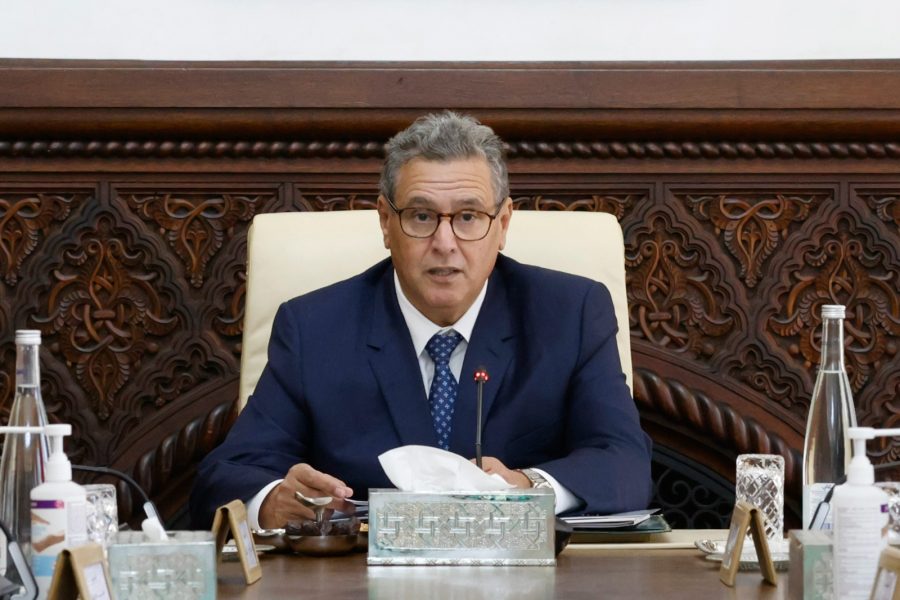
“The AfCFTA is not merely a schedule of tariff dismantling,” declared the Head of Government at the opening of the second edition of the AfCFTA Business Forum, held recently in Marrakech. According to Aziz Akhannouch, the African Continental Free Trade Area “is an architecture that organizes both the liberalization of goods and services, the protocols on investment, competition, intellectual property, as well as digital trade and the inclusion of women and youth.”
Our country, he stressed, confirms its commitment to strengthening mechanisms capable of encouraging free trade and achieving sustainable economic integration in Africa. “Within this framework, we must grant greater importance to roads, ports, banks, digital platforms, and others…,” he affirmed.
“Thanks to the High Royal Directives, Morocco consolidates its status as a central actor and strategic partner in strengthening multidimensional cooperation among the countries of the African continent. Morocco’s vision for Africa remains constant: an Africa master of its own destiny, which transforms its resources into added value on-site and connects its regions with each other, from the Mediterranean to the Atlantic, from the Sahel to the maritime coastlines,” continued the Head of the Executive.
This vision, he points out, has been translated into the Royal Initiative in favor of African Atlantic States and Sahel countries. The Kingdom has thus placed its port and logistical infrastructure at the service of twenty-three Atlantic coastal countries and their landlocked neighbors.
Alongside this, we must keep in mind a series of ambitious projects capable of strengthening our economic and commercial complementarity, such as the Nigeria-Morocco Gas Pipeline project, approximately 6,000 kilometers long and traversing thirteen West African countries.
This project “is not only a gas infrastructure project but a strategic structure capable of preparing the ground for shared industrialization in sectors such as fertilizers, petrochemicals, construction materials, agribusiness—all sectors that need reliable and competitive energy.”
However, integration without financing solutions would keep us at the stage of theoretical projects. “This is where another asset of Morocco comes into play: its financial platform Casablanca Finance City, which constitutes a main engine for economic integration in Africa,” notes Aziz Akhannouch. “To this are added our banking groups established in over twenty African countries and the recent membership of Bank Al-Maghrib in the pan-African payment and settlement system, PAPSS,” he specified.
All these factors, concludes the Head of Government, place the Kingdom in a strong position to pilot projects for payments in local currencies in Africa, export credit security, and risk coverage for African SMEs.