Kingdom
New Generation Programs: The State Closer to Citizens
Investment, basic social services, water access, emerging local centers… these are the ingredients of the new development policy the government is about to deploy. A new step is about to be taken.

It is a new turning point—and the word is loaded with meaning—that our country is about to take in terms of development. A new mechanism being put in place within a series of programs the Kingdom has launched over the past two decades.
The new generation of integrated territorial development programs, the PDTI, whose drafting process has been initiated, is, so to speak, a pivotal phase in the relationship between the State and its citizens and in the way the role of regions and local stakeholders is now perceived.
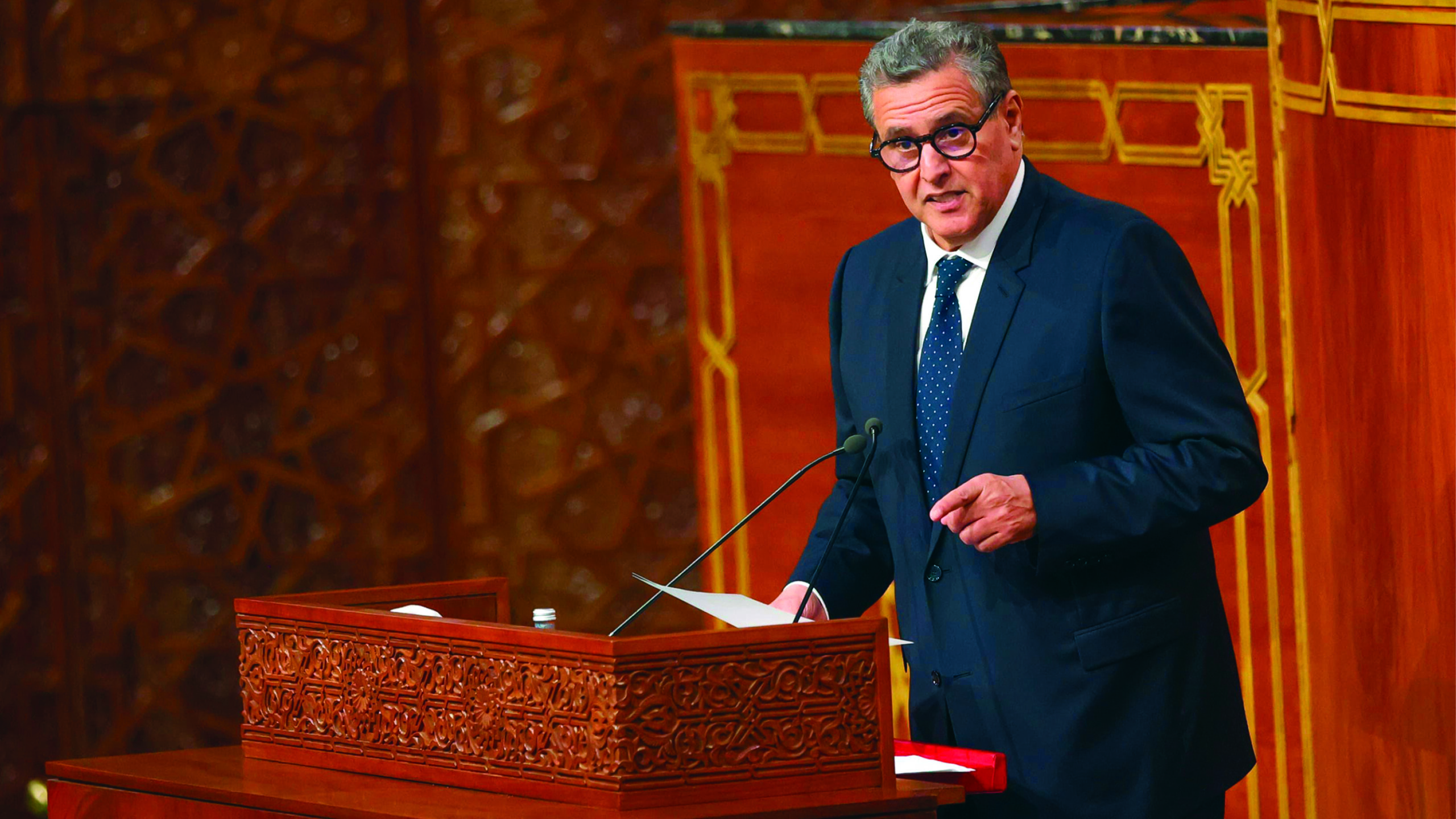
“The moment we are experiencing today is one of transition from a logic of basic services to a logic of creating opportunities,” particularly emphasized Head of Government Aziz Akhannouch on Tuesday, November 25, during the last session of general policy questions in the second Chamber.
In more concrete terms, he explains, we are moving from “water, electricity, and roads… to the local economy, employment, local investment, emerging centers, rural industry, market redevelopment, digital connectivity, and rural tourism.” A step, he continues, where we are no longer just in the “so that people can live,” but in the “so that people can move forward.”
The Head of Government speaks of an “integrated vision,” in which the transition is taking place from a logic of mere “catching up on deficits” to a logic of “building territorial capacities” that guarantee fairer and more sustainable public service and produce a daily and tangible impact in citizens’ lives. This shift will take place within a regional approach and with the involvement and contribution of local and regional stakeholders for the benefit of the citizen.
The course has been set: each region will have its own personality, each area will have its economic identity, and all citizens, without exception or discrimination, will have the natural right to progress. That is the overall vision. This is how investment will be strengthened, along with its corollary of job and wealth creation.
For on-the-ground deployment, investment will be correlated to the nature, particularities, and specificities of each region. There will be areas specialized in automobiles, others in textiles, others in renewable energies, and for other regions, chemical and agri-food industries, just as there will be regions with multiple vocations, notes Aziz Akhannouch.
For him, “it is time to move from uniform national policies in investment and employment to a truly effective economic decentralization, adapted to the specificities of each region, and to move from the concentration of job opportunities along the Tangier-Rabat-Casablanca axis to a real territorial rebalancing.”
Regional Productive Sovereignty
This, the Head of the Executive concedes, requires creating a climate favorable to initiative and local investment, at the very heart of the government’s strategy for reviving employment. In this regard, it must be recalled, the new Investment Charter constitutes a true mechanism of positive discrimination in favor of the least attractive regions.
The goal being to generate a territorial economic dynamic, “particularly in medium-sized cities and in territories that can become strategic pivots around major value production hubs.”
Obviously, there can be no incentive policy for investment, nor wealth and job creation, and beyond that, improvement of citizens’ living conditions without basic services. This is the second pillar of this program. “Water, roads, health, education, and public lighting are no longer mere services dependent on circumstances: they have become full-fledged rights.”
This is why, Aziz Akhannouch emphasizes, the upcoming regional programs will complete the task of opening up isolated areas, strengthen connections to drinking water and electricity, improve the quality of health and education facilities, and guarantee school transport, catering, and aid, because social development is the foundation of everything.
After, and this is a third step, we must “build a new path toward achieving regional productive sovereignty.” In more concrete terms, each region will be capable “of producing, creating value, and ensuring its economic independence.” This depends largely on water security.
Hence the colossal program of investment in securing water resources, mainly non-conventional, particularly through desalination, that the government has deployed in recent years. The challenge is not only to mobilize this vital resource, but also to rationalize its use, notably through advanced irrigation techniques.
Water Security
In the same logic, “integrated territorial requalification” constitutes a strong link in this development chain. “The road alone is not enough, the school without a suitable environment cannot fully fulfill its role, and the dispensary without access routes or health transport is of little use. Development must have a vision, coherence, and integration,” states the Head of Government.
Within this framework, medium-sized cities, villages, and douars, among others, “must be included in our will to forge a renewed national narrative around territorial equity, to transition these spaces from a logic of mere basic service provision to a logic of local development capable of broadening the base of opportunities offered to citizens, according to the specificities of their home territories.”
This logic, the government translates into a new concept: emerging local centers. The idea already appears implicitly in the Green Generation program, launched nearly five years ago, one of whose flagship objectives is to create a rural middle class, providing it with, and in proximity, all elements of urban comfort.
As conceived in this new generation of Integrated Territorial Development Programs (PDTI), these emerging local centers, located between douars and cities, are the true keys to real development, as they host commerce, administration, basic health services, schools, and economic activities that combat rural exodus.
These centers, the Head of the Executive explains, “must be restructured and their aesthetics and attractiveness improved through the requalification of facilities: organized markets, service hubs, rural tourism spaces, powerful digital connectivity, cultural and sports infrastructures…, so that they truly become small hubs that serve people and protect their daily lives.”
This pillar is closely linked to water security, which today, in the difficult and lasting climatic context we face, constitutes an existential challenge for Morocco.
New dams, desalination projects, wastewater reuse, oasis protection, support for family farming, and smart resource management…, an entire program.
National Commitment
With territorial governance now the foundation of all development, the next step will be based on regional planning, “so that projects align with local reality,” and project governance, “to ensure no project remains stalled or on paper.” This is to guarantee that the impact is real and perceptible at the local level.
On the funding side, the government is counting on the mobilization of financing from the State, the region, the municipality, and the private sector.
The government, being in the final year of its mandate, will accelerate the pace and step up implementation.
In the field of public health, improving citizens’ care pathways will continue within the framework of territorial health clusters, through the modernization of health infrastructure and equipment, the quality of reception and treatments, as well as the attractiveness of human resources to the least favored areas, in perfect alignment with the needs of the populations and the specificities of the territories.
Similarly, efforts to enhance the quality of the education system will be maintained through a comprehensive approach linking infrastructure, learning quality, school facility requalification, improvement of the school environment, and guarantee of transport, accommodation, and school catering services—all measures ensuring real equality of opportunity.
At the same time, the government will continue to empower regions, support municipalities, and enable local actors to fully play the role for which they were created. This actor, the Head of Government emphasizes, “is not a single person, but an entire team.”
This is the key actor of this program, whose pillars range, as specified earlier, from investment to regional implementation, basic social services, water resource security, and the launch of emerging centers.
Thus, concludes Akhannouch, “after this long journey of diagnosis, figures, vision, and analysis, we now arrive at the heart of the new step Morocco is about to take: the step where development is no longer just a project, but a national commitment.”
The Key Role of the Local Actor
Why do public policies lack the expected impact on citizens’ daily lives in several regions? That is the question on everyone’s mind. The answer is clear, simple, but extremely profound: the State has made a colossal effort, but the final impact depends on the local actor.
Because it is they who bring all this closer to the citizen, who translate the royal vision on the ground, and who see the daily details that determine whether the citizen feels the State is “present” or “absent,” observes the Head of Government. Examples:
The State can build a regional hospital equipped to the highest standard. But if there is no local health transport, if secondary roads are impassable, if there is no one to ensure patient follow-up, the hospital will remain in reports… without ever entering people’s daily reality.
The State can generalize access to drinking water. But if there is no regular maintenance or rapid intervention, a single day with a dry tap is enough for the citizen to doubt the entire project, despite the enormous effort behind it.
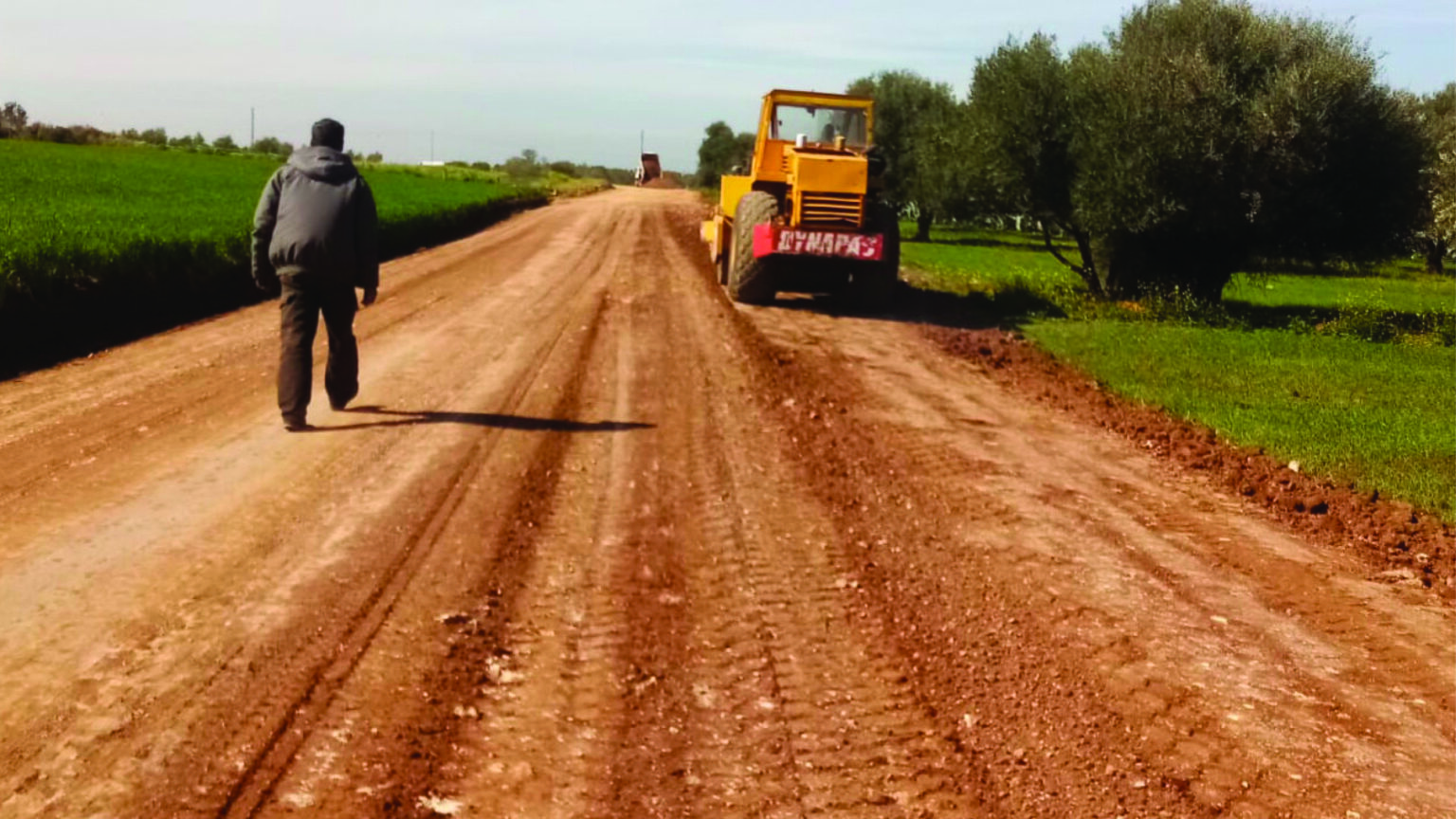
The State can build a new school. But if there is no school transport, if the road is impassable, if public lighting is not installed, the student remains deprived of school even if “the school was well built.” The State can build national roads and highways, but as long as rural roads remain degraded, the douar remains isolated, and isolation blocks development.
All this confirms the absolutely central value of the local actor, and it is not just about the wali or the governor, but also the regional president, the municipal president, elected officials, decentralized services, associations, and even the local economic operator…